


Oil set for second weekly gain as US ramps up pressure on Iran
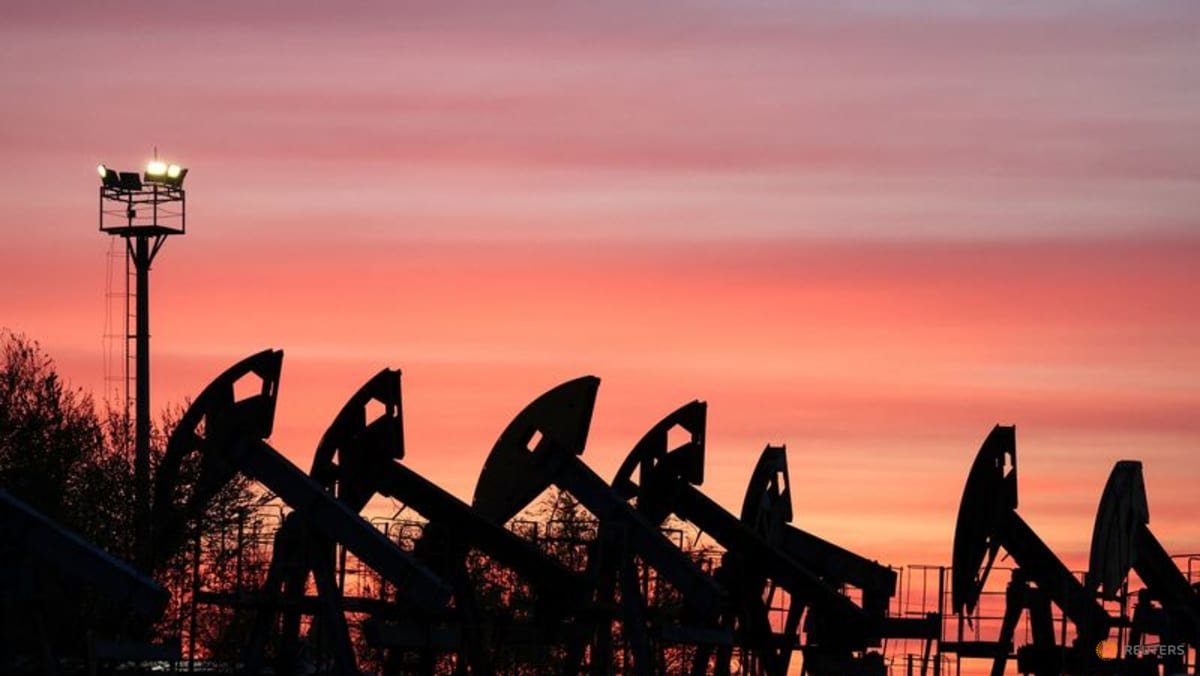
Sunset clouds glow over pump jacks at the Airankol oil field operated by Caspiy Neft in the Atyrau region, Kazakhstan, April 21, 2026. REUTERS/Pavel Mikheyev
Read a summary of this article on FAST.
Get bite-sized news via a new
cards interface. Give it a try.
Click here to return to FAST
Tap here to return to FAST
FAST
Aug 21 : Oil prices edged lower on Friday but were on track for a second straight weekly gain after the United States threatened to impose “the toughest sanctions in history” with no end in sight for disruptions to Middle East oil flows.
Brent crude futures fell 17 cents, or 0.18 per cent, to $93.61 a barrel by 0802 GMT. U.S. West Texas Intermediate crude futures slipped 36 cents, or 0.41 per cent, to $86.47.
The Brent benchmark has gained more than 5.8 per cent while WTI has risen 4.8 per cent this week, with both touching their highest since July 24 in the previous session.
“The U.S. is taking a very firm stance against Iran, with the blockade back in place and threats of tougher sanctions on Iranian oil exports, and that’s why we are seeing oil prices back above $90 a barrel,” said ANZ analyst Soni Kumari.

Guess Word
Crack the word, one row at a time

Buzzword
Create words using the given letters

Mini Sudoku
Tiny puzzle, mighty brain teaser

Mini Crossword
Small grid, big challenge

Word Search
Spot as many words as you can
U.S. Treasury chief Scott Bessent had issued the sanctions threat, suggesting such measures would reduce the need for new major military operations.
Oil prices have climbed on concerns over the continued curtailment of supply from major oil producers such as Saudi Arabia, Iraq, the United Arab Emirates and Kuwait.
The earlier peace deal between the U.S. and Iran expired this week with no effort by either side to restart talks.
The market is starting to adjust to the fact that oil trade and supply conditions are unlikely to return to prewar levels anytime soon, ANZ’s Kumari added.
SUPPLY DISRUPTION CONTINUES
Seven commodity ships sailed along the Strait of Hormuz on Thursday, which was only half the previous day’s tally, data from ship-tracker Kpler showed.
Before the U.S.-Israeli attacks on Iran began in late February, the Strait of Hormuz handled about a fifth of global oil and liquefied natural gas supplies. As the war approaches the six-month mark, disruptions to energy flows through the waterway remain in place.
Elsewhere, Ukraine’s military has hit Russia’s TANECO oil refinery in the Tatarstan region as well as the Tamanneftegaz oil terminal in the Krasnodar region, the Ukrainian General Staff said on Thursday.
Source: Reuters
Sign up for our newsletters

Get the CNA app
Stay updated with notifications for breaking news and our best stories
Get WhatsApp alerts
Join our channel for the top reads for the day on your preferred chat app

Get bite-sized news via a new
cards interface. Give it a try.
Click here to return to FAST
Tap here to return to FAST
FAST







