Touching and spectacular moments from the animal kingdom are always among the favorites in the Wildlife Photographer of the Year competition. All finalists will soon be on display at London’s Natural History Museum.
Image: Audun Rikardsen/Wildlife Photographer of the Year
London’s Natural History Museum is offering a sneak peek ahead of an exhibition. It’ll show all award-winning images of the 62nd Wildlife Photographer of the Year competition, developed and produced by the museum. “Biting Back” by Andrea and Marceo Grammatico is currently on display: The razor-sharp close-up of a fer-de-lance viper captures the mosquito as it appears to be sucking blood.
Image: Andrea and Maceo Grammatico/Wildlife Photographer of the Year
Vegard Byrkjeland Aasen observed a female adult orca in the waters of a Norwegian fjord supporting the dead body of a calf and retrieving it if it fell and began to sink. Vegard said he thought it was “important to document the moment.” More info on the contest can be found here: https://www.nhm.ac.uk/visit/exhibitions/wildlife-photographer-of-the-year.html
Image: Vegard Byrkjeland Aasen/Wildlife Photographer of the Year
The jury selected 100 pictures out of 65,000 entries. They said the selected shots stood out through their originality, technical excellence and moving stories Andrew Parkinson’s portrait shows a black vulture over the carcass of a yacare caiman in Brazil’s Pantanal wetlands.
Image: Andrew Parkinson/Wildlife Photographer of the Year
On October 16, 2026, an exhibition showing the 100 finalists will open at the Natural History Museum. This picture of a black bear in a pool in southern California will also be on display. Loren Elliott entered the photo she took in the “Urban Wildlife” category.
Image: Loren Elliott/Wildlife Photographer of the Year
The common swift can remain airborne for months. It has incredible speed and agility thanks to its long swept-back wings that resemble a crescent. Jack Crockford captured this fascinating interplay of nature and technology at London Heathrow Airport, where the flight paths of birds and airplanes intersect.
Image: Jack Crockford/Wildlife Photographer of the Year
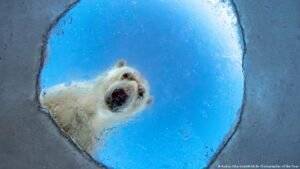
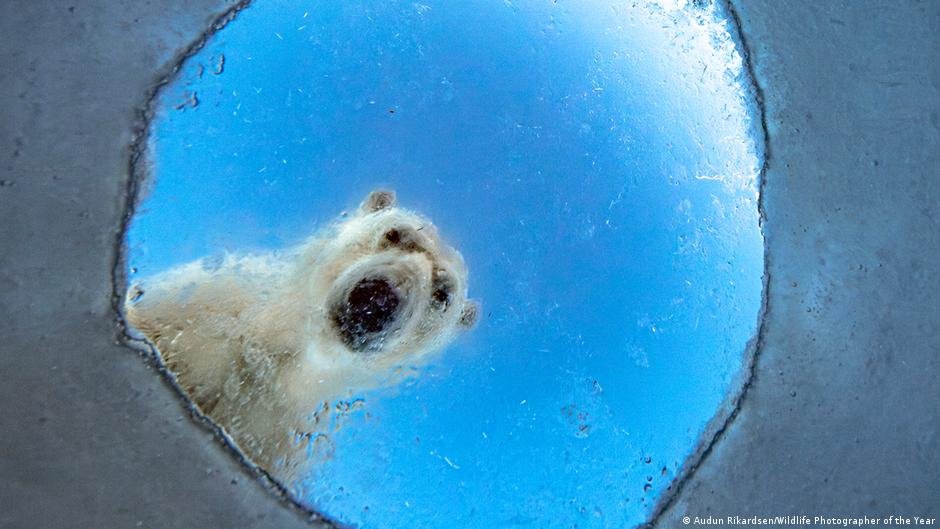
Audun Rikardsen observed a polar bear from a seal’s perspective, as the predator looked down into a breathing hole in the Arctic sea ice. The photographer used an underwater camera and a motion sensor to capture the image.
Image: Audun Rikardsen/Wildlife Photographer of the Year
The winners will be announced a few days before the exhibition opens, then the prizes will be awarded. Jens Cullmann’s photo shows young bullfrogs in Botswana, which “eat everything that moved.” It was entered in the “Amphibians and Reptiles” category.
Image: Jens Cullmann/Wildlife Photographer of the Year7 images1 | 77 imageshttps://p.dw.com/p/5JQub
About The Author