PUB trial aims to halve energy used to pre-treat seawater for desalination
The trial is assessing whether ceramic membrane technology developed by Japanese firm Meiden can replace the three-stage pre-treatment process currently used to remove contaminants from seawater.
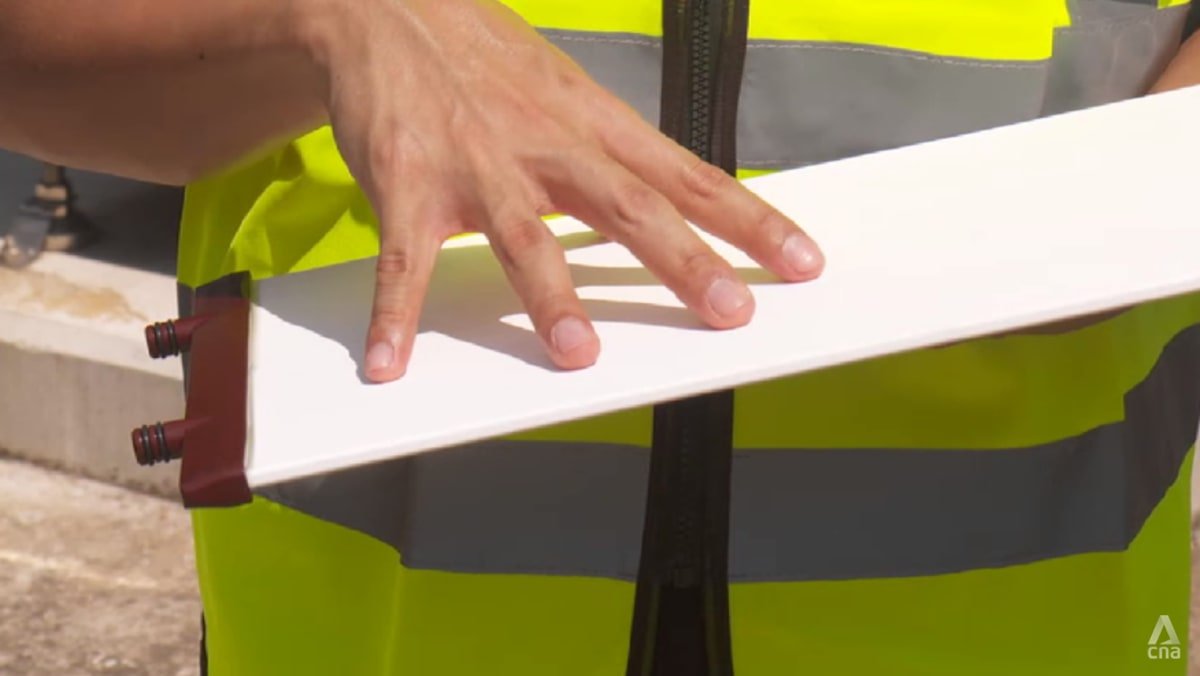
A flat-sheet ceramic membrane. Channels within the sheet pull water through its porous material, which catches contaminants in the process. The water then goes on to the next stage of treatment. (Image: CNA)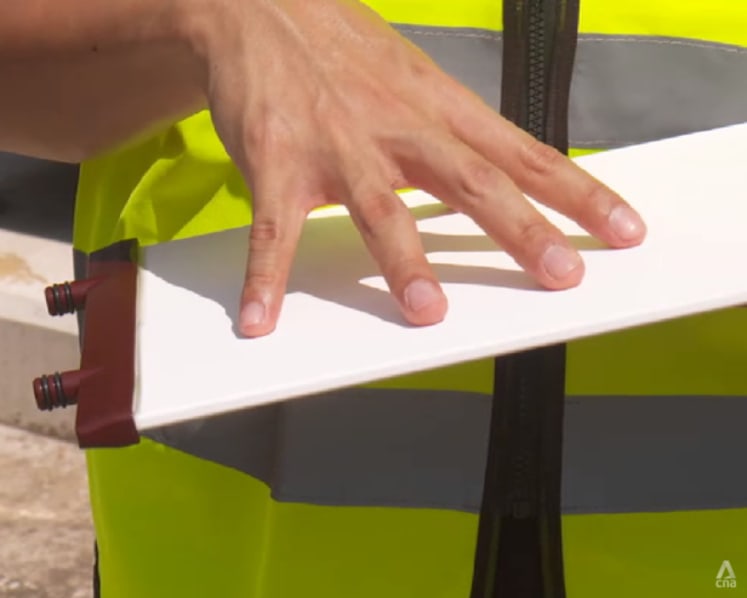
New: You can now listen to articles.

This audio is generated by an AI tool.

Read a summary of this article on FAST.
Get bite-sized news via a new
cards interface. Give it a try.
Click here to return to FAST
Tap here to return to FAST
FAST
SINGAPORE: Singapore is testing a new way of preparing seawater for desalination that could halve the energy used in the pre-treatment process.
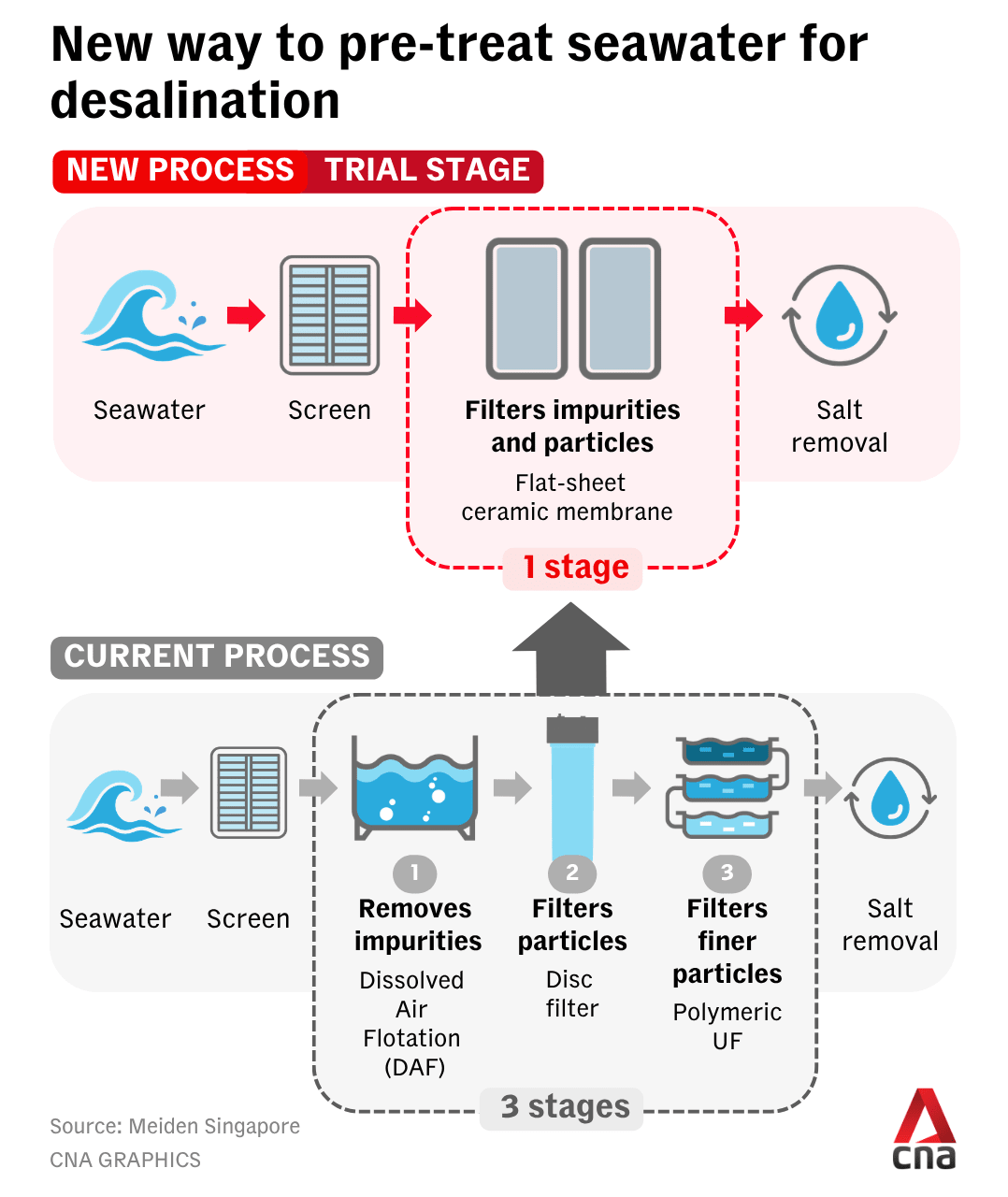
A trial at Tuas is assessing whether ceramic membrane technology developed by Japanese firm Meiden can replace the three-stage pre-treatment process currently used to remove contaminants from seawater.
National water agency PUB said that if the technology proves reliable and cost-effective, it could eventually be deployed at desalination plants across Singapore.
FROM SEAWATER TO DRINKING WATER
Desalination involves several stages before seawater can be turned into drinking water.

Guess Word
Crack the word, one row at a time

Buzzword
Create words using the given letters

Mini Sudoku
Tiny puzzle, mighty brain teaser

Mini Crossword
Small grid, big challenge

Word Search
Spot as many words as you can
Before the main desalination process, contaminants such as dirt, algae and grease must be removed to prevent them from clogging or fouling the membranes used later in treatment.
Currently, this pre-treatment process involves three stages. The new system being tested seeks to combine them into a single, more compact step using ceramic membranes.
“This technology will allow us to save 50 per cent of the energy (needed) for seawater pre-treatment,” said Dr Gurdev Singh, PUB’s chief engineering and technology officer.
“(This) allows us to produce water at the same high quality that we do today, with much less energy and a smaller footprint.”
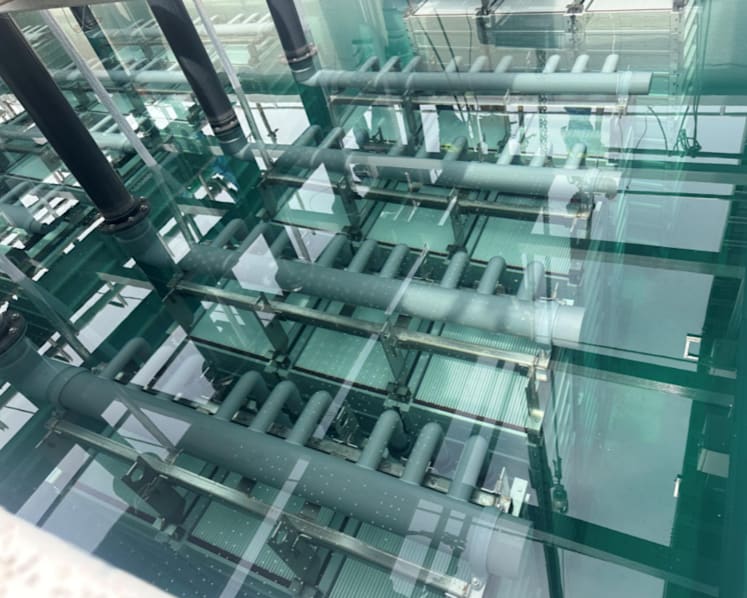
The more compact system could also reduce the space needed for seawater pre-treatment.
The trial is a collaboration between PUB, Meiden Singapore and the National Research Foundation Singapore.
The large-scale demonstration plant at Tuas began trials in June and will operate for about six months to assess its stability and energy-saving potential.
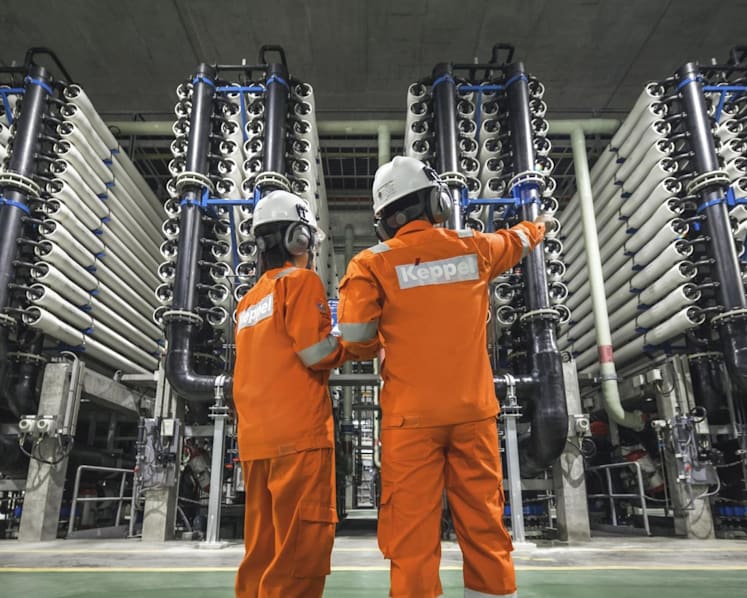
It has 24,000 sheets of the ceramic membrane in total and can produce up to 6 million gallons of filtrate water per day for the downstream treatment processes.
HOW THE CERAMIC MEMBRANES WORK
In the system, seawater flows over sheets of porous ceramic membrane. Channels within each sheet draw water through the ceramic material, trapping contaminants such as dirt, algae and grease on its surface.
The filtered water then passes on to the next stage of the treatment process.
While ceramic membranes are not new, the trial is testing whether this particular configuration can perform reliably at a much higher capacity.
PUB is also studying how well the system copes when seawater conditions deteriorate, including during algal blooms or oil spills.
Meiden said ceramic membranes are more robust than conventional polymeric membranes and can continue operating under challenging seawater conditions.
“Even with algae blooms in the sea, when water reaches the membrane, we can protect (it from) algae on the surface of the membrane, so the filtered water is kept clean,” said Dr Niwa Terutake, director of Meiden Singapore.
“After the algae sticks on the membrane, we can clean (it) using a chemical cleaner. Then we can maintain the same condition.”
PUB said the durability of ceramic membranes could help make Singapore’s water treatment processes more resilient to disruptions.
“This is becoming increasingly important for us to continue to increase the resilience of our treatment process in the face of climate change, as well as incidents out at sea,” said Dr Gurdev.
HIGHER UPFRONT COST BUT LONGER LIFESPAN
Ceramic membranes cost more to install than the polymeric membranes currently used, but Meiden said their longer lifespan could help offset the higher upfront expense.
The ceramic membranes can last about 20 years, compared with about five to seven years for polymeric membranes currently used in water treatment.
Meiden expects the additional initial cost to be recovered within about a decade, after which the system could generate savings for the remainder of its operating life.
Beyond Singapore, the company is looking to expand the technology into the Middle East, where many countries similarly rely heavily on desalination due to limited freshwater resources.
For PUB, the trial is part of a broader effort to reduce the energy and land required to produce water while strengthening the resilience of Singapore’s water supply.
“We will continue to look at innovations that we can scale and translate and apply within our operations to achieve a more sustainable, resilient water supply for Singapore, way into the future,” said Dr Gurdev.
Source: CNA/dn(oc)
Sign up for our newsletters

Get the CNA app
Stay updated with notifications for breaking news and our best stories
Get WhatsApp alerts
Join our channel for the top reads for the day on your preferred chat app

Get bite-sized news via a new
cards interface. Give it a try.
Click here to return to FAST
Tap here to return to FAST
FAST