


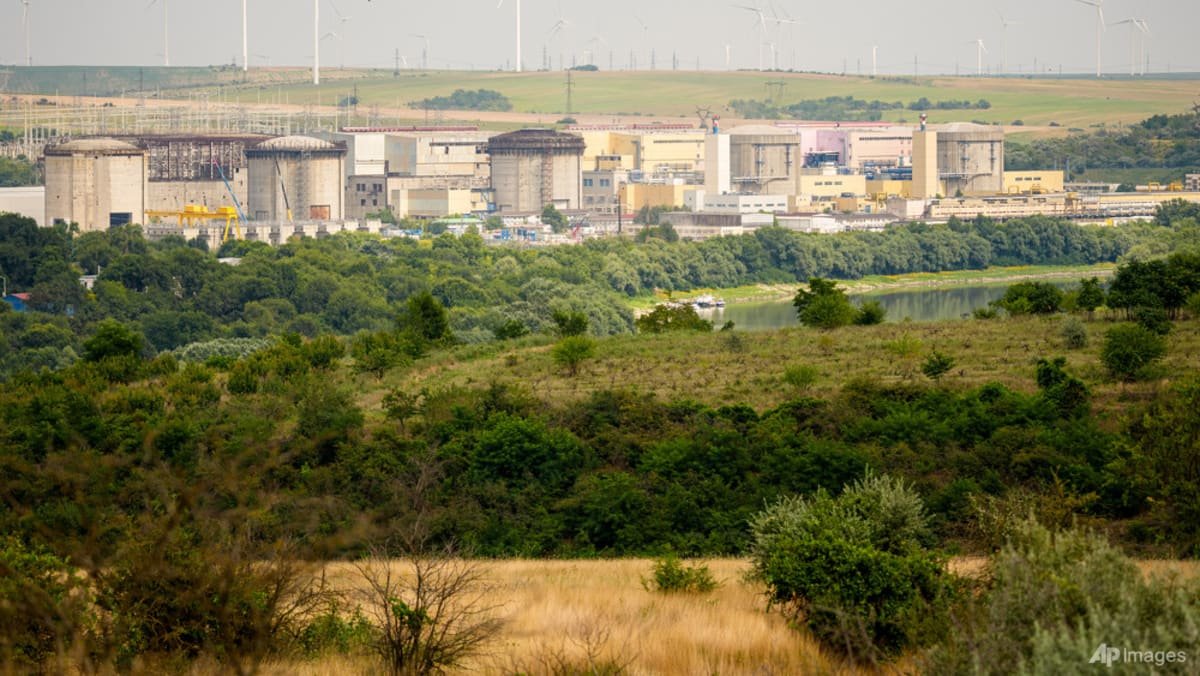
Romania shuts nuclear plant as Danube drops
The plant is not expected to restart for at least 10 days, while Romania plans to rely on alternative power sources and imports.
Cernavoda Nuclear Power Plant, which had to close one of it’s reactors due to extremely low water levels on the Danube River, is seen in Cernavoda, Romania, Monday, Aug 3 2026. (Photo: AP/Andreea Alexandru)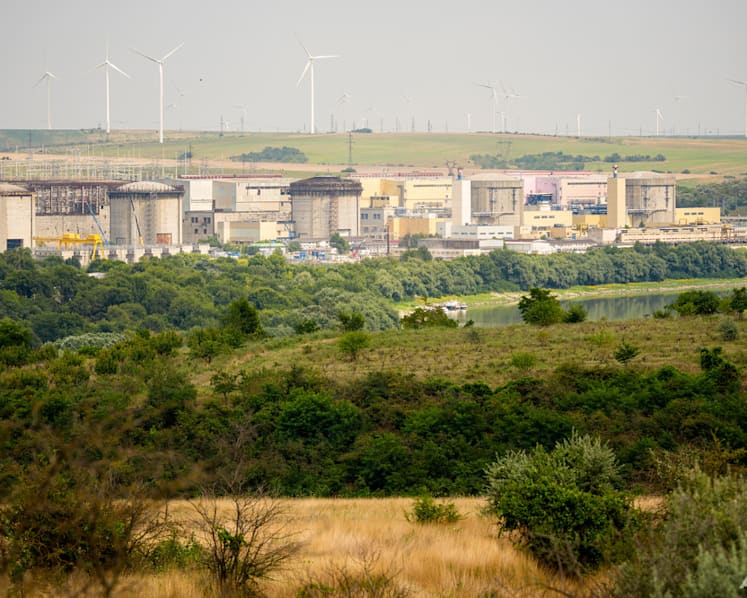
Read a summary of this article on FAST.
Get bite-sized news via a new
cards interface. Give it a try.
Click here to return to FAST
Tap here to return to FAST
FAST
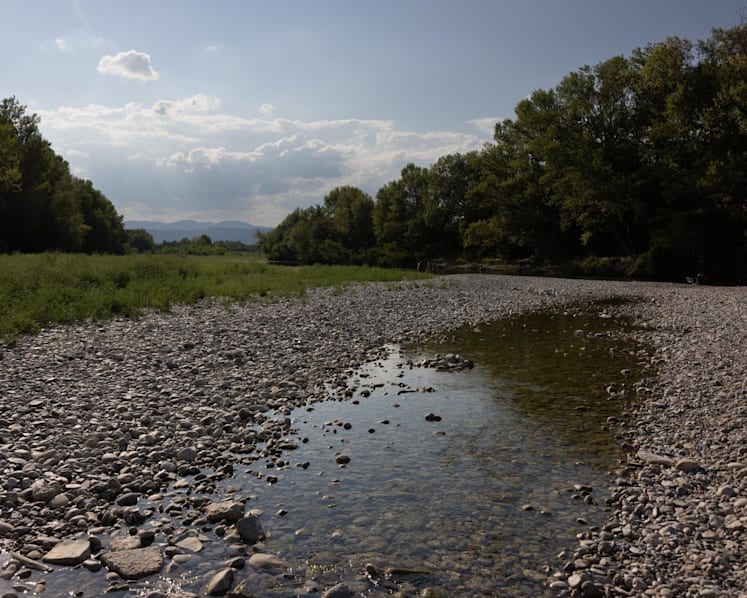
BUCHAREST: Romania shut down its only nuclear plant on Thursday (Aug 13), in a rare move due to drought that has caused the Danube river, whose waters cool the plant, to fall to record lows.
Much of Europe is facing a new summer heatwave amid a drought that has driven rivers to historic lows.
The Cernavoda plant, which usually generates a fifth of Romania’s electricity, has been shut down just once before, in 2003, also due to drought.
The Nuclearelectrica company had already shut one of the plant’s two 700 megawatt reactors last month, and announced Thursday that it needed to shut the second “due to the significant and ongoing drop in the water level of the River Danube”.
“We do not foresee a restart within the next 10 days,” plant director, Romeo Urjan, told AFP.
EFFORTS TO DIVERT DANUBE FLOW
To avert a complete shutdown of the reactors, the nuclear company had budgeted more than two million euros (US$2.3 million) to divert the Danube’s flow to maintain the cooling of the reactors, including blowing up a rock and sinking four barges filled with rocks into the river.
Alternative power sources, including from wind power as well as electricity imports, are expected to ensure adequate supplies, the energy ministry said Wednesday.
But it also reiterated an appeal for “responsible consumption”.
It has warned that as a last resort, large industrial users would have to face restrictions in the evening hours to save electricity.
In early August, the government said carmakers Dacia and Ford would pause production in the country until August 19 to help with the power deficit.

RECORD-LOW FLOWS
Nearly two-thirds of the Danube has seen flow rates that are the lowest on record for a month of July in 34 years, according to an analysis published Monday by the European climate change observatory Copernicus.
The drought has hit nuclear power providers across Europe.
France, which uses nuclear power to generate around 70 per cent of its electricity, recorded a more than 20 per cent shortfall in atomic production capacity this week, a record deficit caused by outages linked to drought, extreme heat and a jellyfish invasion, according to AFP calculations based on EDF data.
In total, 13 of the 57 reactors in EDF’s nuclear fleet were affected.
The drought in Europe has been exacerbated by human-induced climate change, according to the World Weather Attribution group of scientists, who warn that the problem will worsen.
Hungary, neighbouring Romania, has avoided a complete shutdown of its only nuclear plant, Paks, whose four reactors are also cooled by the Danube.
But with the river expected to drop further, Hungarian Prime Minister Peter Magyar said Wednesday that the government had ordered the construction of a submerged wall, or weir, to try to control flows nears the plant.
Two 80-metre (260 feet) barges are also being stationed at Paks that could be sunk to raise the water level.
Paks, which usually provides around a third of Hungary’s electricity, has been partially shut down since late last month.
The low levels of the Danube, Europe’s second-longest river, have also severely impacted shipping along its 2,850-kilometre (1,770-mile) route stretching from western Germany to its mouth on the Black Sea.


Source: AFP/fs
Sign up for our newsletters

Get the CNA app
Stay updated with notifications for breaking news and our best stories
Get WhatsApp alerts
Join our channel for the top reads for the day on your preferred chat app

Get bite-sized news via a new
cards interface. Give it a try.
Click here to return to FAST
Tap here to return to FAST
FAST







