Rural escapism: Why China’s young urbanites are romanticising countryside living
Amid burnout, economic uncertainty and rising costs, more young Chinese urbanites are romanticising rural living through social media, but experts say reality may be more complicated.
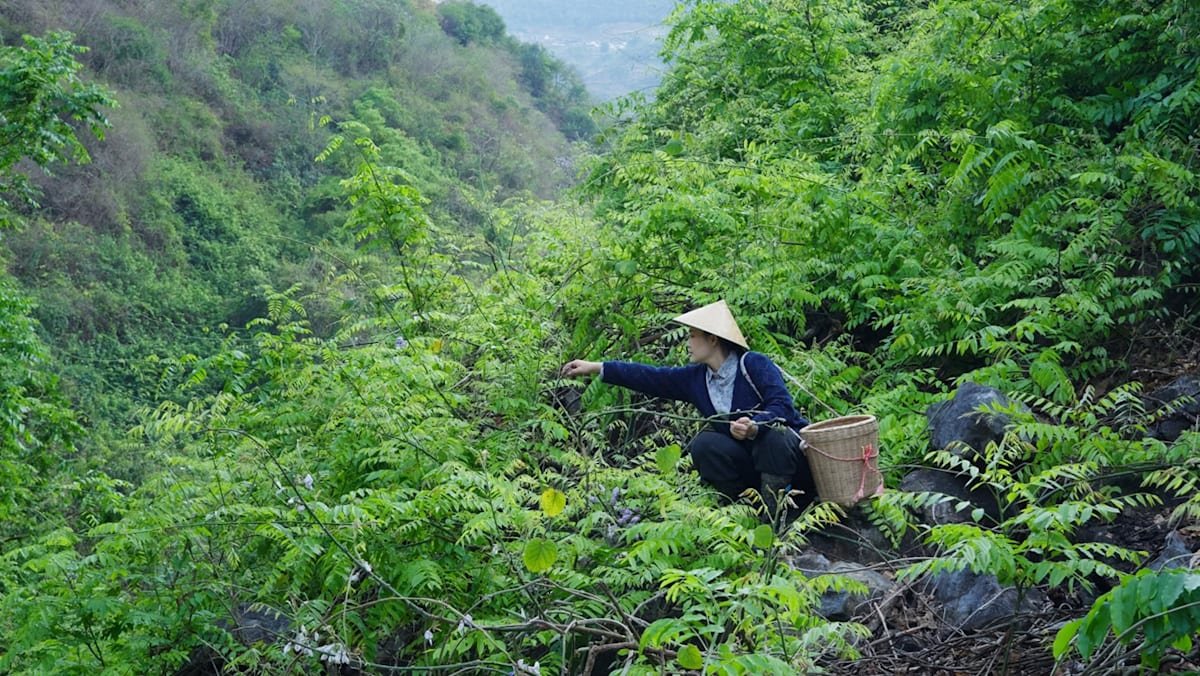
Dong Meihua, better known online as Dianxi Xiaoge, showcases her idyllic village life and promotes local flavours unique to Yunnan in her videos on YouTube. (Photo: Facebook/Dianxi Xiaoge)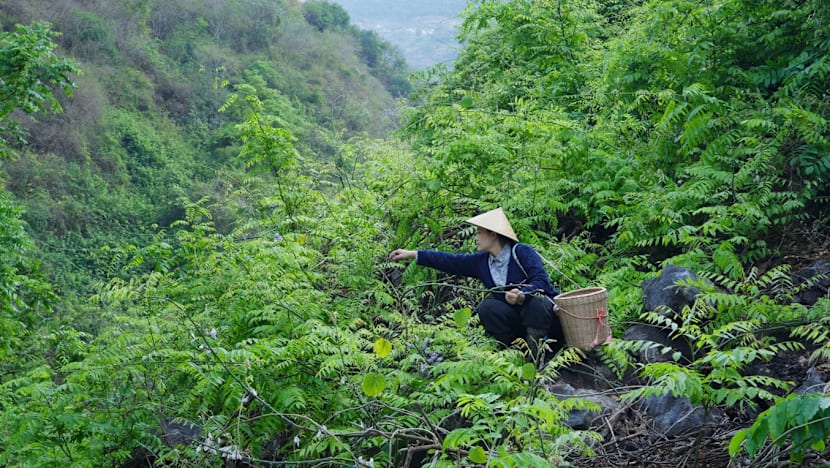
New: You can now listen to articles.

This audio is generated by an AI tool.

Read a summary of this article on FAST.
Get bite-sized news via a new
cards interface. Give it a try.
Click here to return to FAST
Tap here to return to FAST
FAST
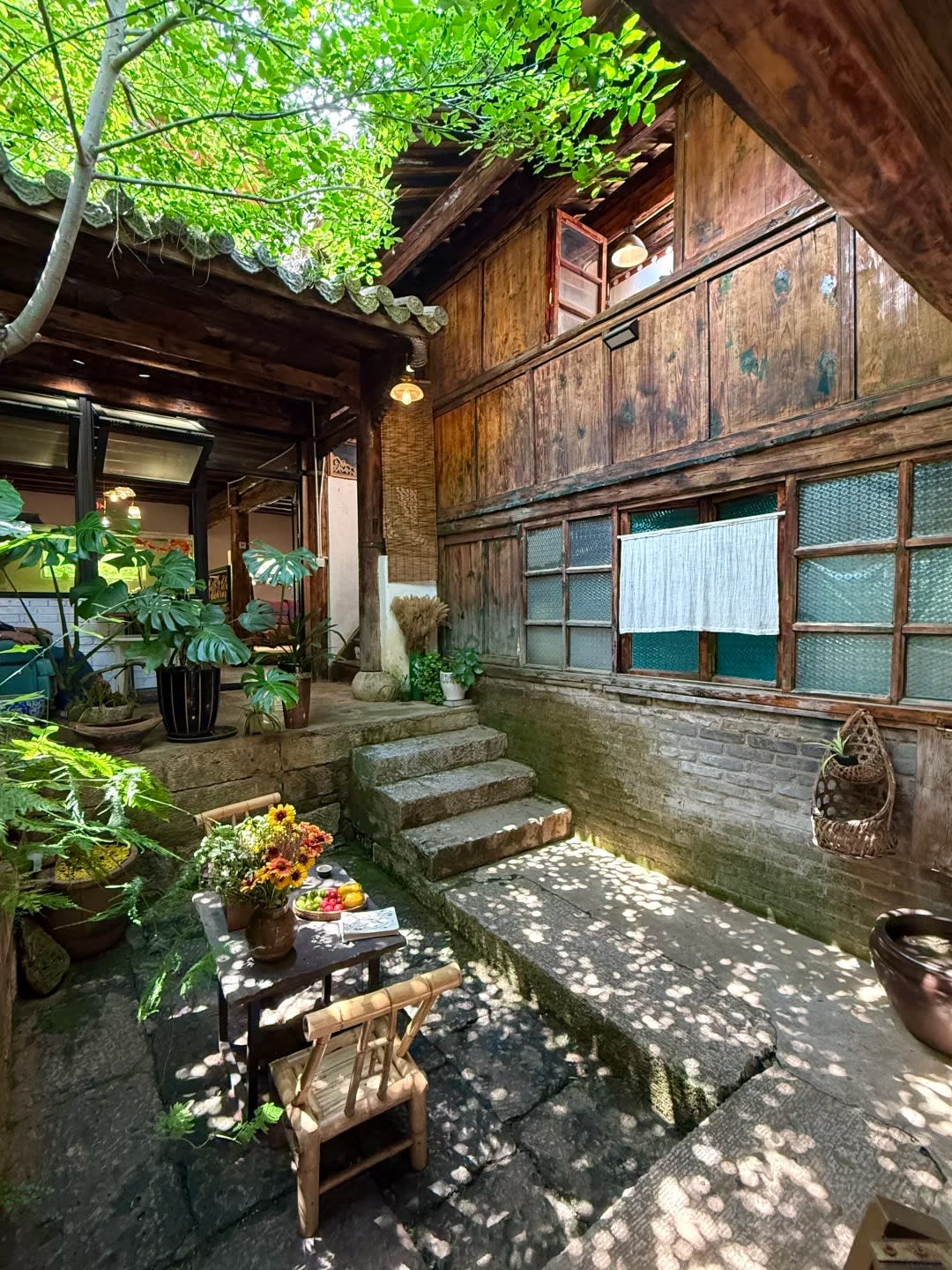
YUNNAN: In a sunlight-dappled courtyard filled with plants, a woman sits back in a bamboo rocking chair, sipping tea.
The century-old house features a traditional yi ke yin courtyard, made of brick and stone – and commonly found in parts of China’s southwestern Yunnan province.
The tranquil space barely measures more than 2 sq m, but for 34-year-old Zheng Junyu, it is more than enough.
A former presenter at Kunming Broadcasting Corporation, Zheng left her job in 2025 in search of a different pace of life.

Guess Word
Crack the word, one row at a time

Buzzword
Create words using the given letters

Mini Sudoku
Tiny puzzle, mighty brain teaser

Mini Crossword
Small grid, big challenge

Word Search
Spot as many words as you can
Her passion for journalism had been waning, she said – and she could barely afford parking fees at her workplace. She felt like “a frog being slowly boiled alive”.
These days, she lives a “quiet and free” life in the Yunnan countryside, one she says is entirely her own.
“When the wind blows, the courtyard is like a dreamscape,” Zheng shared in a video posted on Xiaohongshu on Apr 13, where she has amassed more than 328,000 followers.
“Amidst the tiles and bricks, your days slow down. It seems like the simpler life gets, the easier it is to be content.”
For many young users scrolling through the app after a long workday, content like Zheng’s has become increasingly appealing.
It taps into a growing yearning among many for something that often feels scarce living in China’s major cities: space, quiet and the possibility of slowing down.
“It feels like I’ve gone back in time,” user Vicky Wang said in a comment on one of Zheng’s videos.
Another user Mao Jiuqi called it “the ideal life”. “A tiny courtyard with a dog and a cat, and millions of yuan in savings,” she said.
“I love how you designed your home and the koi fish in your pond,” commented a user named Lei Lei, adding that “lying on tatami mats and eating watermelon is my dream”.
“Now you have made me want to visit Yunnan.”
RURAL REVITALISATION
Rapid urbanisation in China has long been characterised by the mass migration of people from rural areas to cities.
But official statistics in recent years have pointed to a notable reverse flow, driven by a combination of economic pressures, government initiatives and changing lifestyle aspirations.
Figures released in 2025 showed that more than 12 million people had returned to rural areas to start businesses, creating new industries and innovative business models, according to state news agency Xinhua.
The fascination with rural living has also grown alongside broader societal conversations about burnout and economic uncertainty, experts said.
Vivianne Zhang Wei, an ethnographer who spent a year travelling across rural China, noted that many young adults were leaving first-tier cities like Beijing and Shanghai under a wide range of circumstances.
The trend may not be unique to China, but “in China it has some unique aspects”, Zhang told CNA, pointing to state-backed efforts under the country’s rural revitalisation strategy.
Launched in 2017, it aims to modernise China’s agriculture and rural sectors by 2035 – and attract educated young people and talent back to countryside cities and provinces.
But government policy is only part of the picture, Zhang said – noting that many young Chinese urbanites relocating to rural areas were also “driven by exhaustion and disillusionment” amid rising living costs, high youth unemployment rates and a weak job market.
“Slow rural living is the imagined antidote,” Zhang said.

Social media has also helped amplify that appeal.
According to official data cited by Xinhua in its Feb 26 report, the number of Douyin creators who settled back in rural hometowns over the past year had exceeded 130,000.
More than 1.36 billion new rural-related videos were also uploaded to the platform in the past year, while the number of creators under 30 grew 45 per cent year-on-year in 2025.
Kuaishou, another popular short form video platform, had more than 140 million users interested in agriculture, rural areas and farmers as of October 2025, according to a May 14 report by the state-owned People’s Daily tabloid which also cited data from China’s Ministry of Commerce – that leading e-commerce platforms had hosted more than 4 million agricultural livestreams in 2025.
“In 2025, China’s rural online retail sales surpassed 3 trillion yuan (around $441.5 billion) for the first time,” the report said.
Appeal of the rural idyll
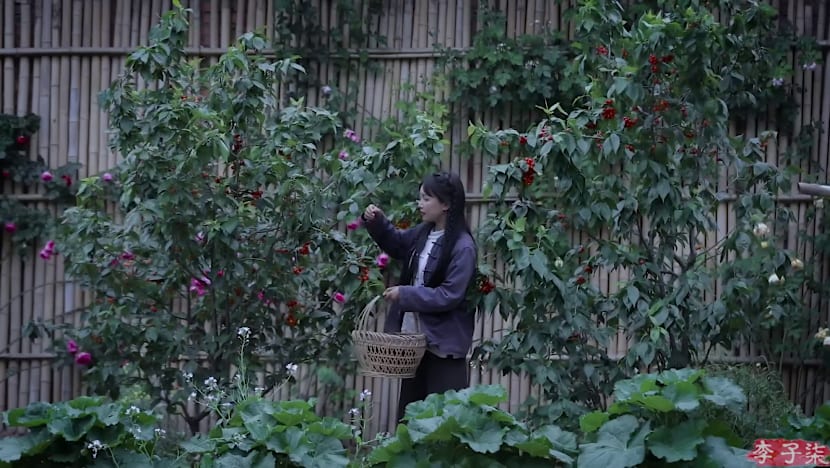
Sichuan-born content creator Li Ziqi became famous for her meticulously-produced videos showcasing her life in the countryside outside Mianyang, a city well-known for electronics as well as hosting prestigious research institutions.
Her videos on farming, cooking and woodworking, making everything from traditional handicrafts, furniture and even paper – have garnered millions of views.
“People love my videos because of a certain resonance,” Li said in a magazine interview back in 2020. “It’s a life many people yearn for.”
“I remember one video where I made traditional mooncakes, and many fans commented that they hadn’t seen them in a long time, evoking shared memories,” she added.
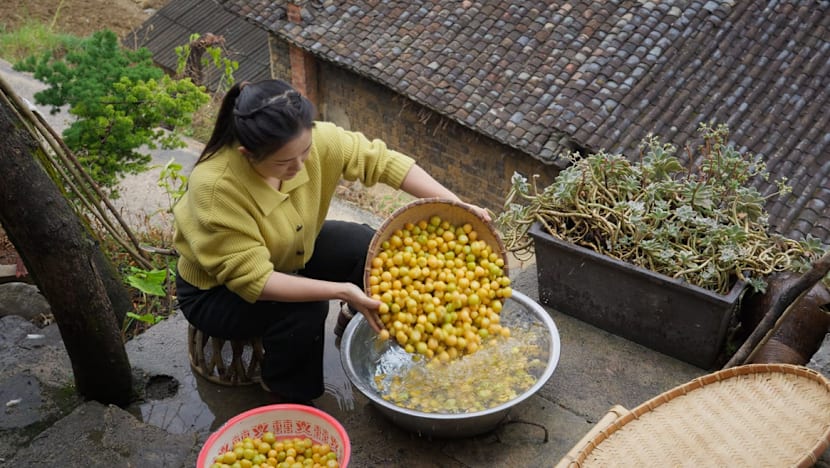
Another popular rural content creator is Dong Meihua, better known online to millions of followers as Dianxi Xiaoge.
Dong started vlogging back in 2016 and worked at a local startup company until her father fell ill.
“I used to make videos that would catch eyeballs, like frying bamboo worms or eating raw meat, so that viewers would remember me among the many other vloggers,” she said in an interview with China News Service in 2024.
With more than 12 million followers on YouTube, her videos, also shared to Instagram, TikTok and Facebook, record rural life and often feature lush green mountains and endless farm fields – and also showcase local delicacies.
In her latest YouTube video, uploaded on Jun 18, she foraged for mushrooms in the forests surrounding her village and made different local sauces using ingredients like mountain fruits, chilli, fermented black beans and spices.
“It’s like that in reality,” she said – describing village life as “peaceful and warm”.
Collapse
Expand
THE NEW COUNTRYSIDE
For many young Chinese urbanites, moving to the countryside no longer means having to give up modern conveniences.
Infrastructure in rural China has improved dramatically in recent years, with better roads, widespread internet access and improved living conditions making rural living increasingly viable, experts said.
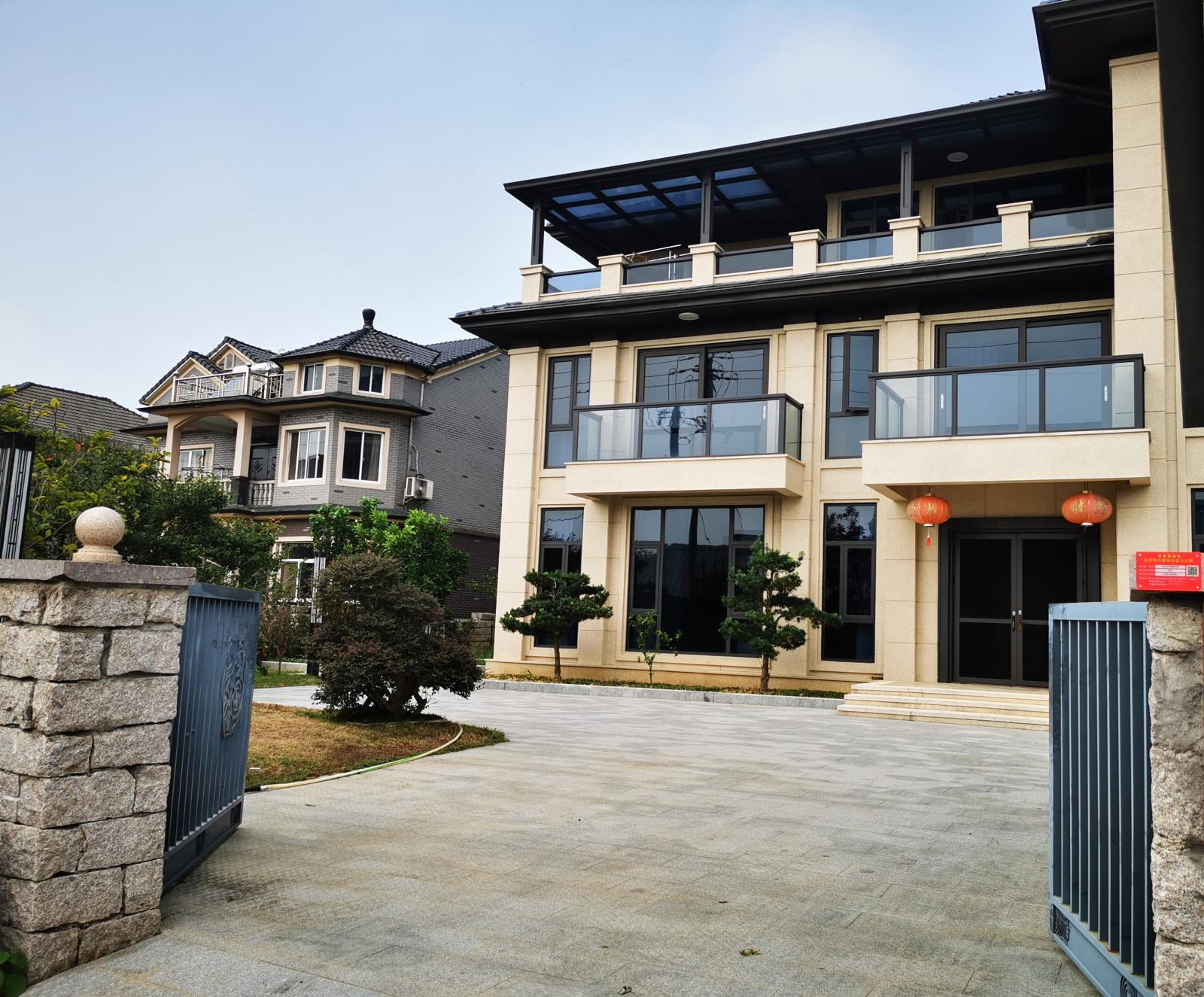
Qian Forrest Zhang, an associate professor of sociology at Singapore Management University (SMU), pointed to regions in the Pearl River Delta, Yangtze River Delta and around Chengdu as examples of rural areas that have become attractive alternatives to city life.
Residents often enjoy larger homes, greener surroundings and access to modern amenities while remaining within commuting distance of major cities.
“That’s why people now move to rural areas for a host of reasons: retirement, vacations, jobs and alternative lifestyles,” Zhang said.
Some are also digital nomads who are drawn by the possibility of working remotely while enjoying a different pace of life.
Living expenses in rural China are also significantly lower, said Zhou Chunsheng, a professor of finance at the Cheung Kong Graduate School of Business.
Housing, usually one of the largest expenses for many urban residents in China, becomes far less burdensome for those returning to family homes in rural areas, he added.
Statistics from the Beijing Municipal Bureau of Statistics showed that in the first quarter of 2026, urban residents spent substantially more on housing than rural residents. Per capita housing expenditure among urban residents stood at 5,391 yuan, compared with 2,299 yuan for rural residents.
“Living in the countryside also means you can meet your basic living needs with relatively little pressure – having a place to live and enough money to buy a simple car,” Zhou said.
“If you don’t have intense career ambitions or feel immense competitive pressure in the city, the countryside is naturally a place where you can sustain a basic livelihood.”
46:09 Min Digital nomad enclaves in China’s rural heartlands are attracting young professionals from across the country. Chinese youths are also giving up prestigious big-city jobs to become new farmers and rural influencers. Discover why attitudes towards rural living have been changing in China.
At the same time, rural China today is far removed from the backbreaking life many older generations might remember.
Mechanisation and technological advances have reshaped agriculture, making farming less labour-intensive while improving living conditions across many rural areas.
Tourism has also opened up new sources of income.
“For example, you’ll see many villages that have become tourist destinations have cafes, bakeries, and other urban amenities that cater to the urban tourists’ imagination of the countryside,” said Zhang from SMU.
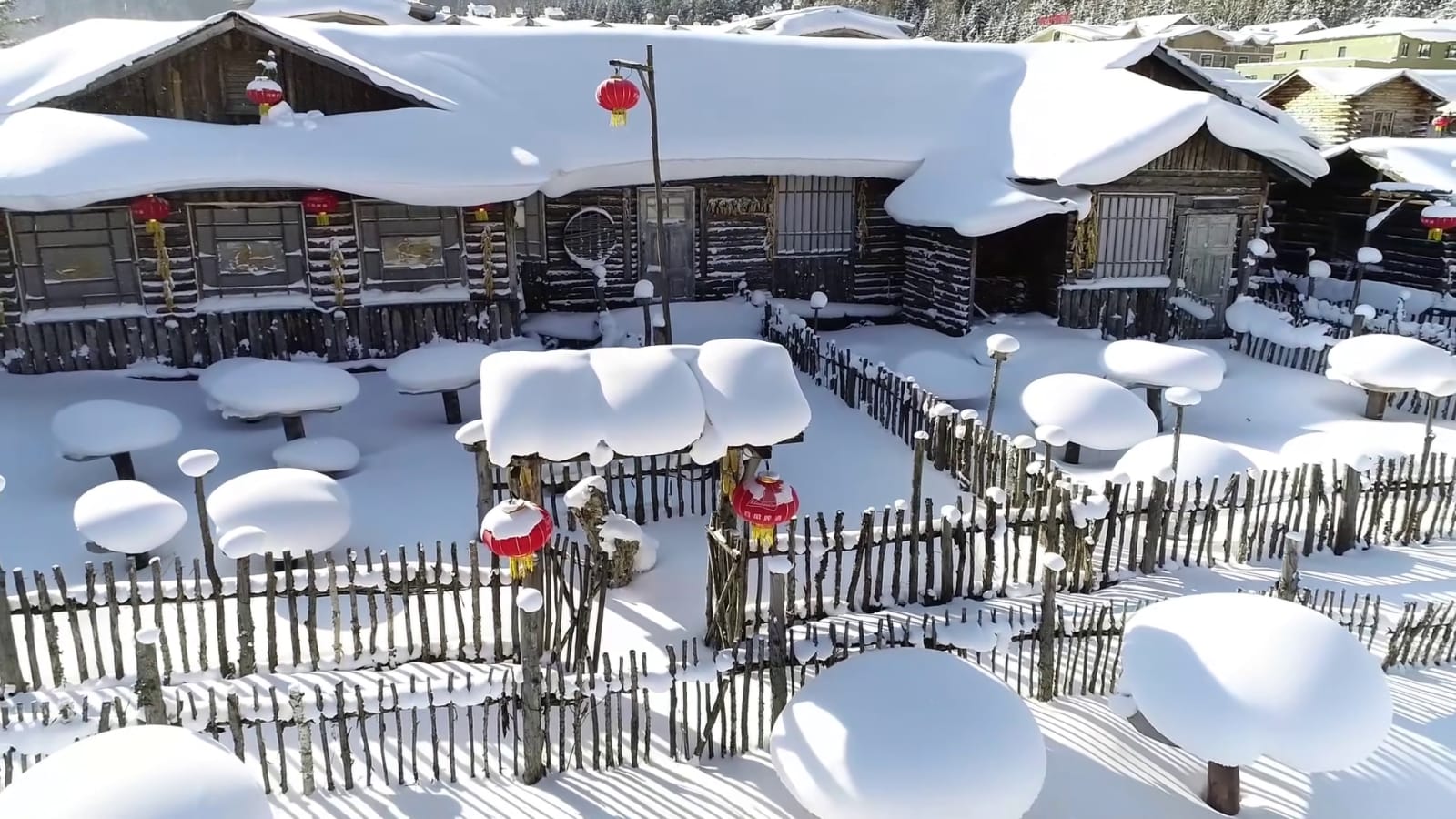
In Xuexiang, a scenic village in Heilongjiang province famed for its winter landscapes, upgraded roads and tourism development have transformed the area into a year-round destination, according to local officials.
During her travels in Sichuan province, ethnographer Zhang observed villagers supplementing their incomes through homestays and the sale of local produce.
The arrival of visitors brought not only economic benefits but also a renewed appreciation among younger residents for their hometowns.
“Some younger people I spoke to would also comment on appreciating these qualities about home,” Zhang said.
“Though most did not see it as possible yet to make a decent living there, they had hope that in the future, it might be.”
BEYOND THE RURAL FANTASY
Yet experts have cautioned against confusing social media portrayal’s rural life with reality.
“Urban tourists basically change to a rural location to enjoy similar kinds of consumption activities, without really seeing the agricultural side of the countryside,” said Zhang from SMU.
With social media awash with videos and posts of quaint vegetable gardens and picturesque homestays, rural living can appear to be an appealing antidote to stressful urban life but living in a rural township or village all year-round is very different – compared to visiting it for a weekend, Zhou said.
Many city dwellers enjoy the peace and quiet, but “might not get used” to rural living permanently because of differences in entertainment, healthcare, education and employment opportunities, Zhou said.
He pointed to the shortage of high-quality jobs and schools in many rural areas, along with continuing gaps in medical services and facilities.
While a growing number of villages and smaller townships might have clinics and basic healthcare facilities – medical services would still differ greatly from those available in larger cities, Zhou added.
Zhang from SMU also noted that many villages had become popular tourist destinations – featuring cafes, bakeries and other lifestyle businesses.
As a result, tourists often encounter a carefully curated version of village life and still remain largely disconnected from the toiling agricultural work that still sustains many rural communities.
Online, some who grew up in rural areas have pushed back against idealised portrayals of farming life.
One Xiaohongshu user, Quail, described farming and agricultural work as physically exhausting and far removed from the picturesque images often seen online.
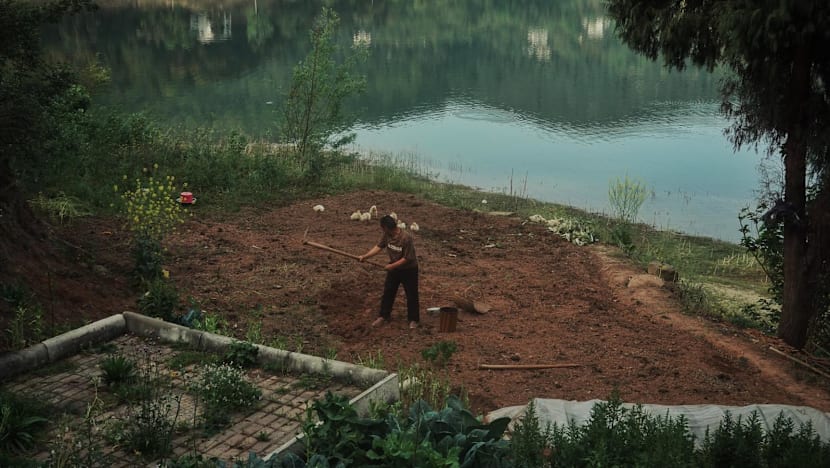
“You get blisters on your hands when using a garden hoe, cut your hands when harvesting wheat, and your skin feels like it will peel off from the blazing sun,” the user wrote.
Another user, WW, was even more blunt.
“Farming is tiring and you don’t earn a lot of money. Children who really come from the countryside would never yearn for rural life.”
One user, Miss Pink Rabbit, pointed out that those who yearn for the idyllic life may be those who aspire to have money and time for leisure.
“(What they want) is to grow some vegetables and fruits for themselves, not to make a living by farming.”
Source: CNA/lk(ht)
Sign up for our newsletters

Get the CNA app
Stay updated with notifications for breaking news and our best stories
Get WhatsApp alerts
Join our channel for the top reads for the day on your preferred chat app

Get bite-sized news via a new
cards interface. Give it a try.
Click here to return to FAST
Tap here to return to FAST
FAST