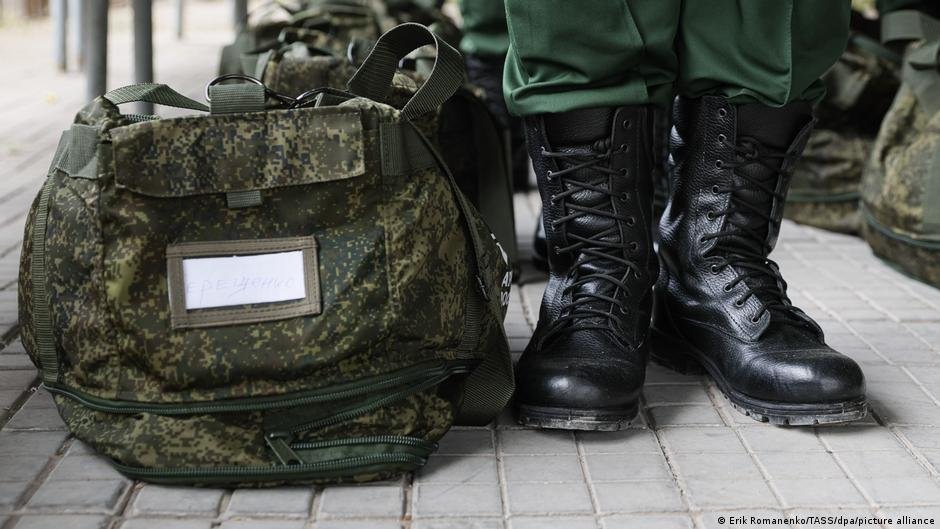
Nikita Zvezdov was just 15 years old when Russia launched its full-scale invasion of Ukraine in February 2022. He was drafted into the Russian military straight after his 18th birthday in April 2024. Shortly before that, he had been failed at a vocational school he was attending in Krasnoyarsk and he believes that his expulsion was deliberate.
Over the past few years there have been reports that Russian students were not only drafted into the army but also prevented from passing their exams or deliberately flunked, so their conscription could not be hindered. This information has not been verified.
In May 2024, after receiving his conscription notice, Zvezdov was assigned to military unit 25573 near Ussuriysk. Soldiers are frequently killed serving this unit and there have also been reports of harassment, extortion and beatings. On various internet forums, the unit is well known for its criminality.
Zvezdov said officers in the unit pressured him and other conscripts to commit to a longer period of service in the army. “I promised myself and my relatives that I would not sign a contract for the [conflict],” Zvezdov said, adding that he had never wanted to fight against Ukraine in the first place.
“They sent me to a training ground where they also did whatever they wanted — officers shot many conscripts in their legs, beat them up and punished them for everything they could and could not do,” Zvezdov continued. “Do 200 pushups in a gas mask and run 50 laps in a bulletproof vest with 25 to 30 kilos on top.”
Zvezdov said he started having suicidal thoughts and even tried to jump off a cliff, but was prevented from doing so by officers. After that, another officer forced him to sign a service contract.
The young man is not alone in this experience. The Russian military is experiencing personnel shortages and conscripts are regularly pressured to join for longer.
The mothers of a number of Russian soldiers told the Russian media outlet Astra, which operates mostly via its Telegram channel and which has been designated a “foreign agent “by the Russian government, that their sons were deceived or harassed until they signed contracts.
‘No choice but to run’
A month after signing his contract, Zvezdov was told he was being sent to units operating in Russian-occupied areas of Ukraine, near Melitopol, which were well-known for a high rate of casualties. “I realized that in principle I definitely have no choice but to run. You won’t be able to wait it out either,” he explained.
After Zvezdov got his first pay as a soldier — 40,000 Russian rubles (€450/$510) — the young man applied for leave, ostensibly in order to stock up on provisions before he left for the front. A former convict, who’d also been conscripted, was assigned to monitor him.
Zvezdov was supposed to check in with him via WhatsApp every few hours. But he was lucky — his minder didn’t pay all that much attention to the job. Zvezdov threw away his uniform and fled to Armenia.
He wasn’t actually classified as a deserter for another six months. By then Zvezdov had traveled further, first to Bosnia and Herzegovina, then onto Croatia, where he applied for political asylum.
But without waiting for a decision on his asylum application, the young Russian then moved on again, arriving in Germany in December 2025, where his grandfather lives. In Germany, he applied for asylum once again.
The German authorities rejected his application, citing the European Union‘s so-called Dublin rule, which means that the country where an asylum-seeker enters is the state responsible for their application. In Zvezdov’s case, this is Croatia.
Germany was supposed to send Zvezdov back to Croatia within six months; the deadline for that would be at the end of July 2026. If he is not sent back, responsibility for his asylum application returns to Germany.
However, according to human rights activists, Russian deserters have almost no chance of getting approved for asylum in Germany. That is despite the fact that the last German government, which was more politically left, had said in 2022 that conscientious objectors and deserters deserved protection.
But public statements made by politicians don’t make any difference to interpretations of the law, explained Alexey Kozlov, manager of human rights and research projects at Solidarus in Berlin, an organization that supports civil society in former Soviet Union states. Many similar applications have been rejected based on the rationale that deserters do not face a “real risk” of severe persecution or deployment to Ukraine upon return.
The Federal Office for Migration and Refugees, or BAMF, confirmed this. According to BAMF, every asylum application and the applicant’s risk of persecution is investigated on an individual basis.
Protection is granted only “if there is a real, individual and justified fear of persecution,” BAMF stated.
To view this video please enable JavaScript, and consider upgrading to a web browser that supports HTML5 video
Improvised prisons and torture chambers
In fact, there are hundreds of reports of Russian deserters being sent directly to the front lines and mistreated. Since the beginning of the Russian invasion of Ukraine, media outlet Astra has identified 29 illegal detention centers for Russian conscientious objectors, mostly in the Russian-occupied Ukrainian regions of Luhansk and Donetsk but also on Russian territory.
The improvised prisons are set up in basements, abandoned industrial buildings, camps, private homes and other structures. Thousands of Russian soldiers and Ukrainian citizens, including wounded and disabled individuals, have been held there. In the prisons, officers extort money from prisoners, urinate on them, starve them, beat, torture or even kill them.
According to Astra, the Russian military has set up something akin to a “torture chamber “in the Petrivka quarry in Donetsk.
“They bring the soldiers there with bags over their heads,” a former Russian soldier told Astra on condition of anonymity; he escaped from his unit in 2024. “They don’t feed them. If you want to go to the bathroom, they give you a bag and tell you to go. They hung us from the ceiling by our hands and feet.”
To view this video please enable JavaScript, and consider upgrading to a web browser that supports HTML5 video
The former deputy platoon leader was imprisoned there along with the men under his command because they refused to go to the front line. He said almost all his men were killed there.
According to figures from the Germany’s parliament, the Bundestag, a total of 126 people were deported back to Russia in 2025. Solidarus’ Kozlov said since Germany’s new coalition government took office a year ago, the already-slim chances of asylum for Russian deserters are now practically zero.
Church asylum delays deportation
As for Zvezdov, after he was denied asylum in Germany he managed to get what is known as “church asylum.”
Church asylum — or “Kirchenasyl” in German — happens when a congregation agrees to temporarily shelter refugees facing deportation. There is no legal right to church asylum in Germany but in practice, if a church grants somebody asylum, the state will often pause deportation proceedings and review the case.
Because of this, Zvezdov was able to move from a refugee camp to a church near Aachen, in the western state of North Rhine-Westphalia. There, he spends most of the day working in the kitchen or grounds; the move has allowed him to remain in Germany for now.
Back in the camp where he had had previously been living, the German police came to collect him on the night of June 16. Had he been there, he would likely have been deported to Croatia the next day.
Now the young Russian is counting the hours until July 30, when the responsibility for his asylum application will fall back to German authorities.
But should they reject his application, Zvezdov isn’t sure what he will do — most likely try to find refuge in a country outside of the EU, he said. He’s quite sure he won’t be able to go back to Russia for decades.
This article was originally written in Russian.
About The Author