September risks are stacking up hard and fast for world markets
A trader works on the floor of the New York Stock Exchange (NYSE) in New York City, U.S., August 21, 2026. REUTERS/Jeenah Moon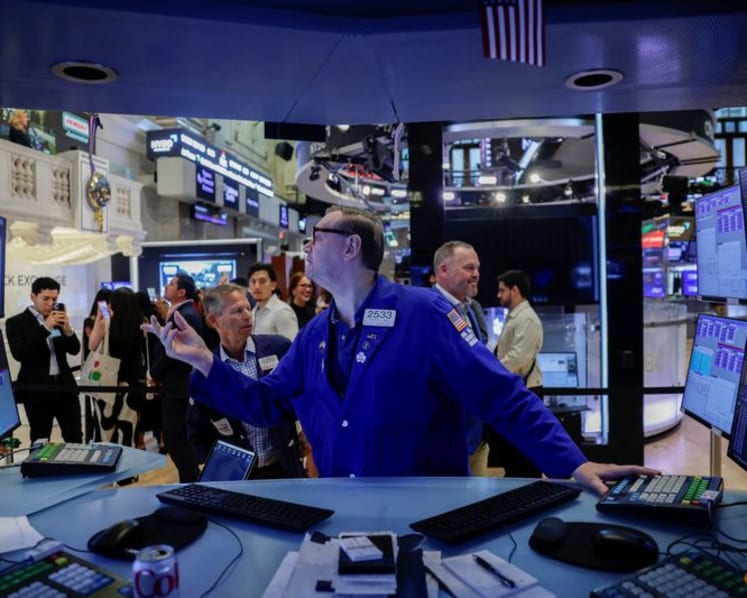
Read a summary of this article on FAST.
Get bite-sized news via a new
cards interface. Give it a try.
Click here to return to FAST
Tap here to return to FAST
FAST
LONDON, Aug 28 : Traders will return from their August breaks to a host of risks for markets, including rising concern about high government debt and prolonged inflation.
Here are some key things to watch.
1/ HOW MUCH LONGER?
The war with Iran has been a big driver of markets.

Guess Word
Crack the word, one row at a time

Buzzword
Create words using the given letters

Mini Sudoku
Tiny puzzle, mighty brain teaser

Mini Crossword
Small grid, big challenge

Word Search
Spot as many words as you can
Oil and gas prices have seesawed as traders try to assess whether, when, and how key waterways, notably the Strait of Hormuz, will open. The movements have boosted energy stocks and hurt big energy consumers, while the resulting higher inflation has hit government bonds.
Global growth has weathered higher prices, but market buffers that cushioned the initial shock are running low.
In the short term, talks between Iran and Oman to manage the Strait of Hormuz are the focus.
Investors with long horizons are mulling geopolitical and economic rebalancing, including potential pipelines avoiding Hormuz and new regional groupings, for example between Saudi Arabia, Pakistan and Turkey.
2/ FED, BOJ IN HOT SEAT
The U.S. Federal Reserve and the Bank of Japan meet in the same week, potentially creating a double dose of volatility.
What Chair Kevin Warsh says at the Fed’s September 16 meeting is as important as what the Fed does: markets see around a 40 per cent chance of a hike.
Warsh, who speaks at the Jackson Hole Symposium on Friday, believes it is important that the Fed takes its cues from the markets, but his sparse communication style has sowed confusion.
Recent U.S. Treasury intervention in bond markets that can dilute market signaling, complicates matters.
“How the Fed is going to communicate going forward is important because it impacts their overall credibility and global interest rates,” said St. James’s Place Chief Investment Officer Justin Onuekwusi.
In Japan, which recently intervened to strengthen the yen, markets expect a BOJ hike on September 18. Its signaling is also key.
“It’s all about the narrative and how hawkish the governor sounds,” said Hank Calenti, chief strategist, global markets at SMBC EMEA, adding the tone could change the shape of Japan’s bond yield curve.
Ten-year yields are nearing 3 per cent, their highest since the mid-1990s.
3/ AI OPTIMISM GETS THE ANTHROPIC TEST
Anthropic is likely to be the next mega-cap tech firm to list publicly, following the mammoth SpaceX IPO in June.
It hopes to raise as much as $100 billion, reports say, which could prove another risk to the AI trade as markets absorb surging big-tech bond salesto fund capital expenditure.
“When it comes to Anthropic and OpenAI, there will probably be massively frothy valuations,” said Rory Dowie, multi-asset portfolio manager at Marlborough, in a nod to both companies’ IPO prospects.
Anthropic was valued at $965 billion in May. A $1 trillion IPO valuation would make it one of the world’s largest listed companies.
“If investor appetite for this theme falters even briefly, there is no diversification cushion,” said Violeta Todorova, senior research analyst at Leverage Shares.
“The read-through hits Nvidia , Microsoft and every stock already priced for AI infrastructure demand, not just the new listings.”
4/ SHOWDOWN FOR FRANCE
The French government should submit a draft budget to the National Assembly in weeks.
A battle looms as the government seeks to keep the deficit under control ahead of 2027’s presidential election that polls suggest could favour the far right.
“There is risk of OAT (French bond) yields moving up,” said Zurich Insurance Group Chief Economist Guy Miller. “But we don’t think it’s to the extent that really undermines the construct of euro debt.”
Germany’s bonds could also struggle as Chancellor Friedrich Merz faces a series of state elections. His popularity is low after several political blunders, and the far-right AfD could outperform Merz’s party in some votes.
5/ BURNHAM’S BRITAIN
New British Prime Minister Andy Burnham’s policies haven’t worried markets much, though his efforts to boost growth given constrained finances could change that.
The October budget and the Labour Party Conference in September are tests for Burnham and new finance minister John Healey.
Britain’s 10-year borrowing costs are elevated but have edged down from 18-year peaks hit in May.
The scars of the 2022 mini-budget crisis may restrain the new government. Burnham says he will stick to UK fiscal rules.
“There is a risk they try and push the envelope, and I think that would be a mistake,” said Berenberg senior UK economist Andrew Wishart.
6/ ELECTION SEASON
Campaigning for November’s U.S. midterms traditionally heats up in September, and could affect policy.
Consumers are eyeing the gasoline price, pushed above $4 a gallon on average by the Iran war, from below $3 in January.
President Donald Trump told Americans this month it is worth higher prices to defeat Iran, but some analysts suspect he wants the price to fall before Americans vote.
Jefferies chief European economist Mohit Kumar also links the election to Treasury Secretary Scott Bessent’s efforts to lower borrowing costs.
The “Trump administration cannot afford higher long-term rates going into the midterms as mortgages are tied to the long end of the (Treasury) curve.”
Source: Reuters
Sign up for our newsletters

Get the CNA app
Stay updated with notifications for breaking news and our best stories
Get WhatsApp alerts
Join our channel for the top reads for the day on your preferred chat app

Get bite-sized news via a new
cards interface. Give it a try.
Click here to return to FAST
Tap here to return to FAST
FAST