SMRT’s new AI-powered bus control centre flags sleepy drivers, harsh braking
More than 1,500 fatigue alerts have been flagged since last year.
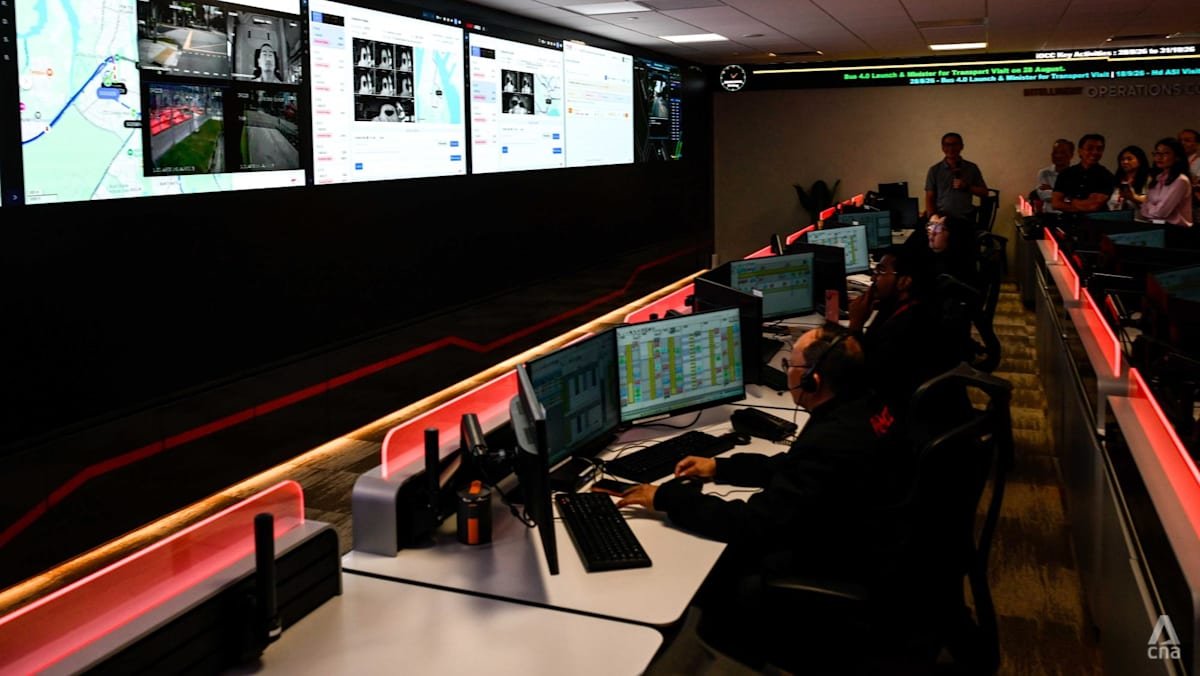
Onboard CCTV footage from a bus is broadcast onto screens at SMRT’s Intelligent Operations Control Centre at the Gali Batu Depot, Aug 28, 2026. (Photo: CNA/ Wallace Woon)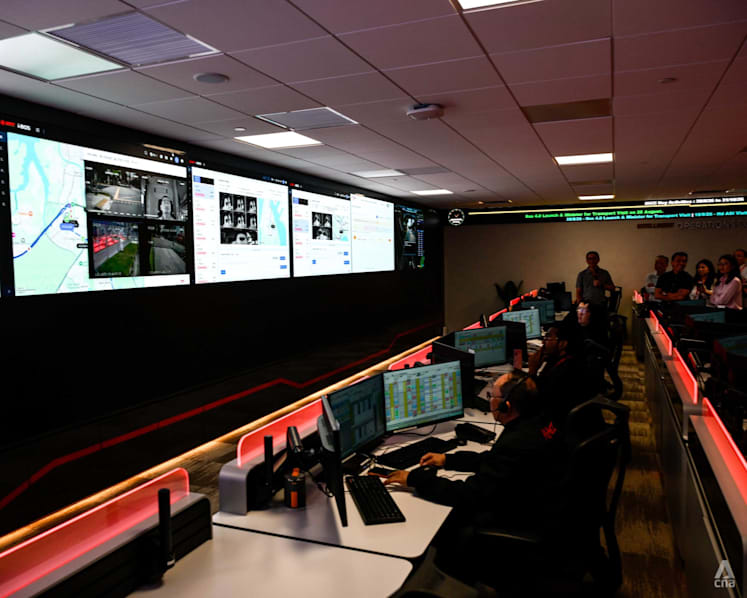
New: You can now listen to articles.

This audio is generated by an AI tool.

Read a summary of this article on FAST.
Get bite-sized news via a new
cards interface. Give it a try.
Click here to return to FAST
Tap here to return to FAST
FAST
SINGAPORE: A new bus control centre flags risks such as drowsy drivers, harsh braking and vehicles encroaching into bus lanes to ensure safer rides for commuters.
Dubbed Bus 4.0, the S$6 million (US$4.7 million) initiative by public transport operator SMRT was launched by Transport Minister Jeffrey Siow on Friday (Aug 28) at Gali Batu Depot, where the new control centre has been operational since June.
It oversees more than 1,200 buses from three of SMRT’s four depots – Soon Lee Bus Depot, Woodlands Depot and Gali Batu Depot – with Kim Chuan Depot in Serangoon to be added later.
The centre runs on “intelligent operations” that use artificial intelligence to monitor buses and passengers.

Guess Word
Crack the word, one row at a time

Buzzword
Create words using the given letters

Mini Sudoku
Tiny puzzle, mighty brain teaser

Mini Crossword
Small grid, big challenge

Word Search
Spot as many words as you can
An on-board camera trained on the driver detects signs of drowsiness such as prolonged eye closure, yawning and head nodding, sending real-time alerts to the control centre.
Service controllers assess the frequency and severity of the alerts and can radio the driver to stay alert, or in severe cases, ask them to stop their journey for the day.
Other alerts could also be raised when a bus follows another vehicle too closely, or brakes or accelerates too harshly.
“With a clearer view of the operations, (the service controllers) can identify risks early and act early before commuters are affected,” SMRT said. “This helps prevent incidents instead of responding only after they occur.”
The fatigue monitoring system was rolled out in February last year, and SMRT said it has recorded over 1,500 instances where bus drivers appeared fatigued and were alerted.
The system has also helped supervisors understand why individual drivers face fatigue, allowing them to adjust driving schedules.
An AI-enabled sensor also detects when a wheelchair user boards a bus. Once detected, a video of the user is sent to the service controller, who can check if the wheelchair is parked and secured properly. If not, the controller can alert the bus driver before the bus moves off – a check that previously relied solely on the driver’s visual assessment.
The system will eventually be extended to prams.
The centre also monitors service irregularities such as bus bunching, when the same bus service arrives consecutively, and use AI to track fleet condition and recall buses for inspection and repairs before breakdowns occur.
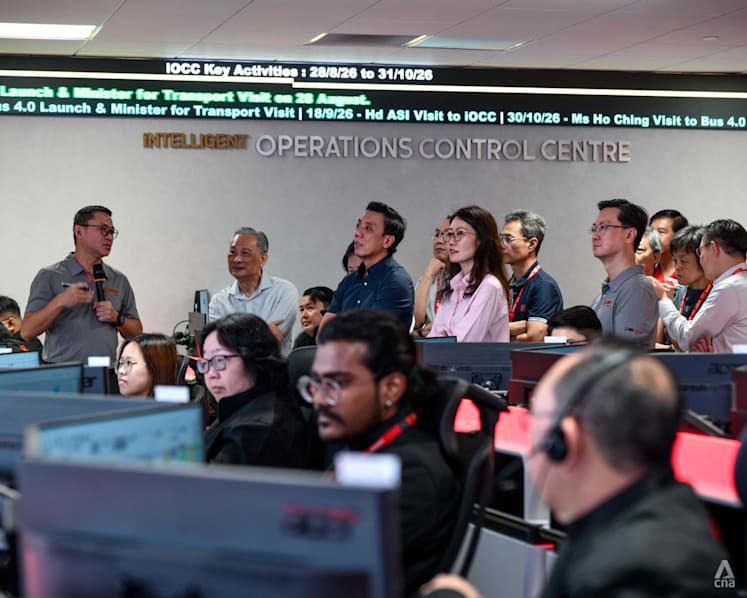
SMRT chairman Seah Moon Ming said in a speech on Friday that the new system highlights “only what needs attention”, as opposed to a controller staring at a thousand buses on a screen.
“This is the shift: from watching everything to knowing where to look and when to act. We move from monitoring everything to managing what matters,” he said.
WHAT THIS MEANS FOR BUS DRIVERS
Before the various new features were put in place, safety issues largely had to be uncovered by the bus driver or retrospectively addressed after commuter feedback.
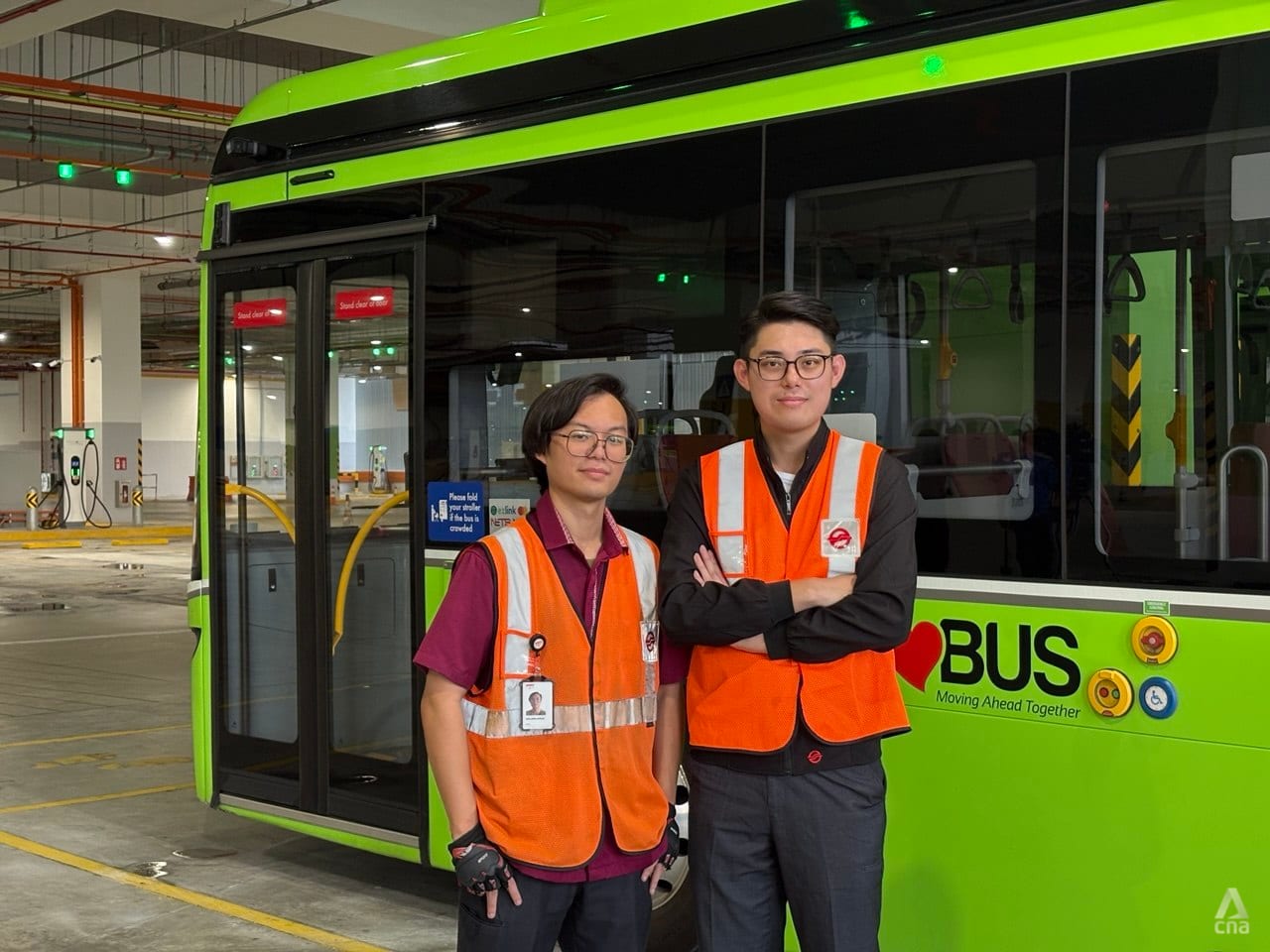
Bus driver Jayrius Ong, 23, said he welcomed the increased scrutiny for the sake of safety.
“Many people will think that maybe these cameras are a bit intrusive in a few ways, but to me, it’s just another way that our service controllers can take a look at us and monitor our driving conditions,” he said.
“In turn, it will make us feel a bit safer. There’s a pair of eyes above us, always watching over us.”
Drivers are further incentivised through an app that deducts points whenever they trigger safety alerts. Those with higher points can earn up to S$600 in vouchers annually.
Mr Ong said he had seven safety alerts during a journey earlier this month, which led to point deductions, but none on a subsequent ride. “All of this is helping me improve to become a safer driver,” he said.
Before the new system was in place, service controllers manually tracked closed-circuit television feeds and relied heavily on driver updates.
“With their attention spread across multiple systems and information sources, maintaining network-wide situation awareness was more challenging, and emerging issues could be missed,” SMRT said.
Controllers will receive a monthly S$160 skills allowance for the added responsibility of assessing risks. Service controller Jason Chong said the system helps forecast and prevent incidents.
“It reduces our mental load, so we don’t need to conduct searches and do it all manually because the system will prompt (us with) the AI recommendations,” he said.
“We spend more time intervening on issues before the problems get big.”
BUS LANE VIOLATIONS
AI-enabled cameras and video analytics also detect suspected bus lane violations, with details such as the vehicle’s licence plate, location and timestamp captured as evidence.
Previously, such violations relied on driver observation and reports, with footage reviewed manually before a report was filed.
The cameras can also spot road hazards such as foreign objects.
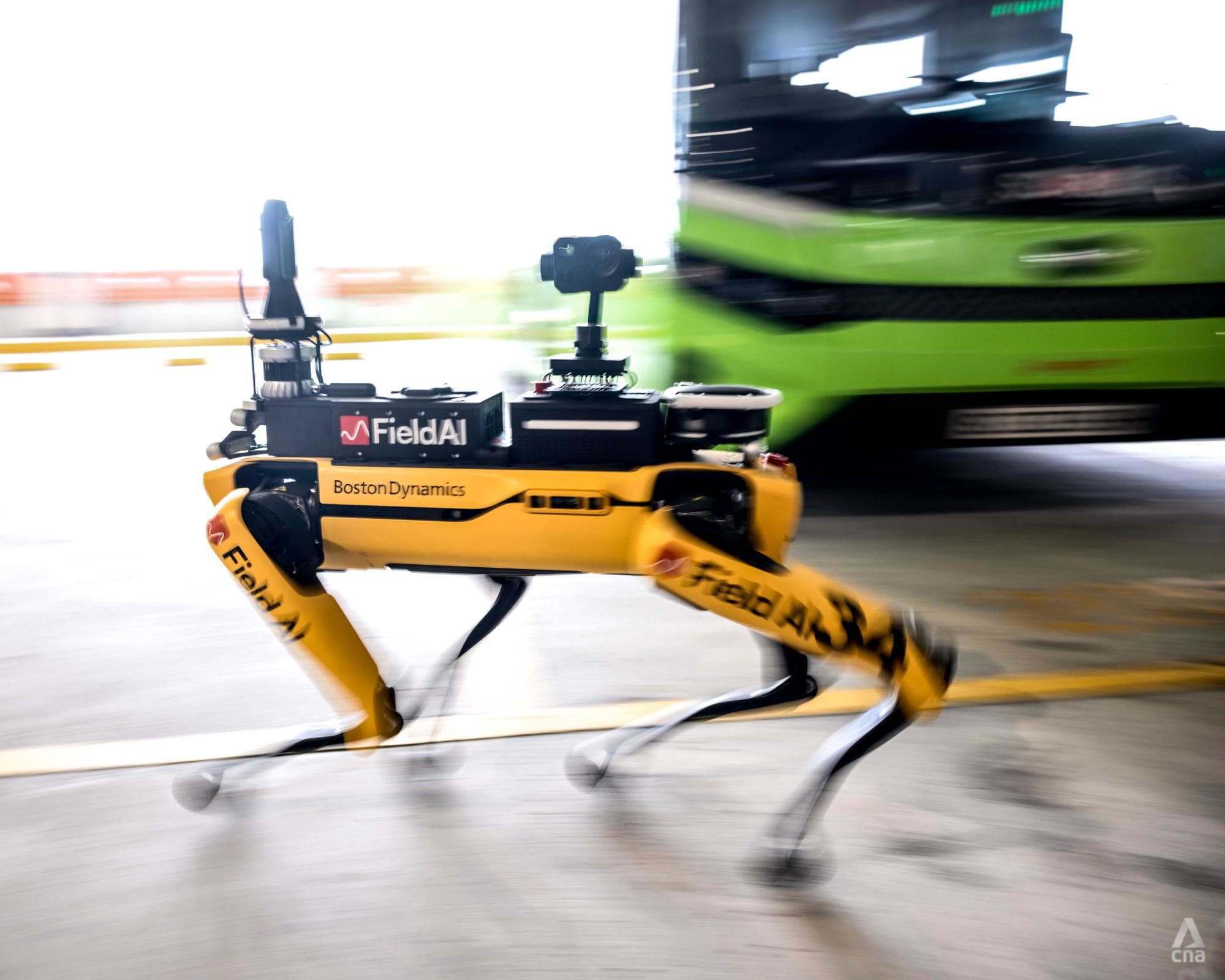
At the depot, a new “surveillance robot dog” has been rolled out for fire safety and surveillance.
CNA observed the robot prowling the depot, using infrared sensors to monitor buses and electric bus charging areas for abnormal heat.
“This provides early warning of potential overheating so depot teams can intervene promptly and strengthen fire safety,” SMRT said.
Source: CNA/jx(cy)
Sign up for our newsletters

Get the CNA app
Stay updated with notifications for breaking news and our best stories
Get WhatsApp alerts
Join our channel for the top reads for the day on your preferred chat app

Get bite-sized news via a new
cards interface. Give it a try.
Click here to return to FAST
Tap here to return to FAST
FAST
About The Author