Snap Insight: US, Iran back to square one with plenty of room for further escalation
By declaring the US-Iran MOU as “over” yet leaving open the possibility of continued negotiations with Iran, US President Donald Trump has absolved himself of responsibility for future talks, says James M Dorsey from the S Rajaratnam School of International Studies.
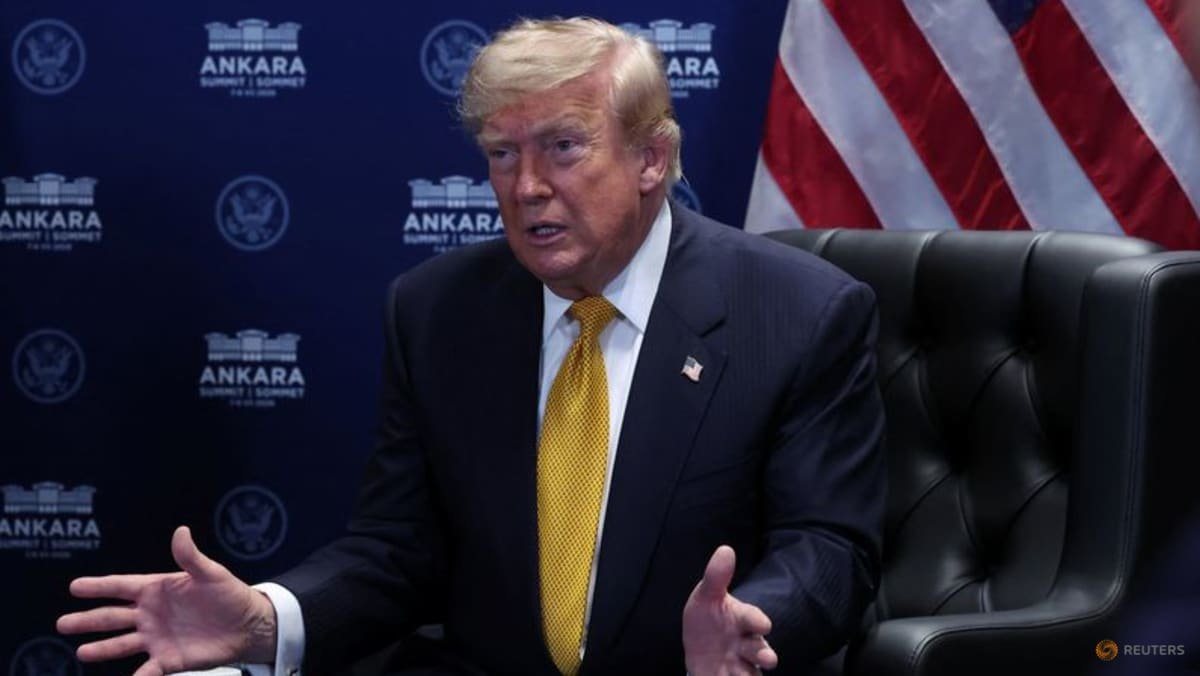
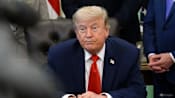
United States President Donald Trump speaks during a meeting with North Atlantic Treaty Organization (NATO) chief Mark Rutte on the sidelines of the NATO summit in Ankara on Jul 8, 2026. (Photo: Reuters/Filip Singer)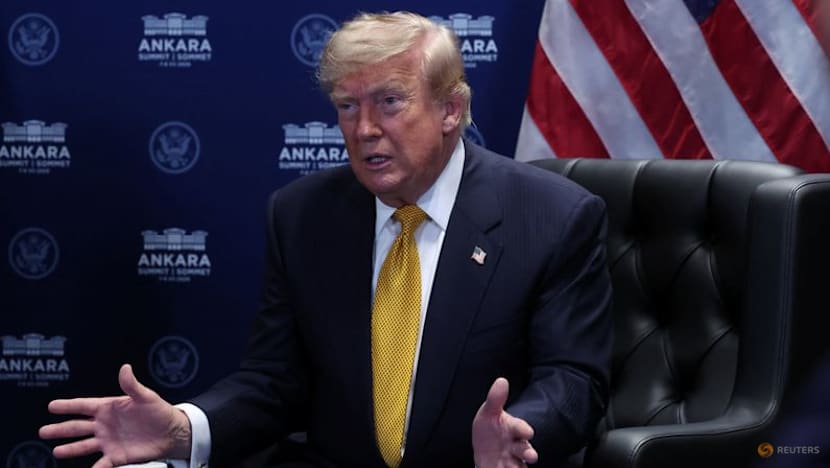
New: You can now listen to articles.

This audio is generated by an AI tool.

Read a summary of this article on FAST.
Get bite-sized news via a new
cards interface. Give it a try.
Click here to return to FAST
Tap here to return to FAST
FAST
SINGAPORE: At first glance, United States President Donald Trump has dealt a death knell to the ceasefire in the Middle East when he said on Wednesday (Jul 8) that the memorandum of understanding (MOU) signed with Iran just three weeks ago was “over”.
But much like Iranian Supreme Leader Mojtaba Khamenei did when he said he approved the peace accord despite having a “different opinion”, Mr Trump did not slam the door shut.
Even as he denounced Iran’s current leaders as “scum”, “liars” and “sick people”, Mr Trump held out the possibility that his negotiators, Steve Witkoff and Jared Kushner, would continue talking to their Iranian counterparts. In doing so, he has absolved himself of responsibility for further talks and set Mr Witkoff and Mr Kushner up as potential fall guys.
Similarly, the US Treasury earlier on Tuesday reimposed sanctions on Iranian oil as the US launched a wave of military strikes on Iran in response to attacks on tankers traversing the Strait of Hormuz through Omani rather than Iranian territorial waters.

Guess Word
Crack the word, one row at a time

Buzzword
Create words using the given letters

Mini Sudoku
Tiny puzzle, mighty brain teaser

Mini Crossword
Small grid, big challenge

Word Search
Spot as many words as you can
But the US Treasury stopped short of reviving the US blockade of Iranian ports. So did Mr Trump until late on Wednesday when he told reporters that he may reimpose a naval blockade of Iranian ports while warning that the US could launch new strikes on Iran.
Reimposing the naval blockade would complicate past successful Iranian efforts to circumvent the sanctions.
AN INEVITABLE BREAKDOWN IN TALKS
A breakdown in US-Iranian negotiations was almost inevitable as both parties interpreted the MOU differently.
Iran reads the first half of the memorandum’s Article 5 stipulation that it “make arrangements … for the safe passage of commercial vessels with no charge for 60 days” as confirmation of its legitimate control of the strait. That is why Iran sees US encouragement of shipping through Omani waters as an effort to deprive it of its greatest asset in the negotiations and most effective tool to deter future attacks.
Iran has, so far, refrained from acting on the second half of Article 5 that obliges it to “define the future administration and maritime services in the strait” in discussion with not only Oman, which stretches along the southern coast of the strait, but also the other Gulf littoral states. It has held inconclusive talks with Oman since signing the MOU but has yet to involve the Gulf states and Iraq.
Iran’s claim that it has a right to control the strait has been in the making for decades. For example, despite signing the United Nations Convention on the Law of the Sea (UNCLOS) in 1982, which guarantees that “all ships and aircraft have the right of transit passage” in waters considered international waterways, it has delayed ratification, while insisting that the convention does not apply to non-parties. The Iranian parliament went a step further in 1993 by passing legislation that defined the strait as Iranian territorial water.
For its part, the US, supported by the Gulf states, insists that the strait is an international waterway and should revert to its pre-war status, with no Iranian control over which ships can pass through and no levying of fees or tolls.
ON A SLIPPERY SLOPE
Even so, the US and Iran are on a slippery slope despite neither wanting a return to all-out war. In particular, the US reimposition of oil sanctions, more than the most recent tit-for-tat strikes and Mr Trump’s latest remarks, potentially puts the warring sides on a path to renewed conflict.
Imposing the oil sanctions is easy; lifting them may prove more difficult.
How Iran responds to Mr Trump’s statements is the joker in the pack. Iran is likely to demand a lifting of the oil sanctions before anything else can be discussed.
That returns Iran and the US to square one and the question of who blinks first, leaving plenty of room for further escalation.
Dr James M Dorsey is an Adjunct Senior Fellow at Nanyang Technological University’s S Rajaratnam School of International Studies, Associate Editor of WhoWhatWhy, and the author of the syndicated column and podcast, The Turbulent World with James M Dorsey.
Source: CNA/sk
Sign up for our newsletters

Get the CNA app
Stay updated with notifications for breaking news and our best stories
Get WhatsApp alerts
Join our channel for the top reads for the day on your preferred chat app

Get bite-sized news via a new
cards interface. Give it a try.
Click here to return to FAST
Tap here to return to FAST
FAST