South Korea said on Thursday that it would recall its ambassador to Ukraine amid a deepening diplomatic rift over making the transfer of North Korean prisoners of war to Seoul public last month.
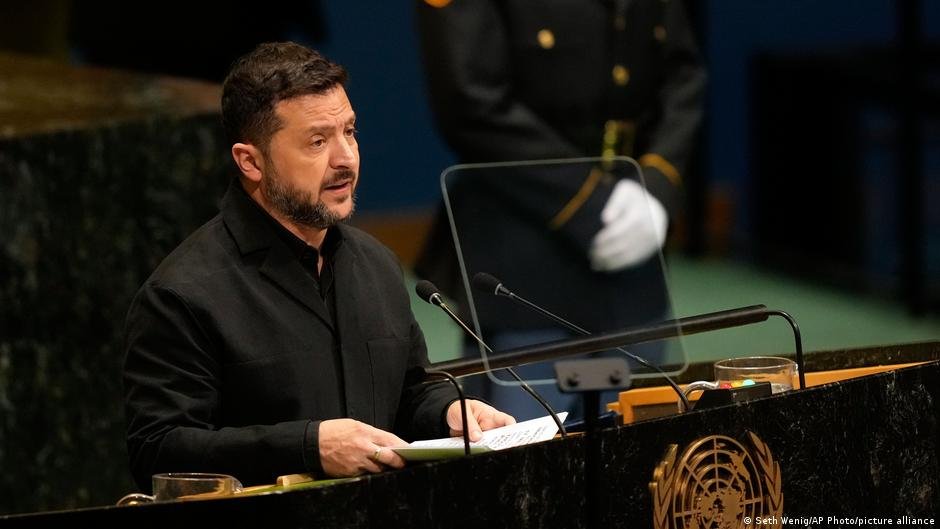
The two countries have been at loggerheads since Ukrainian President Volodymyr Zelenskyy’s speech at the UN General Assembly, during which he spoke about the capture and later the transfer of two North Korean soldiers who had been fighting against Ukraine alongside Russian forces.
South Korea has called for an apology from Ukraine, saying the comments breached a confidentiality agreement and could put the POWs’ families still in North Korea at risk.
Kyiv, meanwhile, has said no such agreement existed and voiced a desire to smooth over a “diplomatic understanding,” but stopped short of apologizing.
What did South Korea’s Foreign Ministry say about recalling its ambassador?
“The govenment has decided to recall its ambassador to Ukraine,” Seoul’s Foreign Ministry said on Thursday.
“The government hopes that all outstanding issues between the two countries will be resolved amicably and wil continue consultations with the Ukrainian side to that end,” it said.
Last week, President Lee Jae Myung called for a “public apology” from Kyiv and said South Korea would take “additional measures” if one was not forthcoming. He said that during the prisoner swap, “the Ukrainian side demanded confidentiality and agreed to it, but unilaterally disclosed it.”
When challenged with what Myung described as “utmost courtesy,” he said Kyiv instead denied the existence of a confidentiality agreement, making him out to be a liar, and spoke of the prospect of war on the Korean peninsula.
Ukraine’s Foreign Minister Andrii Sybiha, meanwhile, had spoken of a “diplomatic misunderstanding” that he said “we sincerely hope to resolve.”
To view this video please enable JavaScript, and consider upgrading to a web browser that supports HTML5 video
Bilateral tensions also emerged this week amid the publication of an investigative report in The Guardian claiming that fuel was being shipped to Russia from South Korea via sanctioned tankers, alleviating the strains on diesel supplies amid Ukraine targeting Russian refineries and other oil infrastructure.
South Korea has walked a fine line on Russia’s war in Ukraine, providing humanitarian and non-lethal equipment to Kyiv, as well as financial assistance, but also seeking to maintain cordial ties with Russia, which has a small stretch of border with North Korea near Vladivostock.
North Korea, meanwhile, sent troops to help Russia reclaim the border region of Kursk that Ukraine was able to partially occupy, and has since celebrated this deployment at home with much fanfare, while seeking closer ties to Putin’s Russia.
Edited by: Elizabeth Schumacher
If you rely on our team for trusted reporting, please take a moment to select us as your Preferred Source on Google, so you’ll always see our verified news first.