Spacecraft bound for Mercury begins ‘tricky’ arrival
A high-risk final approach to Mercury begins as BepiColombo splits from its transfer module after travelling 10 billion km over eight years.
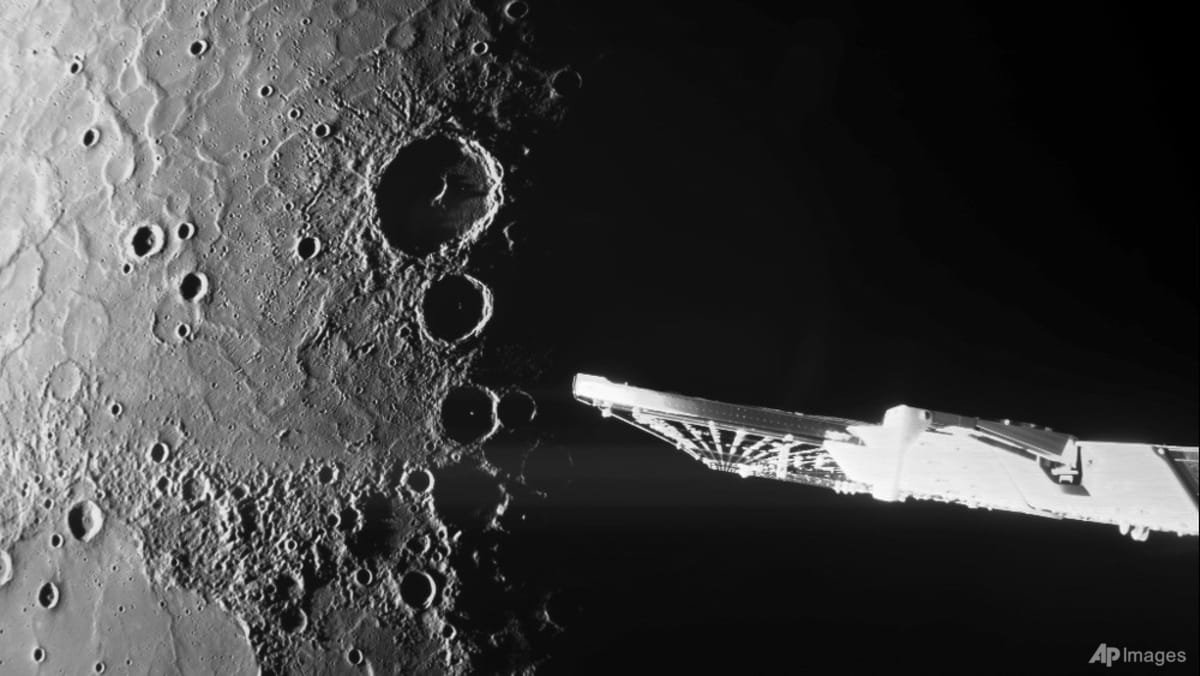
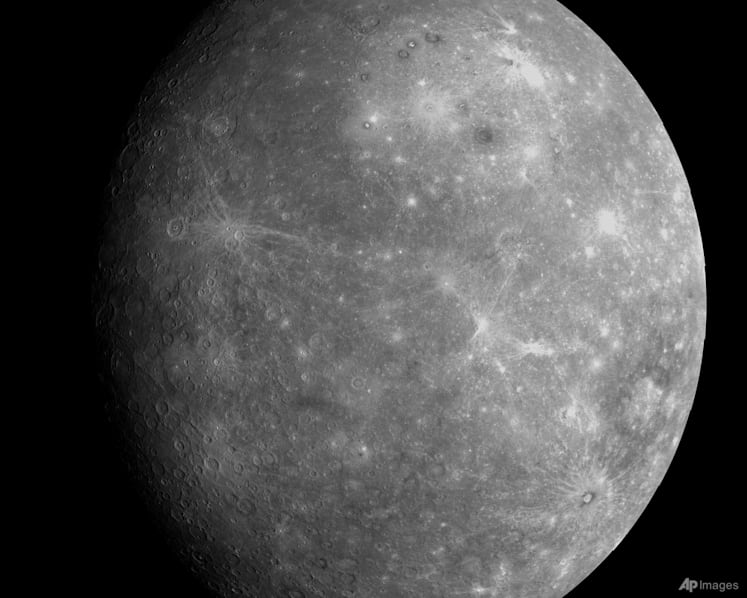
An undated image provided by the European Space Agency shows close-up photos of Mercury’s north pole captured by the European-Japanese spacecraft BepiColombo. (Photo: ESA via AP, File)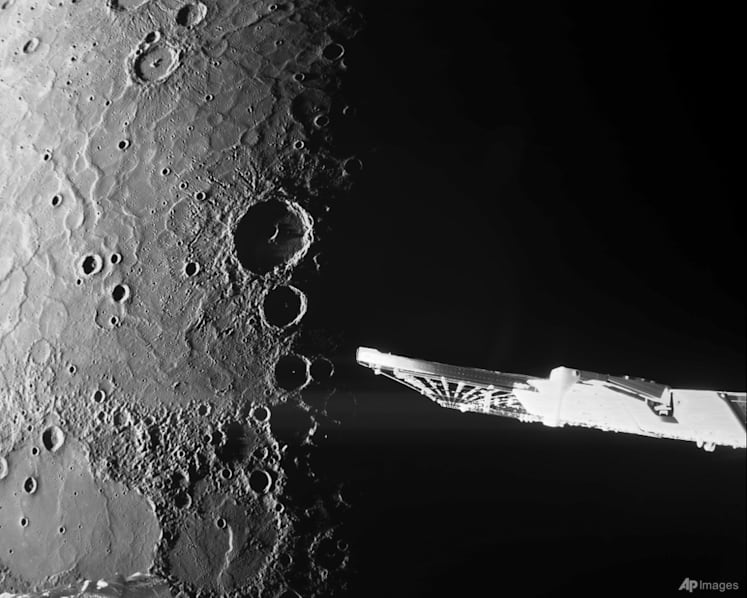
Read a summary of this article on FAST.
Get bite-sized news via a new
cards interface. Give it a try.
Click here to return to FAST
Tap here to return to FAST
FAST
CAPE CANAVERAL: After an eight-year journey, a spacecraft carrying European and Japanese probes began the months-long, high-risk approach to Mercury on Thursday (Sep 3) to study the Sun-scorched planet.
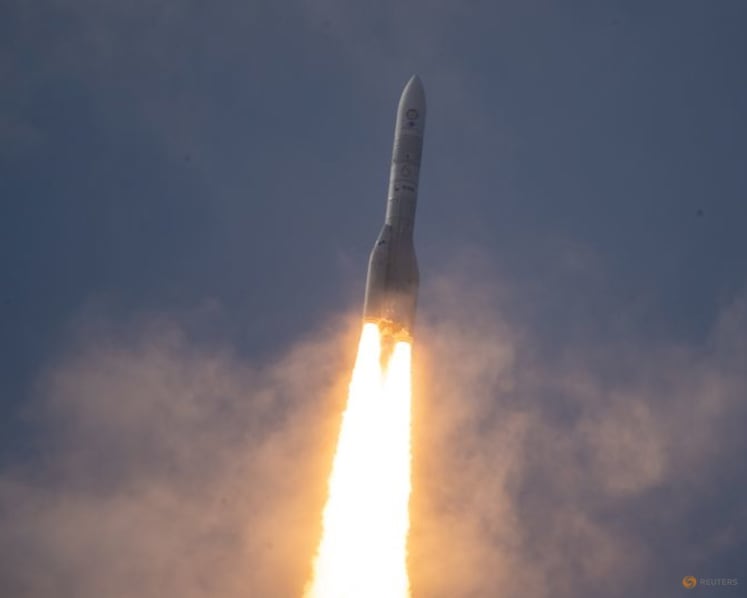
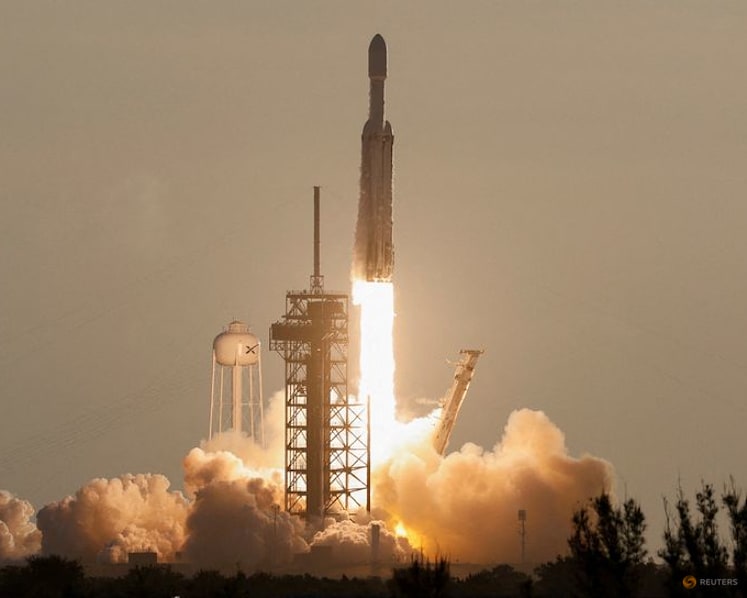
The BepiColombo mission set off from Earth in 2018 on a winding path to study the smallest and least understood planet in our Solar System with the aim of releasing the two probes into its orbit.
On Thursday, it began its arrival phase, described by the European Space Agency (ESA) as its “most operationally challenging planetary arrival sequences ever attempted”.
Mercury’s relatively tiny mass – it is only slightly bigger than the Moon – means its gravitational pull is extremely weak compared to the Sun, making it complex for spacecraft to approach the planet without ending up incinerated or lost in space.

Guess Word
Crack the word, one row at a time

Buzzword
Create words using the given letters

Mini Sudoku
Tiny puzzle, mighty brain teaser

Mini Crossword
Small grid, big challenge

Word Search
Spot as many words as you can
“It’s a very ambitious mission,” Santa Martinez, the mission manager at ESA, told a press conference ahead of its arrival.
The spacecraft had to travel more than 10 billion kilometres (miles), executing a series of nine flybys, to speed up, slow down and perfect its trajectory.
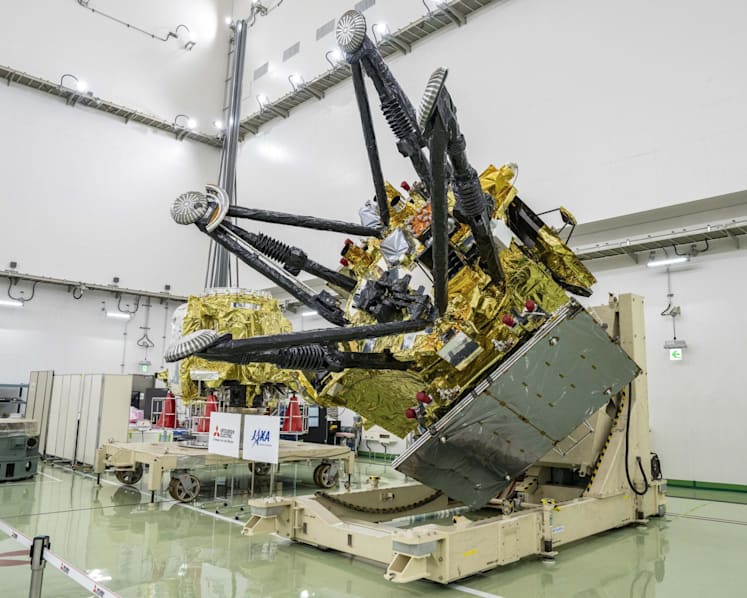
The two probes, which are attached to each other, finally separated on Thursday from the transfer module that has propelled them – a crucial first step in the final approach.
It was the equivalent of “launching a new spacecraft. Only this spacecraft happens to be around a different planet,” explained Ignacio Tanco, ESA’s head of inner solar system mission operations, before the separation began.
ALL WENT TO PLAN
On Thursday, Mercury was some 63 million km from the Sun and 200 million km from Earth.
“At these distances… any real-time operation becomes impossible,” Tanco said, explaining there was about a 30-minute delay between checks being performed and commands being executed from the ground to the craft.
It means the spacecraft had to check and execute the separation autonomously – a “tricky business,” Tanco said.
But all went to plan.
The spacecraft autonomously cut the four mechanical struts connecting the orbiters to the module.
Spring mechanisms then gently pushed them away.
The separation took place at a speed of 40 centimetres (16 inches) per second, leaving the two entities relatively close given the vastness of space.
Due to the distance between the probes and Earth, the signal confirming the operation’s success reached the control centre in Darmstadt, Germany, nearly two hours later, at 1353 GMT, sparking rounds of applause and cheers.
“This is the best-case scenario: that the telemetry comes exactly at the moment we expect it,” said Elsa Montagnon, in charge of module operations at ESA.
“The spacecraft has completed its reconfiguration as expected,” she said happily.
The probes are due to come into Mercury’s orbit on November 21.
The next tricky phase will come on December 9 and 10, when the two probes separate into their respective orbits.
PLANET CLOSEST TO THE SUN
From April, the ESA’s Mercury Planetary Orbiter (MPO) will begin studying the planet closest to the Sun with unprecedented precision, passing just 480 km from its surface.
The Japanese Mercury Magnetospheric Orbiter (Mio) will focus on its space environment and magnetic field, following an elliptical orbit that will carry it as far as 11,000 km away.
Mercury is the least studied of the four rocky, innermost planets in our solar system, which include Venus, Earth and Mars.
NASA’s Mariner 10 was the first probe to capture a close picture of its lunar-looking surface in 1974.
The MESSENGER probe then orbited the planet in 2011.
But many mysteries remain about its magnetic field, iron core and surface marked by hollows.
With its 16 instruments and 1.7-billion-euro ($2.0-billion) budget, BepiColombo “is going to bring to humanity and to the scientific community unprecedented views of Mercury… and it’s going to open a new chapter in our understanding of the solar system”, Martinez said.
Science observations should begin next spring, with the European Space Agency covering most of the mission’s $2 billion (1.7 billion euros) cost.
Source: Agencies/fs
Sign up for our newsletters

Get the CNA app
Stay updated with notifications for breaking news and our best stories
Get WhatsApp alerts
Join our channel for the top reads for the day on your preferred chat app

Get bite-sized news via a new
cards interface. Give it a try.
Click here to return to FAST
Tap here to return to FAST
FAST