‘This is our home’: The women fighting a company’s land claim on Indonesia’s Pari Island
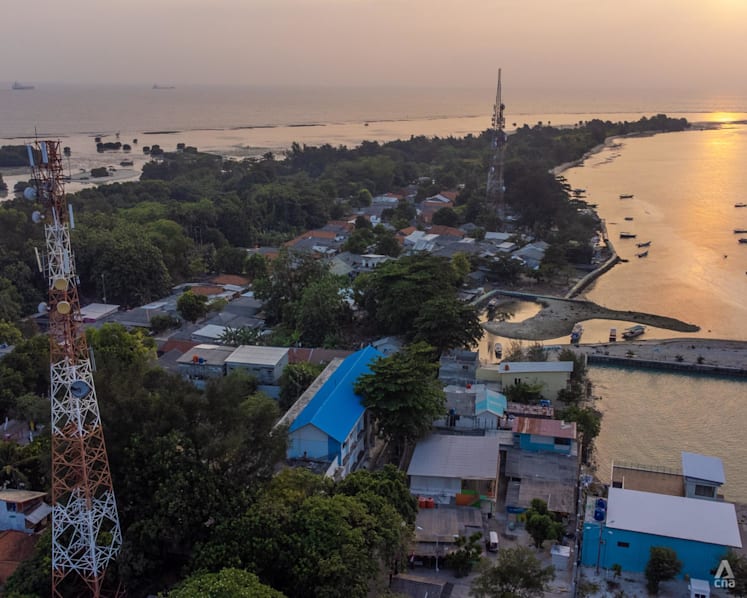
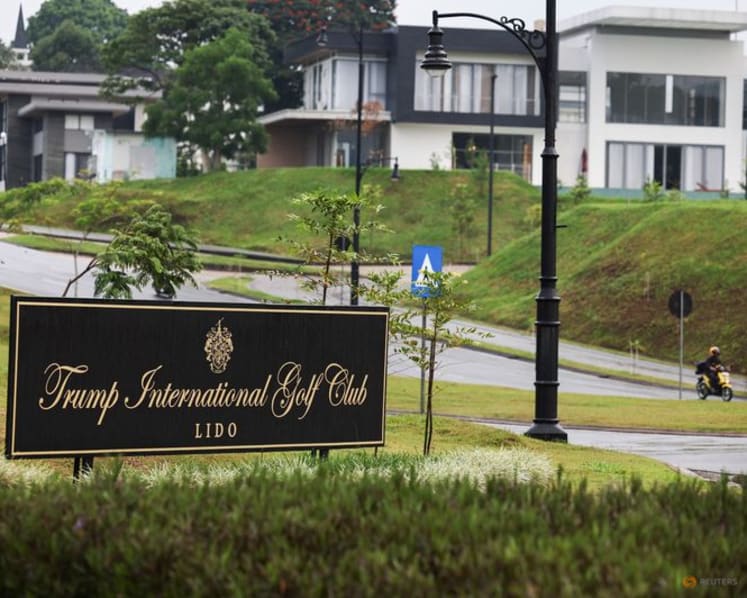
Pari Island is at the centre of a decade-long land dispute which has seen local residents attempting to defend their community land rights against PT Bumi Pari Asri which says it owns about 90 per cent of the island via freehold certificates and right-to-build permits.
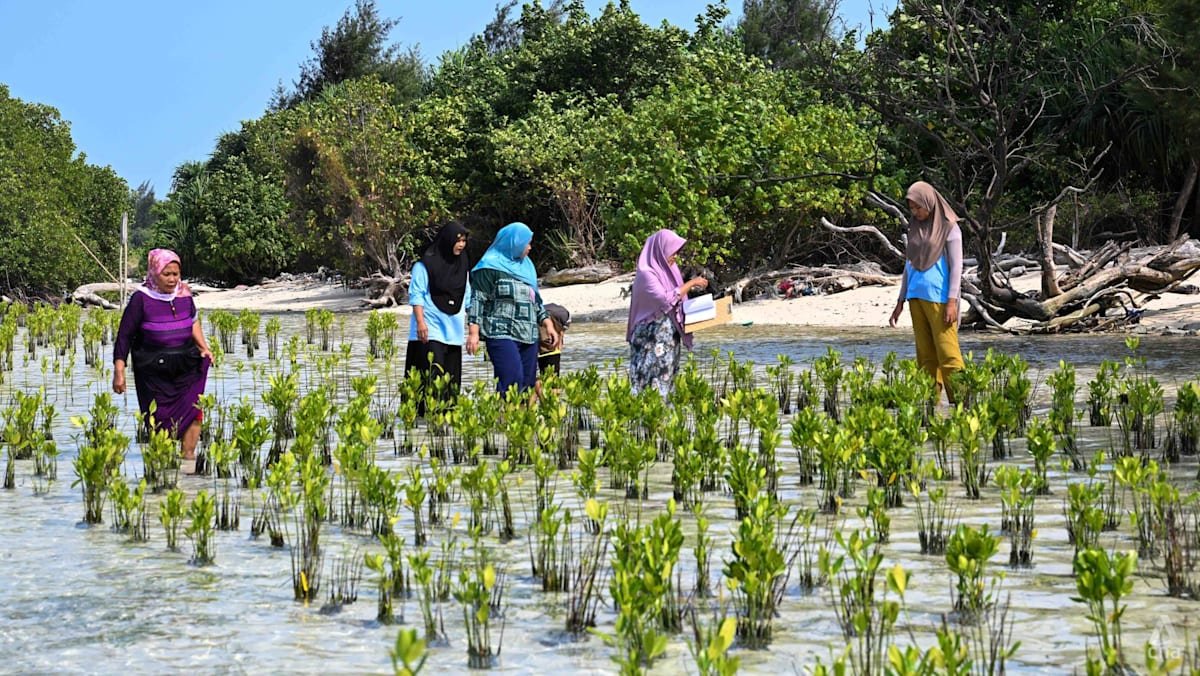
Members of Pari Island Women’s Group monitor mangrove saplings they planted a few months earlier in shallow coastal waters on Pari Island, on Aug 7, 2026. (Photo: CNA/Ridhwan Siregar)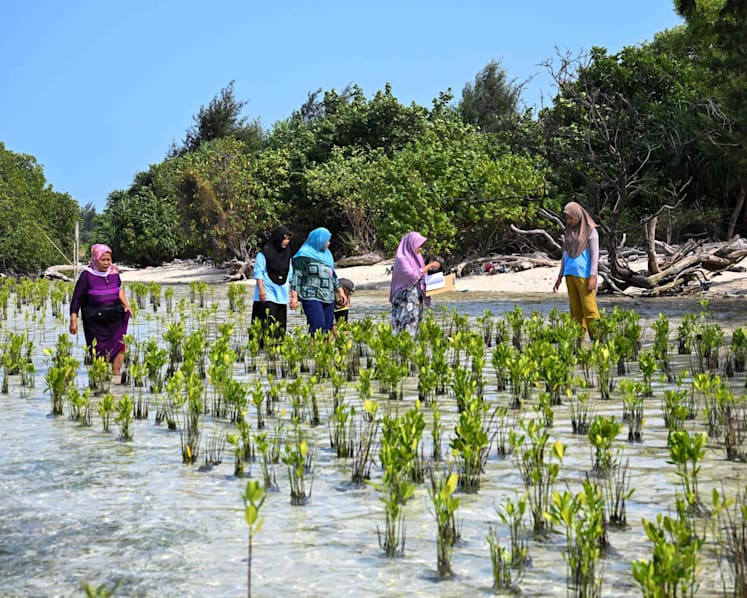
New: You can now listen to articles.

This audio is generated by an AI tool.

Read a summary of this article on FAST.
Get bite-sized news via a new
cards interface. Give it a try.
Click here to return to FAST
Tap here to return to FAST
FAST
PARI ISLAND: On a small island about a two-hour ferry ride from North Jakarta, 60-year-old Wina Sabenah walks slowly along the coastline, hunched over as she pauses to check on young mangrove saplings that she and a group of other women had planted in neat rows some months back.
Armed with a pen, paper and a ruler, Wina and her friends carefully inspect and measure each growing plant, making sure that the roots are holding firm in the soft tidal soil of Pari Island against incoming waves.
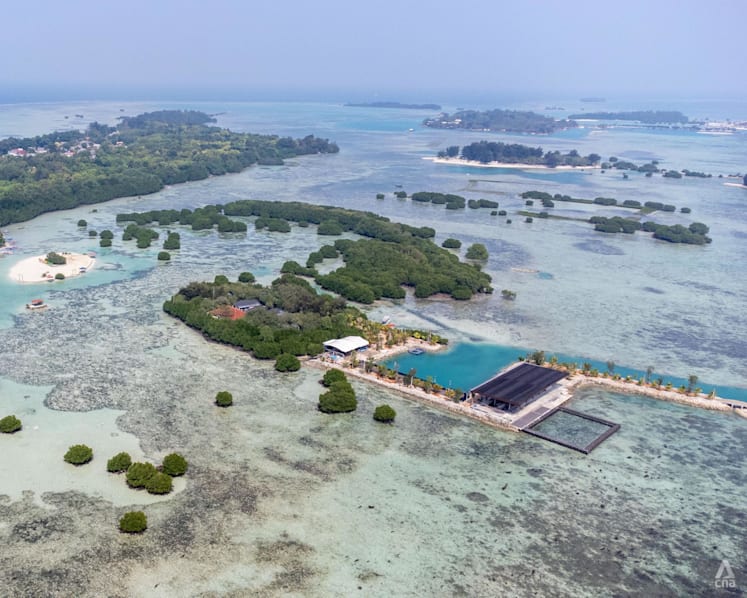
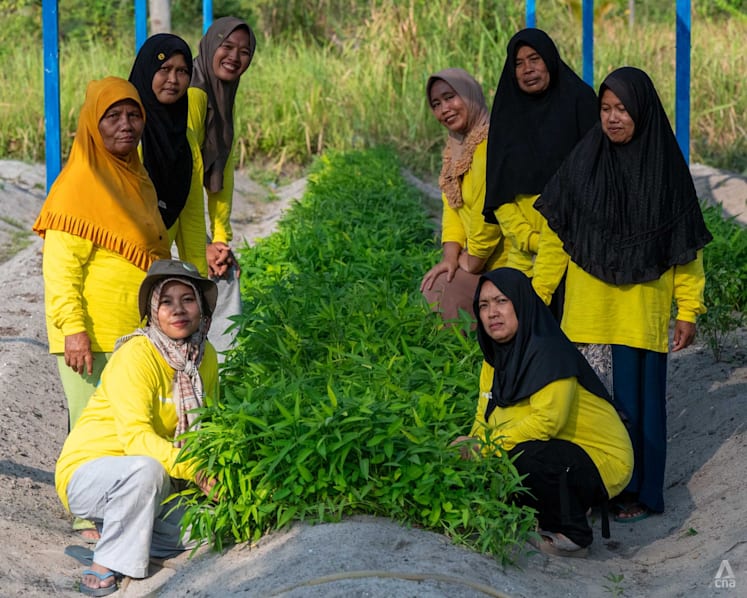
The women are part of a crew known as the Pari Island Women’s Group, which aims to protect the 43ha island – equivalent to about 60 football fields – from being taken over by a private firm.
Their primary objective: to ensure that families can continue living on the island – which forms part of Jakarta’s Thousand Islands regency – for generations to come.
“I joined (the) Pari Island Women’s Group to hold onto my birthplace and so that my children and grandchildren can also continue living here. This is our home,” said Wina, a grandmother of one.

Guess Word
Crack the word, one row at a time

Buzzword
Create words using the given letters

Mini Sudoku
Tiny puzzle, mighty brain teaser

Mini Crossword
Small grid, big challenge

Word Search
Spot as many words as you can
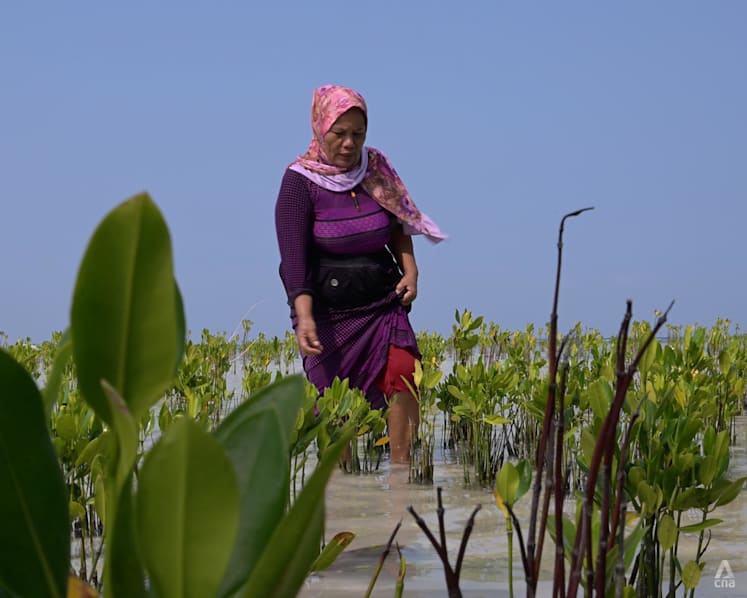
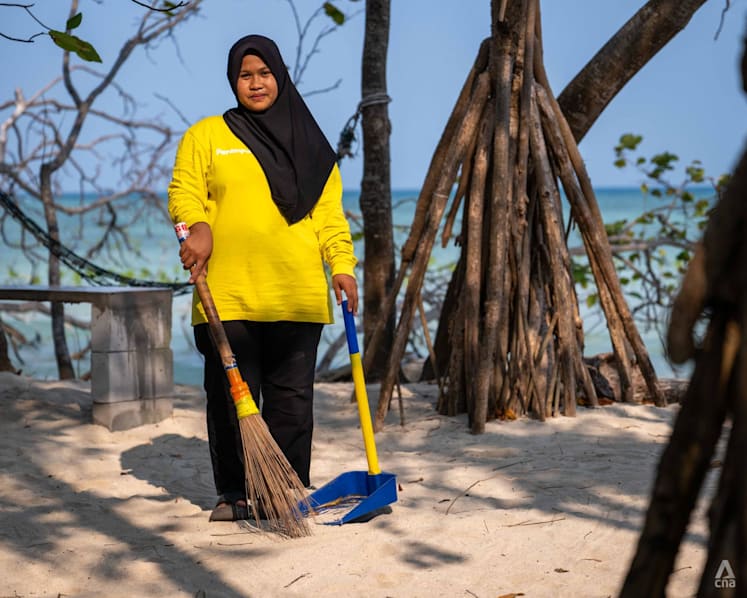
Pari Island Women’s Group regularly hold activities such as mangrove planting and beach cleaning as a means of protecting their environment and supporting their families.
It was founded in 2017 by 43-year-old Asmania, who like most Indonesians goes by one name.
Pari Island lies just 1.5m above sea level, and reports predict that rising sea levels due to climate change could submerge most parts of it by 2050.
In December last year, a Swiss court agreed to hear a landmark case filed by Asmania and three other Pari Island residents against global cement giant Holcim seeking financial compensation for climate-related loss and an order to reduce its greenhouse gas emissions.
The court decision made global headlines.
But what is less known about Pari Island and Asmania’s group is that underlying its activities is a separate long-running dispute over land ownership on the island.
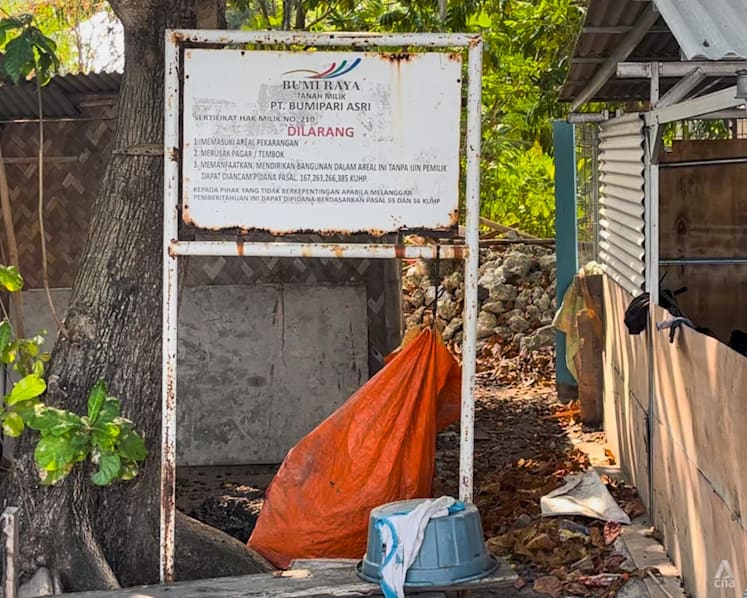
In 2014, PT Bumi Pari Asri – a company that focuses on land and property development – claimed rights over a large part of Pari Island.
Islanders and rights groups have challenged the process through which land ownership certificates and right-to-build permits were issued to the company.
Slamet Huzaini, field supervisor of PT Bumi Pari Asri, told CNA that all the certificates were obtained legally from the North Jakarta National Land Agency.
PT Bumi Pari Asri claims to own about 90 per cent of the island, arguing that it has 62 freehold certificates, which in Indonesia is the highest form of land and property ownership, and 14 right-to-build permits, which gives the firm the legal right to construct and own buildings on land that they do not fully own.
The women’s ecological activities and advocacy have expanded against the backdrop of that dispute as they seek to resist what they believe to be corporate encroachment that may lead to the island’s destruction.
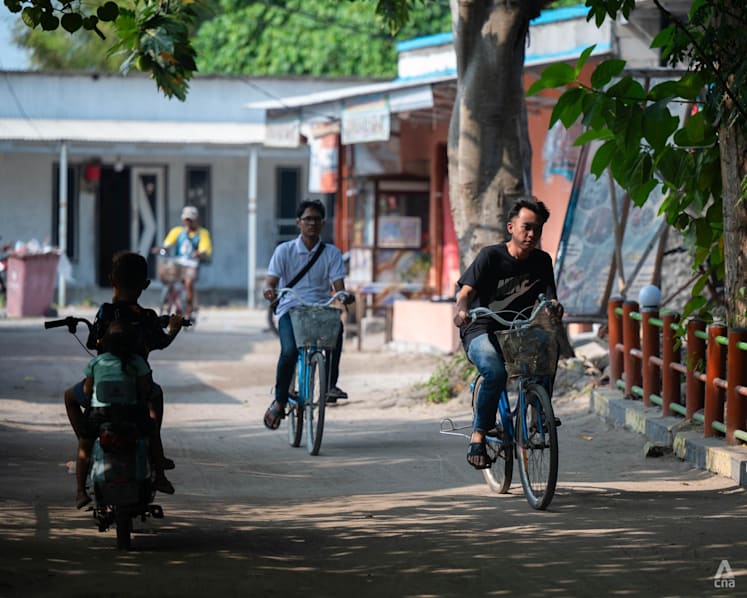
For them, planting mangroves and seagrass, cleaning beaches, and even running tourism businesses have helped protect their tiny island from environmental damage, such as erosion, while creating sources of income.
It is also their way of standing up against PT Bumi Pari Asri.
“Security officers (from the company) used to tell me that I cannot plant plants. But now they don’t dare to stop me anymore because I have a lot of support from Jakarta-based right groups,” Wina claimed.
Slamet told CNA that the company does not object to the activities conducted by the Pari Island Women’s Group, as long as these are not done on private land owned by the firm.
“We support the activities undertaken by the women’s groups, especially those related to the environment. However, they shouldn’t be carried out illegally. At the very least, as the owners, we should be informed,” said Slament, claiming that the women are farming on the company’s land.
“As for the mangroves, those are in the marine area, that does not belong to us,” he added.
LAND DISPUTE PUSHES WOMEN INTO ACTION
Asmania – who is affectionately called Sister Aas by her community – told CNA that the women’s involvement grew out of the pressures their community faced during the dispute.
Initially, only the men protested against the company’s claims, with the support of their wives.
The islanders objected to the claims, as this meant that they – having lived on Pari Island for generations – could potentially be evicted.
Thus, Asmania decided to form the Pari Island Women’s Group so that they could develop the island on their own.
“We are fighting back through farming, even though, at first, we had no knowledge of how to cultivate the land,” Asmania told CNA.
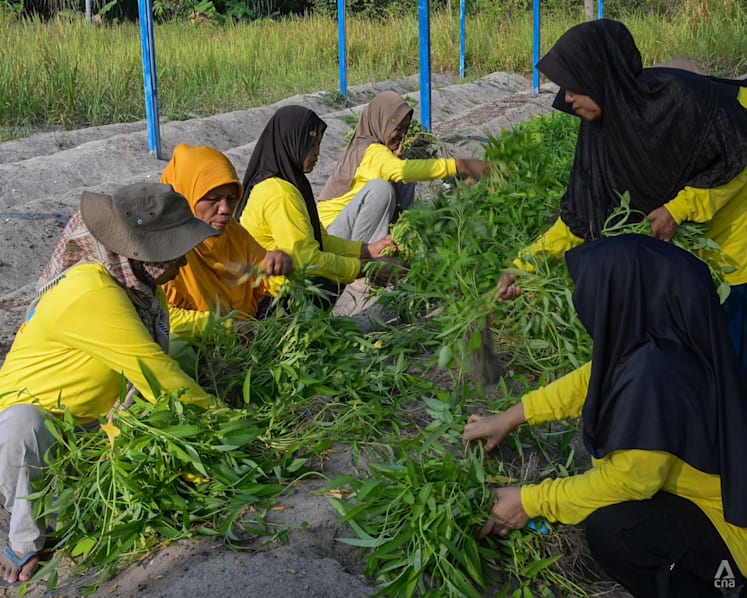
They planted crops, worked around the beach and produced food including salted fish, fish crackers and dodol – a type of sticky traditional sweet made from seaweed – which are then sold to tourists visiting the island.
Over time, their activities expanded and they also planted mangroves and seagrass to prevent coastal erosion.
At one point, the group had about 50 members, but today it has around 20 active members, as some were reluctant to continue for various reasons, including fear of being imprisoned.
According to local media reports, the dispute escalated in 2017 when three islanders who were managing eco-tourism were arrested after they were accused of offences such as extortion of tourists and illegal occupation of land belonging to PT Bumi Pari Asri.
However, in 2018, the Jakarta High Court overturned the convictions and acquitted all three men, ruling that no crime had been committed.
The standoff between the Pari Island Women’s Group and PT Bumi Pari Asri has drawn attention and support from civil society organisations, including the Jakarta Legal Aid Institute, or LBH Jakarta, which supports the women and islanders.
LBH Jakarta’s director Fadhil Alfathan told CNA the organisation became involved in advocacy for the islanders over land claimed by private interests on Pari Island.
Residents have long questioned the validity of PT Bumi Pari Asri’s certificates, claiming that these had involved the collection of residents’ signatures without them knowing what the signatures were for.
In 2018, the Indonesian Ombudsman found maladministration regarding PT Bumi Pari Asri certificates, but until today, the findings have not brought the dispute to a definitive conclusion.
Maladministration refers to the improper management of an organisation and typically involves poor governance or a failure to follow proper rules.
In Indonesia, the Ombudsman independently investigates complaints from citizens against government agencies, public services, or businesses and acts as a neutral referee to resolve disputes.


After the Ombudsman’s findings, PT Bumi Pari Asri maintained that it was the lawful owner of the land, according to local media reports.
News outlet Tempo reported in 2018 that the Jakarta National Land Agency was required to issue a decision no later than 30 working days after the Ombudsman’s finding was signed on April 9, 2018.
But to date, it has yet to issue a decision regarding the status of land ownership on Pari Island in the Thousand Islands.
Slamet from PT Bumi Pari Asri disputed the residents’ allegations that they had signed documents believing these were to help them secure electricity for the island, only for their signatures to later be used in connection with land transactions.
He stressed that the land transactions involved residents who wanted to sell their land to the firm.
When asked what the firm did about the Ombudsman’s findings, Slamet told CNA: “As far as I know, this matter has been rectified by the National Land Agency, and they have clarified that there was no maladministration.”
CNA has reached out to the Jakarta National Land Agency as well as federal National Land Agency for comment.
Lawsuit against Holcim
In January 2023, Asmania and three Pari Island residents – Arif Pujianto, Mustaghfirin and Edi Mulyono – filed a complaint against cement manufacturing giant Holcim in a Swiss court, asking for financial compensation for climate-related loss and that the firm contribute to protective measures.
In their lawsuit filed in Zug, the islanders also want an order that Swiss-based Holcim reduce its greenhouse gas emissions.
The suit was backed by various NGOs.
Holcim is considered one of the world’s largest cement companies and the industry is said to be a major contributor of carbon emissions driving global warming.
On its part, Holcim has said that it is committed to reaching net-zero emissions by 2050 through a science-based approach.
According to media reports, the company also said that the courtroom is not an appropriate platform to address the global challenge of climate change.
In response, the court in Zug said its decisions do not replace democratically legitimised climate protection policies but complement them.
In December 2025, the court decided to allow the lawsuit to proceed and be examined on the merits.
According to media reports, Holcim, which does not operate on Pari Island, said it would appeal and that the question of “who is allowed to emit how much carbon dioxide” should be a matter for lawmakers, not a civil court.
The case is the first climate lawsuit against a major company in Switzerland.
In March, the High Court of Zug approved Asmania’s and the other three islanders’ application for legal aid.
Collapse
Expand

PLANTING MANGROVES, BUILDING LIVES
For 29-year-old housewife Sarah, one of the biggest lessons from joining the Pari Island Women’s Group came from a plant she had previously paid little attention to.
Mangroves, she said, had once seemed to her like ordinary plants.
She later learnt that they could act as a natural barrier against coastal erosion and provide habitats that support fish populations.
Restoring the ecosystem, Sarah said, could therefore have a knock-on effect on residents’ livelihoods: more fish could mean better opportunities for fishermen, as most of the 1,200 residents of Pari Island earn a living from fishing.
“I used to think mangroves were just ordinary plants, but it turns out they are useful for absorbing carbon and serve as a natural barrier against erosion,” said the mother of two, whose husband is a fisherman.
“This Rengge beach, for example, has suffered severe erosion as 9m of land has been lost here,” she told CNA.
Oceanographer Widodo Pranowo from Indonesia’s National Research and Innovation Agency (BRIN) said Pari Island’s coastline is shaped by seasonal monsoon-driven water movements and the island’s physical structure, both of which can contribute to coastal erosion and changes to the shoreline.
While mangrove restoration helps conserve Pari Island from environmental destruction, it is only one part of a much more complex coastal system, he said.
In general, there are three barriers which could prevent coastlines from erosion: coral reefs, seagrass and mangroves.
“The outermost layer consists of coral reefs, followed by seagrass beds, and then mangroves, the plants that grow along the shoreline,” said Widodo.
“When coastal erosion occurs, we need to check whether the coral reefs are still thriving and if there is still abundant seagrass. If not, mangroves are the only remaining line of defence capable of protecting the island.”
Although for now the Pari Island Women’s Group is not involved with coral reef checking, its activities extend beyond mangrove and seagrass planting.
Aside from food production, founder Asmania said that an increase in tourism over the years has also provided islanders with opportunities such as opening homestays and food stalls.
Residents could also earn income from activities including catering and providing boats for visitors who come to snorkel, she added.
The group has also experimented with hydroponics – growing plants without soil – farming, although they initially had a limited supply of clean water.
The water source in the plantation area had a high salt concentration, so to obtain clean water, residents had to purchase it for 5,000 rupiah (US$0.28) per gallon. Up to 10 gallons of clean water was needed daily for hydroponics farming.
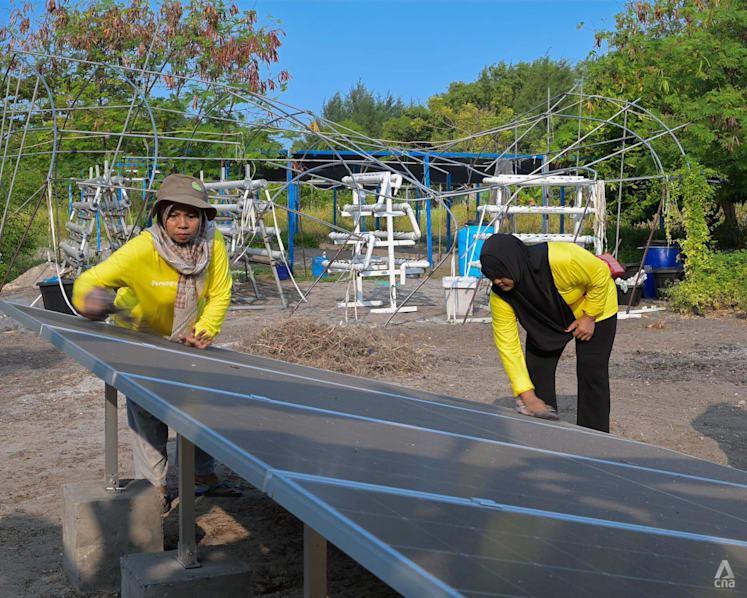
Ramadhan, an action coordinator with non-governmental organisation (NGO) Enter Nusantara, said his organisation subsequently helped the Pari Island Women’s Group install a reverse osmosis system to provide clean water suitable for hydroponics and drinking.
Reverse osmosis is a water purification system that removes up to 98 per cent of dissolved solids, as well as heavy metals, bacteria and chemicals.
Enter Nusantara also helps the group set up solar panels to support the system.
The solar panels produce a daily average power of 1,193 watts to sustain the hydroponics’ needs.
“The installation of the solar power system and reverse osmosis unit enables residents to cut the costs of purchasing clean water for their hydroponics gardens and daily drinking needs,” said Ramadhan.
This also enabled the islanders to spread awareness about the climate crisis and the decentralisation of the energy transition, he added.
PARI ISLAND’S FUTURE
The conflict surrounding Pari Island is not an isolated case in archipelagic Indonesia, said experts.
Fikerman Saragih, secretary-general of the NGO the Coalition for Fisheries Justice (KIARA), said similar conflicts have emerged elsewhere across Indonesia, such as in North and South Sulawesi, when permits covering spaces used by communities are issued to businesses by the government without residents knowing beforehand.
He noted that in cases involving coastal communities, women can be particularly affected when environmental changes interfere with economic activities on which their families depend.
Fikerman said that large-scale changes to coastal areas could disrupt mangrove ecosystems, underscoring the connection between development questions and the environmental systems on which island communities depend.
Hence, KIARA has also helped the Pari Island Women’s Group by conducting sharing sessions on laws and policies relevant to their situation.

Similarly, Roni Septian, head of policy and advocacy at the Consortium for Agrarian Reform, said the Pari Island case should not be viewed in isolation.
Agrarian conflicts are taking place in coastal areas and on small islands across Indonesia, he said.
“The issue is not merely about land conflict, but about who controls agrarian politics and the allocation of land,” said Roni.
He said that conflicts continue to recur because permits are often given greater weight than recognition of community rights and social and ecological protections.
As long as coastal areas and small islands are treated primarily as economic commodities rather than places where communities live, disputes such as the one in Pari Island will continue to emerge in different forms, he warned.
The stakes are heightened by Pari’s physical vulnerability as a small island, experts said, and for the Pari Island Women’s Group, the question is what will happen to their livelihoods.
Founder Asmania said that the islanders had demonstrated that they could create economic opportunities themselves.
“Our wish is very simple. Let us manage our island, our sea, and our land, because we know how to take care of them all.”

Source: CNA/ks(as)
Sign up for our newsletters

Get the CNA app
Stay updated with notifications for breaking news and our best stories
Get WhatsApp alerts
Join our channel for the top reads for the day on your preferred chat app

Get bite-sized news via a new
cards interface. Give it a try.
Click here to return to FAST
Tap here to return to FAST
FAST