After the deadly collision of two high-speed trains in Spain, rescue crews continue to search for survivors. The disaster is raising questions about the safety of Spain’s high-speed rail network.
Image: Oscar Del Pozo/AFP
At least 69 people were killed in a collision between two high-speed trains south of Madrid. Rescue workers are combing through the wreckage with the help of drones, search dogs and cranes in an effort to find survivors. Investigators are working around the clock to determine the cause of the crash, with early indications pointing to human error.
Image: Burak Akbulut/Anadolu/picture alliance
The train accident occurred Wednesday morning in the central Spanish province of Toledo. A train operated by Spain’s state-owned railway company, Renfe, collided with an Iryo train that was standing on the same track. Rail service between Madrid and Seville is expected to remain suspended until mid-December.
Image: Marcelo del Pozo/REUTERS
The tragedy has shaken public confidence in the safety of Spain’s high-speed rail system. It is the second major train disaster in the country this year. In January, 46 people were killed in a collision on the same route.
Image: Violeta Santos Moura/REUTERS
More than 100 people, some with serious injuries, are receiving medical treatment following the crash. According to regional authorities, there has been encouraging news regarding several of the most critically injured patients. Four of the 15 individuals initially classified in the highest-priority “red” category have shown signs of improvement.
Image: Andrea Comas/AP Photo/picture alliance
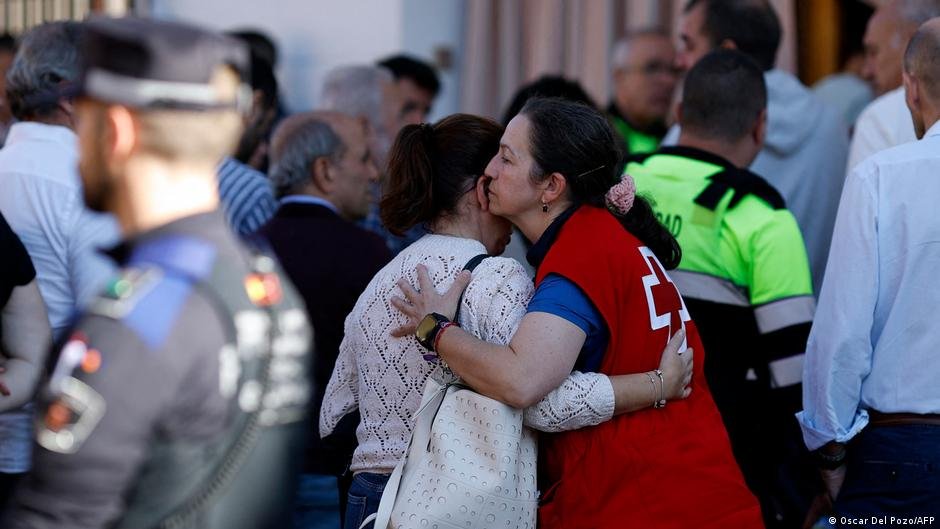
Many people are desperately waiting for news of their loved ones. At the time of the accident, there were more than 500 passengers on board the trains. “It’s important for the families to find their loved ones, even if they are dead,” said a pastor from Urda who is providing support to those affected. Saying goodbye helps many people come to terms with their loss.
Image: Oscar Del Pozo/AFP
Spain’s high-speed rail network is considered one of the country’s greatest achievements and carried nearly 45 million passengers last year. The German train control technology, which has been in use on the Madrid-Seville route since 1992, is set to be replaced by the European ERTMS system — which is already in use throughout the rest of Spain.
Image: Marcelo del Pozo/REUTERS
Audio recordings suggest a serious misjudgment on the part of the rail control center. Although the automatic train control system had not yet resumed operation following a computer failure, the control center gave the Renfe train the green light to proceed while the Iryo train was still on the tracks. And this at a “normal” speed of up to 200 kilometers per hour.
Image: Oscar Del Pozo/AFP
Flags are flying at half-staff in Spain, and Prime Minister Pedro Sánchez has declared three days of national mourning. The second major train accident this year is increasing pressure on the prime minister just a few weeks before the parliamentary election. This is the third major train accident since high-speed trains were introduced in the 1990s; an Alvia high-speed train derailed back in 2013.
Image: Thomas Coex/AFP8 images1 | 88 imageshttps://p.dw.com/p/5OpR0