Skip NavigationMarketsBusinessInvestingTechPolitics & PolicyVideoWatchlistInvesting Club PRO
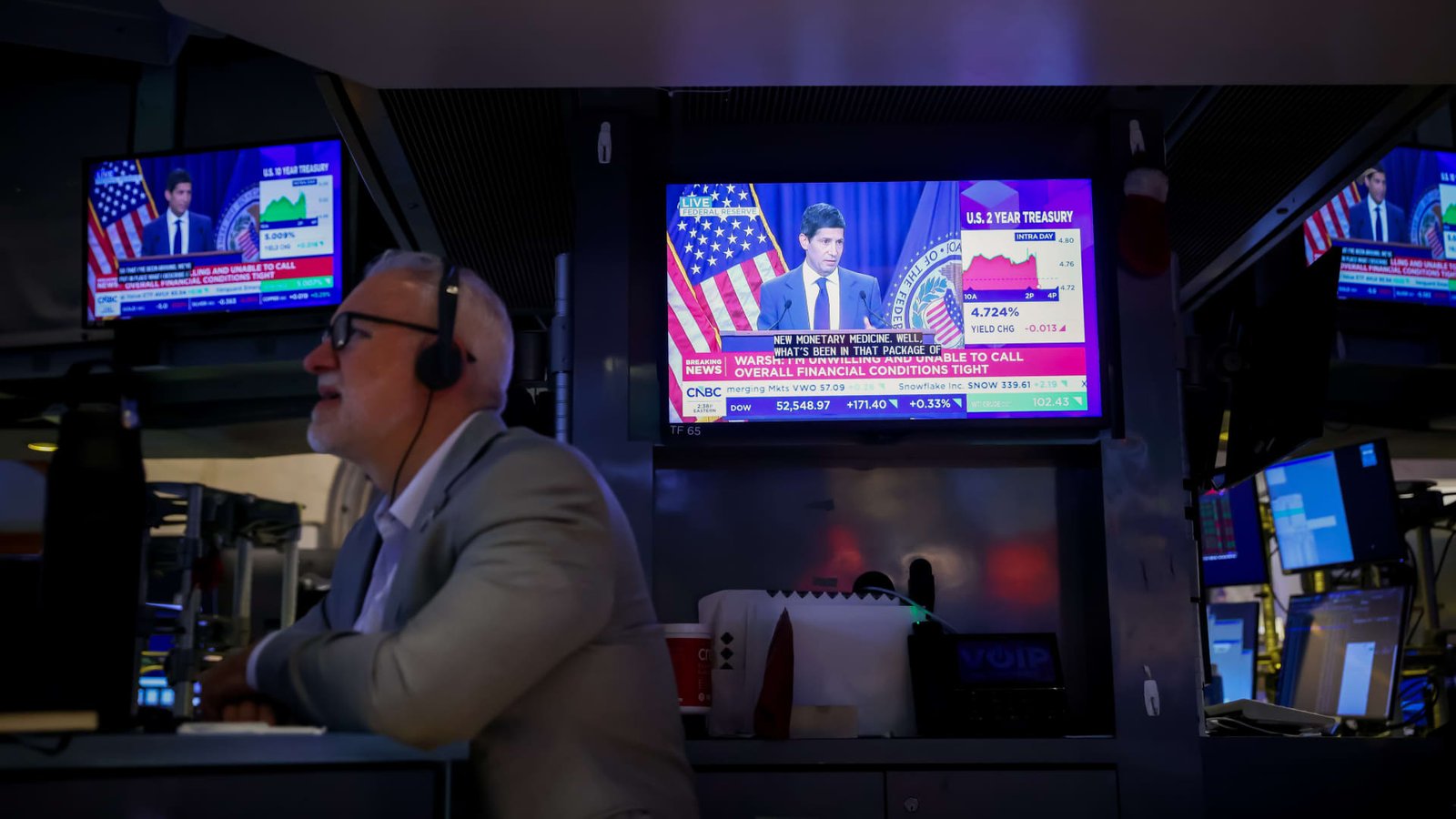
 LivestreamMenuA television station broadcasts Kevin Warsh, chairman of the US Federal Reserve, speaking after a Federal Open Market Committee (FOMC) meeting as a trader works on the floor of the New York Stock Exchange (NYSE) in New York, US, on Wednesday, Oct. 28, 2026. Michael Nagle | Bloomberg | Getty Images
U.S. Treasury yields fell on Thursday morning, a day after the Federal Reserve’s October meeting that saw the central bank hold its key interest rate steady.
At 6 a.m. ET, the yield on the 10-year Treasury note was 5 basis points lower at 4.995%. The 2-year Treasury yield lost 5 basis points to trade at 4.683%, while the yield on the 30-year Treasury was down by 3 basis points at 5.329%.
One basis point equals 0.01%, or 1/100th of 1%, and yields and prices move inversely to one another.
While the Fed voted on Wednesday to keep its overnight funds rate in a range between 3.75% and 4%, the post-meeting statement acknowledged that inflation remains elevated.
The annual U.S. inflation rate hit 3.7% in September.
“The accumulation of more information will help the Committee determine the policy stance appropriate to ensure a timely return of inflation to the Committee’s 2 percent goal,” the Fed said Wednesday.
Speaking to reporters after the meeting, Fed Chair Kevin Warsh said policymakers were not on a set path.
“If we had a firm conclusion about the conduct of monetary policy, we’d announce it to much fanfare today,” he said.
Markets are currently pricing in an 83.6% chance of a quarter-point hike from the Fed in December, according to the CME’s FedWatch tool.
Ali Hassan, a portfolio manager at Thornburg Investment Management, said in a note on Wednesday that markets appeared to see the Fed updates as “a softer policy path, not an inflation scare.”
“The market trimmed hikes further out: it still expects a December move but is less convinced of the follow-through,” Hassan said. “The test comes on Friday, when the blackout lifts. If Fed speakers put more hikes back on the table, they could claw back the front-end easing and blunt the self-defeating dynamic.”