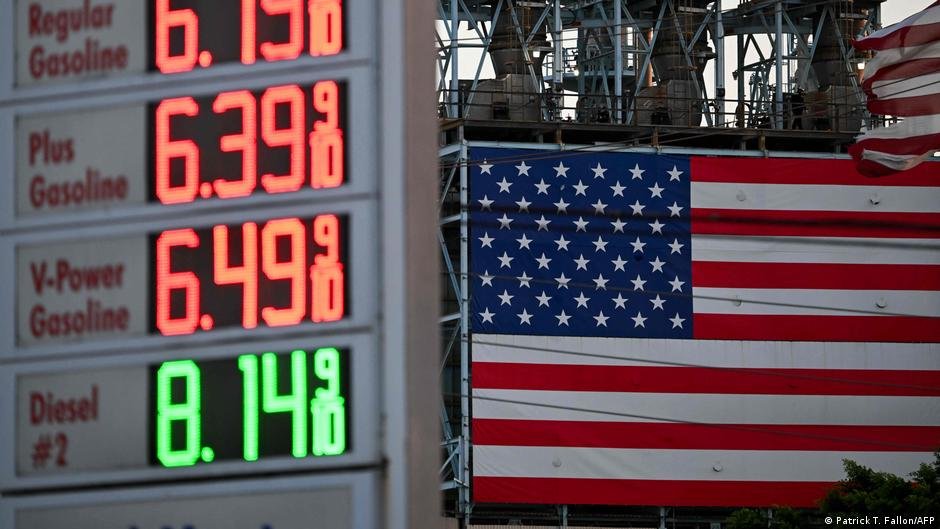
The diesel deal between US President Donald Trump and Russian President Vladimir Putin has sparked anger in Ukraine. Under the agreement, Moscow is allowed to supply Russian diesel fuel to global markets. The US news website Axios reported the move came in response to Kyiv’s failure to comply with Washington’s demands to stop attacks on oil refineries in Russia.
Trump also declared that it was time “for Ukraine to get a new president.”
The agreement to sell diesel was announced while talks between Ukrainian, US and European representatives were taking place in Miami.
“I think our team is simply being used as a cover. That is definitely not fair,” Ukrainian President Volodymyr Zelenskyy told journalists shortly afterwards, describing Trump’s decision as “a weak decision by strong partners.”
From the Oval Office to Miami
This is hardly Kyiv’s first crisis in its relationship with the Trump administration. In February 2025, Trump told Zelenskyy in the Oval Office “you don’t have the cards.”
The White House confrontation was followed by a suspension of weapons deliveries and intelligence-sharing agreements. According to media reports, US special envoys Steve Witkoff and Jared Kushner threatened to suspend intelligence sharing during the talks in Miami, too, citing Ukraine’s attacks on Russian oil refineries as the reason. US officials have denied the reports.
The current tension recalls the dispute in the White House at the time, says Mykhailo Honchar of the Ukrainian Center for Global Studies “Strategy XXI” in an interview with DW. However, he says there is no reason for Ukrainians to panic.
“Last year, too, there were threats and suspensions of intelligence sharing, as well as disruptions in weapons supplies,” he said. “Then the Americans realized how much this was hurting them, too, and reluctantly resumed everything.”
Is Trump looking for a ‘scapegoat?’
All the experts interviewed by DW see a connection between Trump’s threats toward Ukraine and the US midterm elections on November 3. In the midterms, all seats in the House of Representatives and roughly one third of Senate seats are up for election.
Ivan Us of the National Institute for Strategic Studies in Kyiv expects a crushing defeat for the Republicans. He says the main reason will be high fuel prices.
“Donald Trump wants desperately to distract attention from the fact that high prices are linked to his war with Iran and the problems in the Strait of Hormuz. He needs a scapegoat for this. And he has decided that Ukraine will be it,” the expert said.
Mykhailo Honchar sees Russia as the main beneficiary of Trump’s deal with Putin: “This whole diesel deal looks like a disguised request from Putin to Trump to exert influence on Ukraine.”
Honchar also links the agreement to a possible sale of the foreign assets of Russian oil company Lukoil. According to The New York Times, potential buyers of these assets include investors with ties to Trump.
To view this video please enable JavaScript, and consider upgrading to a web browser that supports HTML5 video
How can the crisis be resolved?
Oleksandr Kraiev of the Ukrainian think tank Ukrainian Prism warns against taking drastic action.
“Slamming the door in anger will certainly not help us. In that case, security assistance and intelligence sharing will be off the table. We cannot afford that. It may be difficult, and sometimes even repulsive, but we have to maintain contact with the Americans,” the expert said.
At the same time, Ukraine could work with Germany, Denmark, the United Kingdom and France to make deliveries of Russian diesel fuel “simply unrealistic.” After all, the tankers would have to pass through these countries’ territorial waters on their way to the United States, and the partners have already said they would not allow this.
Ivan Us advises against reading too much into the harsh rhetoric.
“You can say whatever you want in public, as long as you carry on as before,” he said of the possible relationship between Kyiv and Washington.
Ukrainian diplomats should work with US Republicans and the MAGA movement. Trump’s agreement with Putin is already being criticized in those circles, with some raising concerns that Russia could use the proceeds from the diesel trade to support Iran.
Us also does not rule out a legal challenge to Trump’s decision. Republican Senator Tom Tillis told NBC that the president was likely violating a 2022 law prohibiting imports of Russian oil and other energy products.
Ivan Us considers US threats to cut Ukraine off from intelligence or weapons to be little more than “fearmongering” ahead of the elections.
“The US makes such statements not because it intends to take action, but to make the markets believe that it is about to exert pressure and thereby drive prices down,” Us said.
What will change after November 3?
The three experts agree that Kyiv should ride out the situation until after the US midterm elections on November 3. Oleksandr Kraiev says he is sure that Trump may back down on this issue after the elections, since abandoning Ukraine would mean showing weakness toward China.
Mykhailo Honchar points out that Trump’s deal with Putin is already being criticized by Republicans in both the Senate and the House of Representatives. In addition, Republican Congressman Brian Fitzpatrick has introduced a bipartisan bill named after former US President Ronald Reagan that would block purchases of Russian oil.
“Despite all the threats, and perhaps even some attempts to impose temporary measures against Kyiv, it is unlikely that Trump will go any further. The situation should not be portrayed in apocalyptic terms,” Honchar said.
He added that Trump’s pressure was also bringing Ukraine and its European partners closer together.
This article was originally published in Ukrainian.