Is 2026 a particularly bad year for earthquakes? The number of extremely strong quakes so far this year is not, in fact, unusual. Over the long term, around the world, there are an average of about 15 earthquakes per year registering above magnitude 7 on the Richter scale. By mid-August this year, there had been 10. The devastation some of the quakes have wreaked has, however, been striking.
Venezuela: two quakes in just 39 seconds
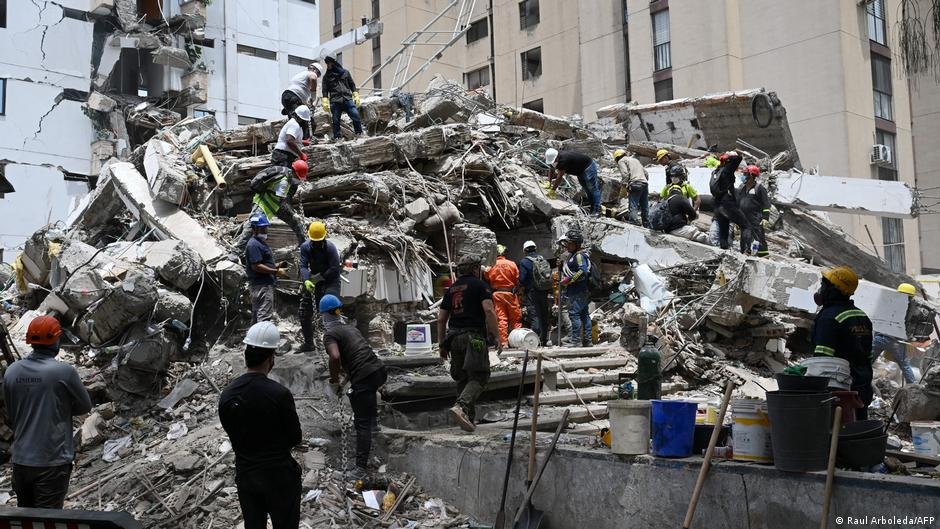
On June 24, Venezuela was hit by an earthquake that proved to be by far the deadliest this year. A magnitude 7.2 quake was followed just 39 seconds later by an even stronger one of magnitude 7.5. The north of the country and the capital, Caracas, were the areas worst affected.
According to official figures, more than 6,300 people were killed in the double earthquake. The effects on the impoverished country’s infrastructure have also been dramatic. Shortly afterward, a satellite-based assessment by researchers at Oregon State University provisionally concluded that more than 58,000 buildings may have been damaged or destroyed.
To view this video please enable JavaScript, and consider upgrading to a web browser that supports HTML5 video
Philippines: the strongest quake of the year
With a magnitude of 7.8, the earthquake on June 8 off the southern coast of the Philippine island of Mindanao was the strongest of 2026 so far. It occurred at a depth of about 57 kilometers (35 miles), and was felt across large parts of the island.
At least 107 people were killed. But the fact that, despite the very high magnitude of the quake, far fewer people died in the Philippines than in Venezuela demonstrates that the strength of the quake does not necessarily determine the severity of the consequences.
Colombia: hundreds dead, despite the depth
On August 10, a magnitude 7.4 earthquake shook western Colombia. The epicenter was in the Choco region, near San Jose del Palmar. Although the quake occurred at a depth of 100 kilometers (62 miles), the damage it caused was immense.
More than 250 people are currently estimated to have died. Landslides and damaged roads are hampering the search for victims buried beneath the rubble, as well as the provision of supplies to remote areas. After Venezuela, this quake is the most consequential so far this year for Latin America.
Tonga: powerful earthquake with little damage
On March 24, the earth shook near the island group of Vava’u in the Pacific kingdom of Tonga. With a magnitude of 7.5, it was one of the strongest globally this year. But because there was no severe damage and no deaths, it received almost no attention from the media.
The quake occurred unusually far below the earth’s crust, at a depth of around 230 kilometers (143 miles), meaning that the tremors were significantly weakened by the time they reached the surface. To date, there have been no reports of deaths, or damage to infrastructure.
Japan: strong undersea quake off the Sanriku Coast
On April 20, there was an undersea quake off the northeastern coast of Japan. The US Geological Survey recorded a magnitude of 7.4.
This region, the Sanriku Coast area in Iwate prefecture, achieved terrible notoriety after the catastrophic earthquake and tsunami there in 2011, which also resulted in the Fukushima nuclear disaster. A tsunami warning was issued after this year’s earthquake, too, but fortunately the region was spared the devastation of that magnitude 9 quake 15 years ago.
There was no major tsunami this time, but the quake illustrated once again how much Japan is affected by its location on the Pacific Ring of Fire. This 40,000-kilometer (25,000-mile) volcanic belt runs around the edge of the Pacific Ocean where several tectonic plates collide.
Afghanistan: weak, but deadly
The earthquake in the northeastern Afghan province of Badakhsham on April 3 only reached a magnitude of 5.8, which puts it right at the bottom of the list of the strongest earthquakes this year. Despite this, at least 12 people were killed, which is why it counts as one of the most significant quakes of 2026.
In poorer countries, even slight tremors can have deadly consequences. The risks are heightened by inadequate building construction, the difficulty of accessing remote areas and underdeveloped disaster response protocols.
This article has been translated from German.
About The Author