Why this landscape designer never wants you to see a garden all at once
Thai landscaper Jirachai Rengthong, whose projects include Capella Ubud, Shinta Mani Wild and Four Seasons Resort Koh Samui, uses layered planting, mature trees and garden “rooms” to create landscapes that reward slow exploration.
Jirachai Rengthong believes the best gardens should never be taken in at a glance, but discovered slowly as visitors move through them. (Photos: Jirachai Rengthong and Four Seasons Resort Koh Samui)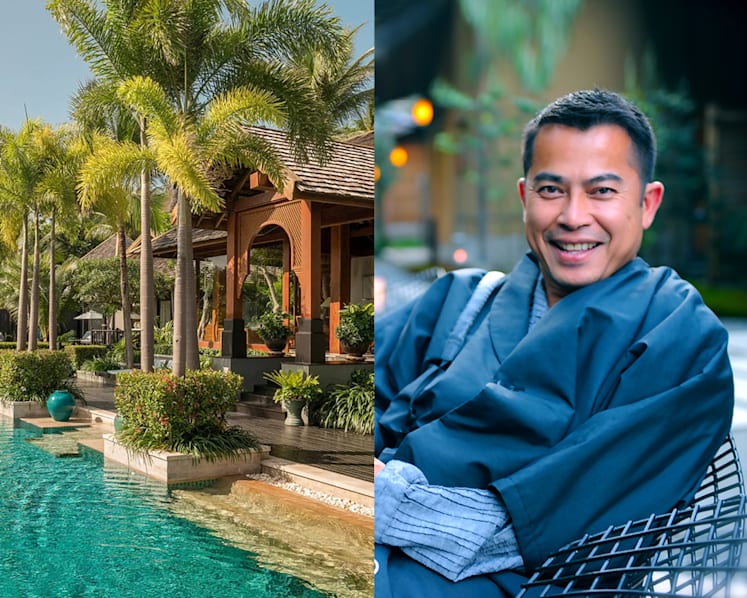
New: You can now listen to articles.

This audio is generated by an AI tool.

By
Read a summary of this article on FAST.
Get bite-sized news via a new
cards interface. Give it a try.
Click here to return to FAST
Tap here to return to FAST
FAST
Ask landscaper and horticulturalist Jirachai Rengthong what a garden should do to a person, and he doesn’t reach for any grand pronouncement. “I just want you to feel relaxed.”
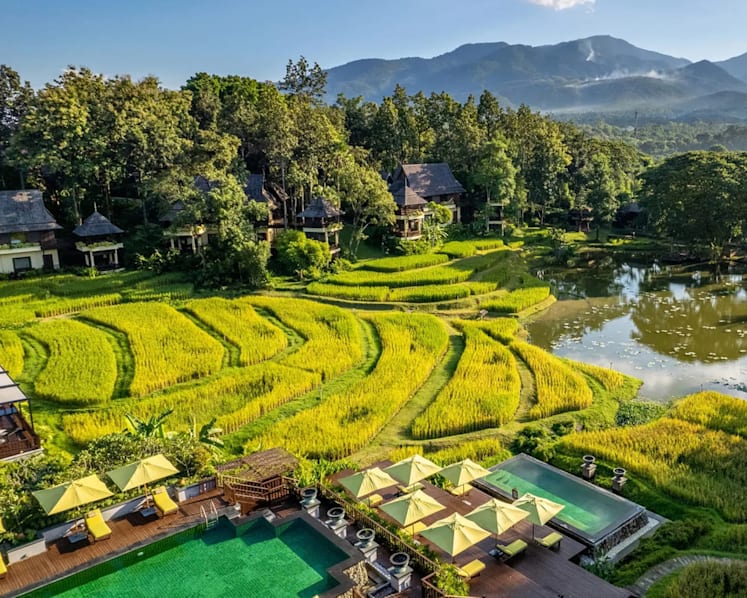
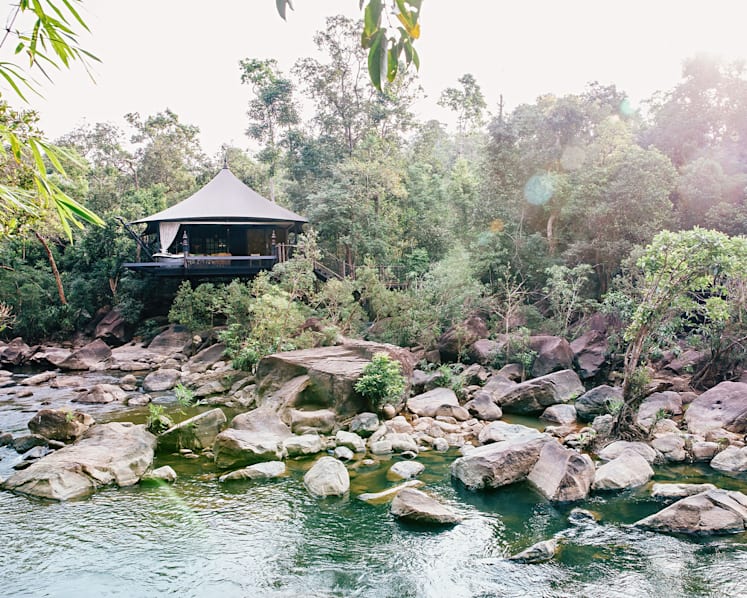
This philosophy, reduced almost to a koan, is the result of four decades of planting gardens across Southeast Asia – with landmark projects along the way including Capella Ubud, the jungle tented camp in Bali where the surrounding forest was left untouched during construction; The Siam in Bangkok, which threads antiques and vertical gardens through a riverside retreat; and Shinta Mani Wild, the Cambodian conservation camp cocooned within hundreds of acres of Cardamom rainforest along the Tmor Rung River.
Ask Rengthong how he learned any of it, and the answer is just as plain: he didn’t, not formally. “It’s self-taught,” he said. No horticulture degree, no apprenticeship under a master gardener – just books, a great deal of dirt and one long working partnership.
Rengthong grew up in Uthai Thani, a Thai province roughly three hours’ drive northwest of Bangkok, watching his police officer father and housekeeper mother tend a modest garden thick with ornamental plants. “I guess I got the green thumb from them.”
At the time, gardening wasn’t a career plan. He studied political science instead, a path that held until 1988, when he met a young Californian named Bill Bensley, then working as a landscape architect in Bangkok. Watching the tall, lanky American create gardens pulled Rengthong back to the soil of his childhood. It was the start of a partnership now closing in on four decades.

Their first project together was the Royal Garden Village in Hua Hin, now Anantara Hua Hin Resort & Spa. Rengthong remembers the time fondly. “The client essentially let us create whatever we liked.” Once a month, the pair arrived on-site with a fresh haul of plants and began dividing the grounds into themed rooms, each with its own character – a palm garden here, a colour garden built entirely around yellow flowers there. “It was a great start to our careers, to have this liberty to experience, to learn how to plan and design a garden,” he said. “It felt more like a playground than a job.”
The garden-room habit never left him. It shows up across the studio’s work as almost a signature move: planting is used to both decorate and divide a site, so that a garden unfolds as a sequence of distinct set pieces rather than one continuous view. A hedge or a stand of palms does the work a wall might do in a house, and a visitor moves from one mood to the next – dense and shaded in one section, open and sculptural in another – without ever seeing the whole composition at once. “This way, you can wander around and explore,” Rengthong explained.
His method for reading a raw site is almost architectural. First, take stock of what lies beyond the property line. Anything unsightly gets screened off with big trees and dense planting – “a wall of greenery”, as he puts it. Anything worth keeping stays open and unobstructed with lawns and views. Then comes the layering: tall canopy first, a lower tier of palms stepping down beneath it, a band of colour from cordyline – the deep-red variety is a favourite – and low variegated foliage at the front. The tallest layers represent a 10-to-15-year commitment, he says; the lower ones can be swapped at will.
Those early years taught him what not to do, too. Small-leaved trees planted too close to a pool clog the filters with fallen foliage – a costly lesson learned early. Ficus is banned outright near any pool or building. “The rooting system is very aggressive,” he said – worse, in his account, than that of any palm.
Over the years, Rengthong and Bensley’s creative partnership has grown from a two-person landscaping outfit into a full-service practice covering architecture, interiors and garden, beginning with Hotel de la Paix in Siem Reap, now a Park Hyatt. Rengthong calls the shift “dreadful and fun at the same time”, the thrill of controlling an entire property tangled with the pressure of it. The studio still takes landscape-only commissions when a client insists, though these days the preference is for the whole project.
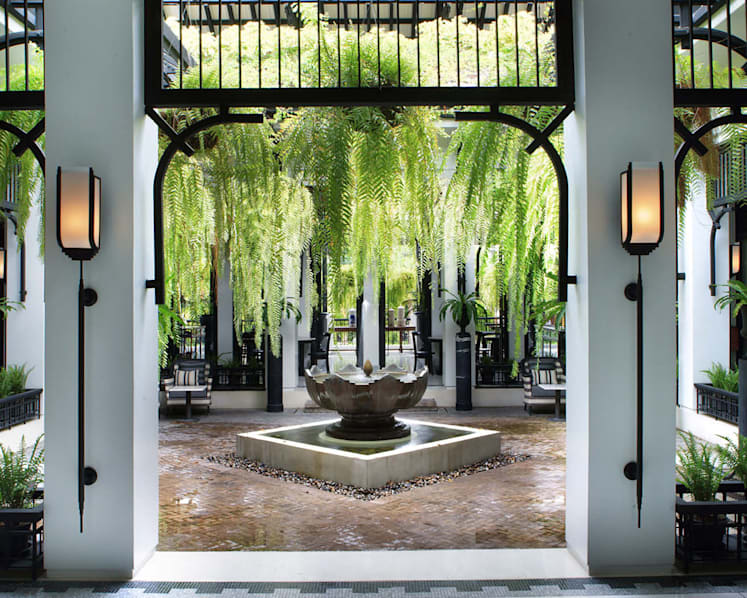
And while most designers finish a job and move on, he has kept going back. Four Seasons Resort Chiang Mai is the oldest project still under his care, tended continuously for two decades through an unusual ongoing maintenance contract with its owner, the Minor Group, which also owns the Anantara brand. “The garden is changing and growing and getting more mature,” he said with satisfaction.
And should visitors be inspired by Rengthong’s creations and want to replicate something at home, he is direct with his advice. Don’t buy anything expensive to start, because you don’t yet know what you can keep alive. Reach for palms, philodendrons and easy cordyline instead. Learn where the light actually falls through the day before buying anything. And plant mature trees. “They are essential for a garden in the long run.” They cool a house in ways air conditioning only imitates. As for the leaf litter that comes with them, he isn’t much bothered. Everything can be swept up and, besides, “it’s good exercise.”
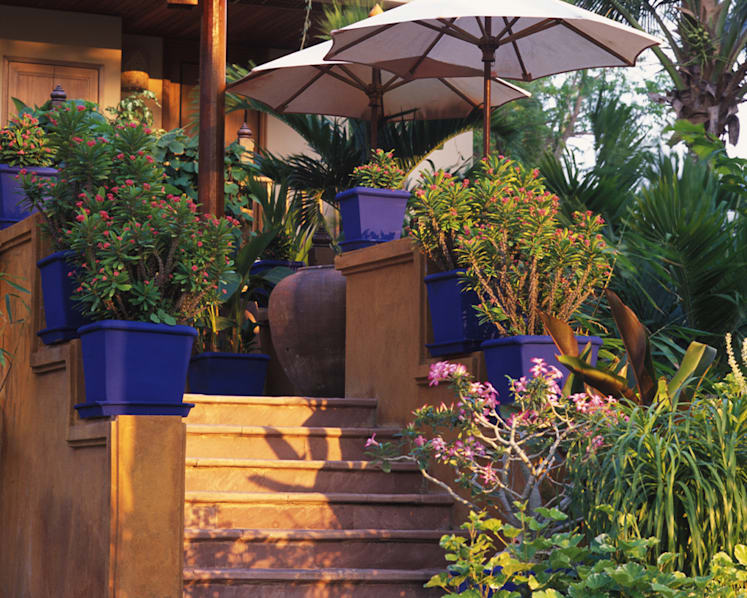
Above all, he says, have fun. Playful, quirky details are his trademark. A pair of wire sculptures of sheep grazing in a corner of the lawn. A carved wild dog hidden among the shrubs. A curtain of trumpet flowers hiding a staircase. Even the most casual visitor ends up lingering, wondering what surprise might lurk behind the rhododendrons.
His own favourite gardens span the globe: Sissinghurst in England, for its exuberant summer borders; a private sculpture garden in Brazil, for the healthiest tropical planting he has seen; and Singapore Botanic Gardens, kept stocked with fresh orchids year-round.
Jirachai’s days, meanwhile, are packed with a full roster of around 20 concurrent projects, including La Vie Wellness Resort, a regenerative wellness retreat set within 81 forested acres in India’s Ananthagiri Hills and Gaggan Hotel in a working 1826 sake brewery in Osaka.
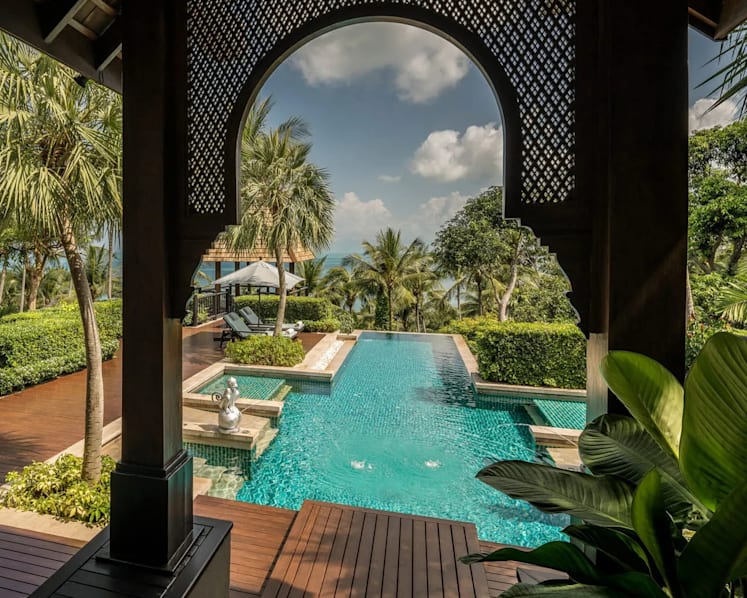
Ask which project makes him proudest, and he doesn’t hesitate: Four Seasons Resort Koh Samui, the setting for the third season of the HBO hit The White Lotus. Because Bensley refused to let a single coconut tree be cut, Rengthong had to shape an entire resort around the trees already there, working with the terrain to keep the landscape natural without letting it slide into unruly jungle. Arrive from the lobby today, he says, and the resort looks as if it has always been there – the coconut palms untouched, the garden built entirely around them.
It’s the same instinct that shaped those first garden rooms in Hua Hin, and the same one behind everything since: never let a visitor take in a garden all at once. “We want people to enjoy walking through the garden,” Rengthong said, “not just pass by, or rush through.” Forty years on, still self-taught, still learning something new from every site he’s handed, that seems to be the only credential he thinks worth having.
Source: CNA/bt
Get bite-sized news via a new
cards interface. Give it a try.
Click here to return to FAST
Tap here to return to FAST
FAST