Commentary: AI can be a personal trainer in your pocket – but is it safe?
AI feels like the future of fitness coaching, but it has limitations, says this academic.
Read a summary of this article on FAST.
Get bite-sized news via a new
cards interface. Give it a try.
Click here to return to FAST
Tap here to return to FAST
FAST
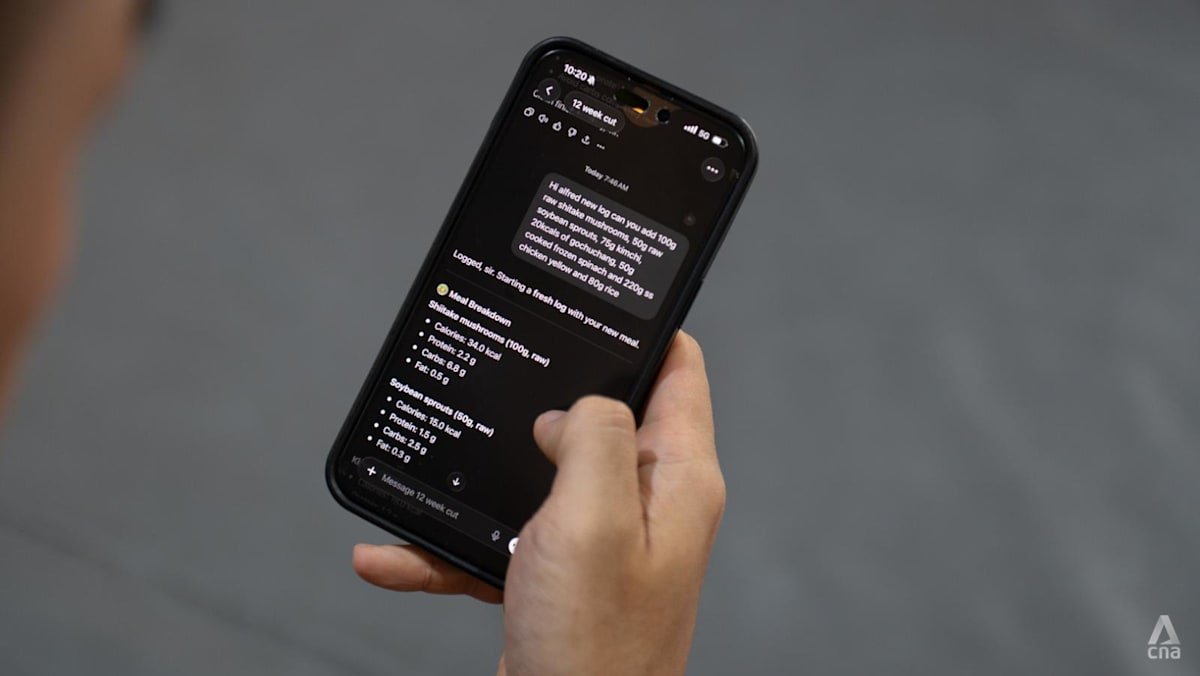
ADELAIDE, Australia: Generative artificial intelligence (AI) is changing the fitness industry: People can now ask chatbots to write marathon plans, build gym programmes and even adjust workouts based on sleep or heart rate data.
For many, AI feels like the future of fitness coaching because it is fast, cheap and readily available. But while AI can be helpful, research suggests it still has limitations, especially when compared with experienced human coaches.
So, let’s look at how it all works and the pros and cons.
There is very little research examining exactly why people use AI for exercise programmes, but researchers have offered some potential explanations.

Guess Word
Crack the word, one row at a time

Buzzword
Create words using the given letters

Mini Sudoku
Tiny puzzle, mighty brain teaser

Mini Crossword
Small grid, big challenge

Word Search
Spot as many words as you can
Firstly, accessibility and cost: A chatbot can create a strength or running programme in seconds without you having to wait for an appointment with an exercise professional. Not to mention these can be generated for free.
Secondly, availability. There is some research indicating people appreciate rapid feedback in real-time from AI tools. For example, you could ask an AI tool how to change an exercise due to knee pain and get a response in seconds. However, if you are following a programme prescribed by a human coach, you may need to wait a day or two before discussing the issue and receiving feedback.
WHAT ARE THE BENEFITS AND RISKS?
There is a growing body of research looking at the suitability of AI-generated exercise programmes across a host of contexts.
One study had ChatGPT design an individualised exercise programme for five made-up people, which were then evaluated by a team of experts. They concluded the AI tool could provide safe, basic exercise recommendations, but may not provide enough adaptability to ensure long-term progress.
Similarly, another study had expert running coaches assess AI-generated running programmes. They thought the exercise programmes were suitable for novices but not great for trained athletes.
The effectiveness of these programmes appears to be highly dependent on the level of information provided. In short, the more context you can provide regarding your current capabilities, goals and fitness level, the better the exercise programme will be.
However, providing such detailed prompts requires a degree of content-specific knowledge that many people don’t have. This may make AI tools less useful to the average person.
Finally, it is not clear whether AI systems can fully account for injuries or medical conditions. Health screening is important to keep people safe before exercising and something all exercise professionals should do before writing you a program.
If this is being missed, there is the potential for an AI-generated exercise programme to be unsafe for your current level of health.


ARE HUMAN TRAINERS BETTER?
There is a small body of research comparing AI-generated exercise programmes to human-generated programmes and the results are interesting.
One recent study randomly allocated people to one of two groups: a 12-week weight-training programme under the guidance of ChatGPT or a 12-week programme under the guidance of a personal trainer.
There were larger increases in muscle size and strength in the personal trainer group.
Another compared a five-week AI-generated fitness programme to a five-week human-generated programme. It found the human-generated programme led to slightly greater increases in fitness and endurance than the AI programme.
Finally, a third study compared a ten-week AI-generated athletic performance programme against a ten-week human-generated programme on measures of jump performance in volleyball athletes. They found the human programme led to slightly greater improvements in jump distance but the same improvements in jump height.
Collectively, these studies suggest that while AI-generated exercise programmes can improve your fitness, they might be slightly less effective than programmes created by human experts. This may be due to their inability to provide real-time feedback and motivation.
However, it is also important to note these studies were all published in relatively low-quality journals and had some limitations. So, their findings should be interpreted with caution.


WHAT SHOULD YOU WATCH OUT FOR?
If you choose to use AI, there are some key things to keep in mind.
Treat AI-generated programmes as a starting point. Use them to organise your training, but keep in mind you might need to modify the plan if it feels unrealistic or inappropriate.
Avoid increasing training volume or intensity too quickly. Sudden jumps in running distance or lifting intensity can increase injury risk, and this may not be factored into AI generated programmes.
If you are completely new to a gym environment, you may want to spend a couple of sessions with a human trainer to familiarise yourself with good technique before starting your AI-generated programme.
If you are looking to achieve high levels of performance, you might need to consider a human coach to maximise your progress.
Be extra cautious if you have injuries, a chronic disease, or complex goals. Current AI tools may not be able to personalise your programme perfectly and it might be safest to see a professional.
Hunter Bennett is a lecturer in exercise science at Adelaide University. This article first appeared in The Conversation.
Source: Others/zw(el)
Sign up for our newsletters

Get the CNA app
Stay updated with notifications for breaking news and our best stories
Get WhatsApp alerts
Join our channel for the top reads for the day on your preferred chat app

Get bite-sized news via a new
cards interface. Give it a try.
Click here to return to FAST
Tap here to return to FAST
FAST
About The Author