Snap Insight: Barisan Nasional won big in Johor state polls – it has Pakatan Harapan to thank
The morning after Johor, Malaysian Prime Minister Anwar Ibrahim’s coalition faces some grim electoral calculations, says CNA’s Leslie Lopez.
New: You can now listen to articles.

This audio is generated by an AI tool.

Read a summary of this article on FAST.
Get bite-sized news via a new
cards interface. Give it a try.
Click here to return to FAST
Tap here to return to FAST
FAST
KUALA LUMPUR: For years, conventional wisdom held that a higher turnout tends to hurt the incumbent, that it reflects the young, urban and middle-class voters who favour the opposition. The Johor state assembly election on Saturday (Jul 11) shattered that.
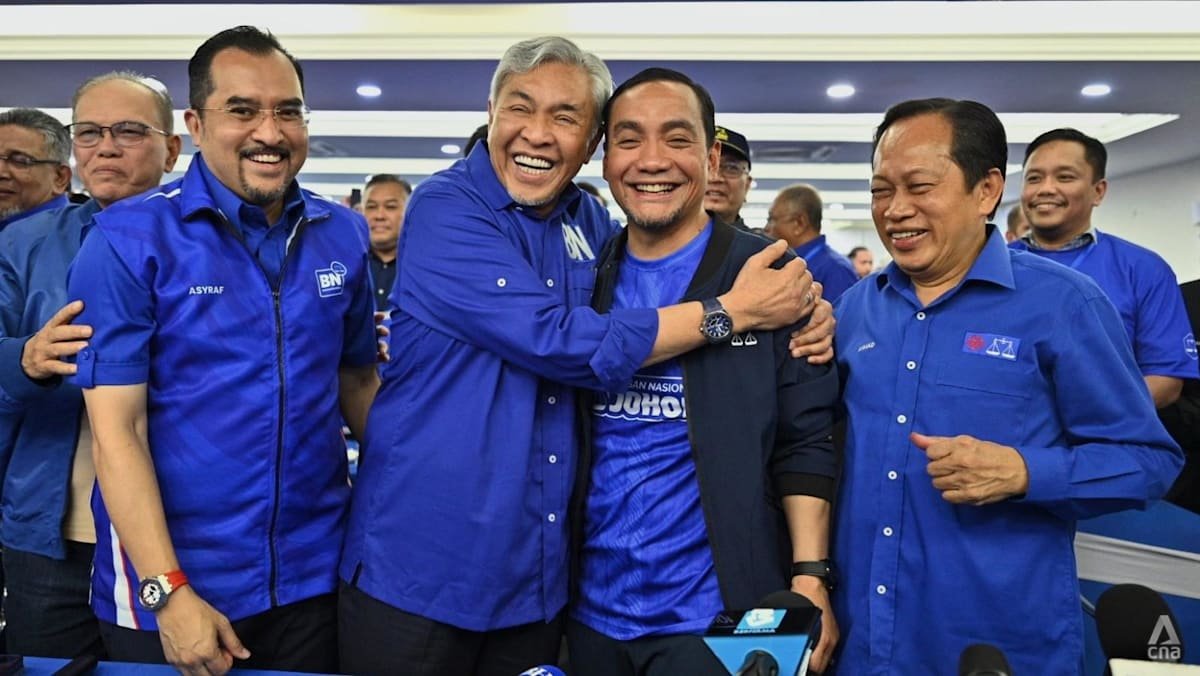
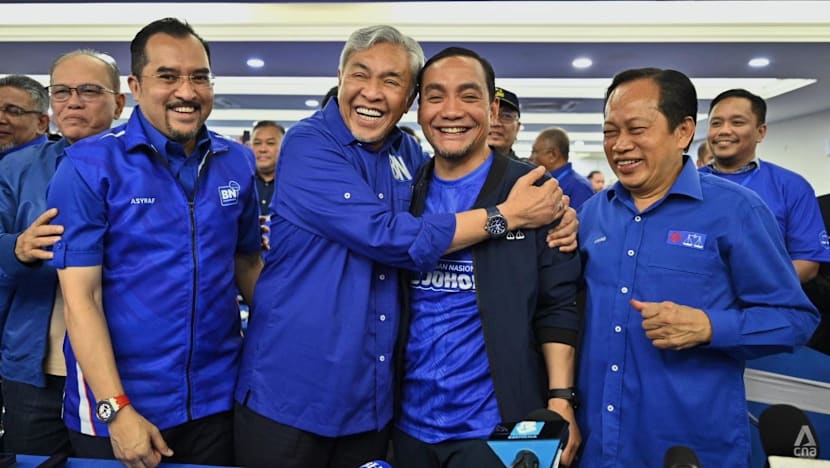
The Barisan Nasional (BN) coalition, led by the United Malays National Organisation (UMNO), delivered a thumping victory and swept 48 of 56 seats. It even improved on its robust 2022 performance of 40 seats, proving that voters turned out for the incumbent.
It was nothing short of disastrous for everyone else. The Pakatan Harapan (PH) coalition, led by Prime Minister Anwar Ibrahim, collapsed to just eight seats, down from 12. Perikatan Nasional – the Malay-right coalition led by the right-wing Parti Islam Se-Malaysia (PAS) and its smaller partner Parti Pribumi Bersatu Malaysia (Bersatu) – was wiped out entirely, losing all the 16 seats that it contested.
The turnout hit nearly 70 per cent, up from 54 per cent in 2022. The silent majority Mr Anwar and PH claimed to represent had clearly switched sides.

Guess Word
Crack the word, one row at a time

Buzzword
Create words using the given letters

Mini Sudoku
Tiny puzzle, mighty brain teaser

Mini Crossword
Small grid, big challenge

Word Search
Spot as many words as you can
A STRUCTURAL COLLAPSE
To chalk PH’s dismal performance up to a protest vote is to let the coalition off too lightly.
This was more than a mid-term referendum on Mr Anwar, who became prime minister in November 2022. It was a verdict on his government’s shortcomings.
In Johor, PH could not point to a single transformative achievement by the Anwar government; inflation, unemployment and investment stagnation remained unaddressed.
These issues were cast in a different light for BN, as the federal government was seen as antagonistic to UMNO’s state administration. The state under Chief Minister Onn Hafiz Ghazi had been demanding a greater share of federal revenue, which was seen as pushing back against federal bullying.
On institutional reform, promises that defined PH’s strong performance in the 2018 general election – an anti-corruption drive, the fight for judicial independence and civil service neutrality – were either seen as stalled or seriously diluted because of coalition compromises.


The shattering of the high-turnout myth exposed several hard truths for Mr Anwar and the PH coalition-led government. The coalition’s losses to BN and UMNO were structural and not cyclical. There was a broad erosion in all segments, with vote share collapsing even in seats PH retained.
A MAJOR BLOW TO DAP AND ANWAR IBRAHIM
The Democratic Action Party (DAP), PH’s largest party and the anchor of its Chinese support, underperformed spectacularly. Chinese voters, who had invested enormous political capital in the party as the champion of their interests, saw the party as ineffective.
In the government, DAP leaders hold key portfolios, such as housing and transportation. But failure to address gripes over worsening housing availability and pressure on small businesses showed that DAP could not deliver material improvements in Malaysians’ daily lives when given levers of power.
The party only won six seats in Johor, while the Malaysian Chinese Association (MCA), BN’s main Chinese anchor, won eight seats and wrested seats that were long considered strongholds of the DAP, such as Tangkak, Johor Jaya and Jementah.
The Johor election result also represents a personal blow to PM Anwar. A politician who built his career as Malaysia’s most gifted orator, he campaigned tirelessly over the last three weeks with speeches from the stump.
But the leader who was supposed to be the coalition’s greatest asset proved electorally neutral or negative. In constituencies where he campaigned heavily, PH did not outperform. In many constituencies, it underperformed.
PH CREATED CONDITIONS FOR UMNO’S VICTORY
PH must face up to the fact that it created the conditions for UMNO victory.
But for UMNO, Johor was a state election won by default. A federal election would require more.

The party also performed well because its machinery in the state remained intact. Voter rolls were quickly updated, the mosque Friday prayer circuit was quickly mobilised and patronage relationships that were built over decades were activated.
But this does not prove that UMNO is nationally resurgent. The party still lacks a credible economic narrative for a country struggling with inflation, youth unemployment and tepid investment growth.
The 16th General Election is not due until February 2028, but amid speculation that it could be called sooner, Johor will be a data point that advises caution.
The morning after in Johor, the main conclusion for all parties in the election should be that Malaysians won’t tolerate unfulfilled pledges of reform. The next state election, Negeri Sembilan on Aug 1, does not leave any party much time to address this.
Source: CNA/lo(ch)
Sign up for our newsletters

Get the CNA app
Stay updated with notifications for breaking news and our best stories
Get WhatsApp alerts
Join our channel for the top reads for the day on your preferred chat app

Get bite-sized news via a new
cards interface. Give it a try.
Click here to return to FAST
Tap here to return to FAST
FAST
About The Author