Indonesian villagers can now earn money by photographing rare animals instead of hunting them. This conservation program protects endangered species while also creating new income opportunities.
Image: Bay Ismoyo/AFP
Octavius, who like many Indonesians uses a single name, roams Borneo’s rainforests every day, using his smartphone to snap photos of orangutans, monkeys and birds. This is how he earns a living, just like hundreds of other villagers. They are part of a conservation program that pays people to photograph and protect animals instead of hunting them.
Image: Bay Ismoyo/AFP
Participants in the KehatiKu project learn how to track wildlife and document their observations with photos or audio recordings. Payment varies depending on the rarity of the animal. A common bird is worth 5,000 rupiah (equivalent to about 30 US cents), while a sighting of an endangered orangutan is worth up to 130,000 rupiah.
Image: Bay Ismoyo/AFP
The critically endangered Bornean orangutan lives in the Indonesian part of Borneo. Its natural habitat consists primarily of the island’s rainforests. However, this habitat is shrinking due to deforestation and conversion to agricultural land. Poaching also poses a threat to these animals.
Image: Inaki Relanzon/Nature Picture Library/IMAGO
For many women in the villages, the project give them greater independence. By observing wildlife, they earn their own money and are less financially dependent on their partners. Some also report that their daily walks through the forest are good for their health.
Image: Bay Ismoyo/AFP
Wild boars, such as the Bornean bearded pig shown here, were once considered pests and hunted. Today, some villagers use the project as a way to earn some extra income while working in the fields. Snapping photos or making audio recordings is quick and easy. The project is funded by international grants, which will cover operating costs and bonus payments through 2028.
Image: W. Layer/blickwinkel/picture alliance
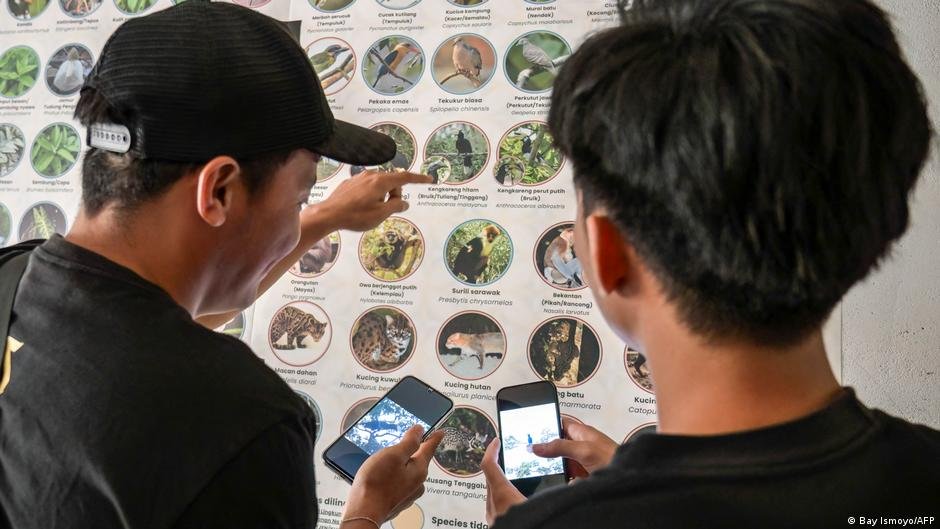
Villagers upload their photos or audio recordings via an app. An AI system checks the species and scans for duplicates, and experts verify each sighting. Only confirmed sightings receive payments — to ensure that every reward is based on a genuine sighting.
Image: Bay Ismoyo/AFP
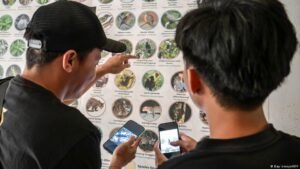
A large display board with photos and the names of the most important animal species dominates one wall in the training room. It shows which animals qualify for rewards, helping participants to quickly recognize the animals. This visual guide not only makes it easier to upload photos via the app, but also teaches participants about local wildlife.
Image: Bay Ismoyo/AFP7 images1 | 77 imageshttps://p.dw.com/p/5MrVj