Inside McDonald’s push to have AI price your Big Mac
Read a summary of this article on FAST.
Get bite-sized news via a new
cards interface. Give it a try.
Click here to return to FAST
Tap here to return to FAST
FAST
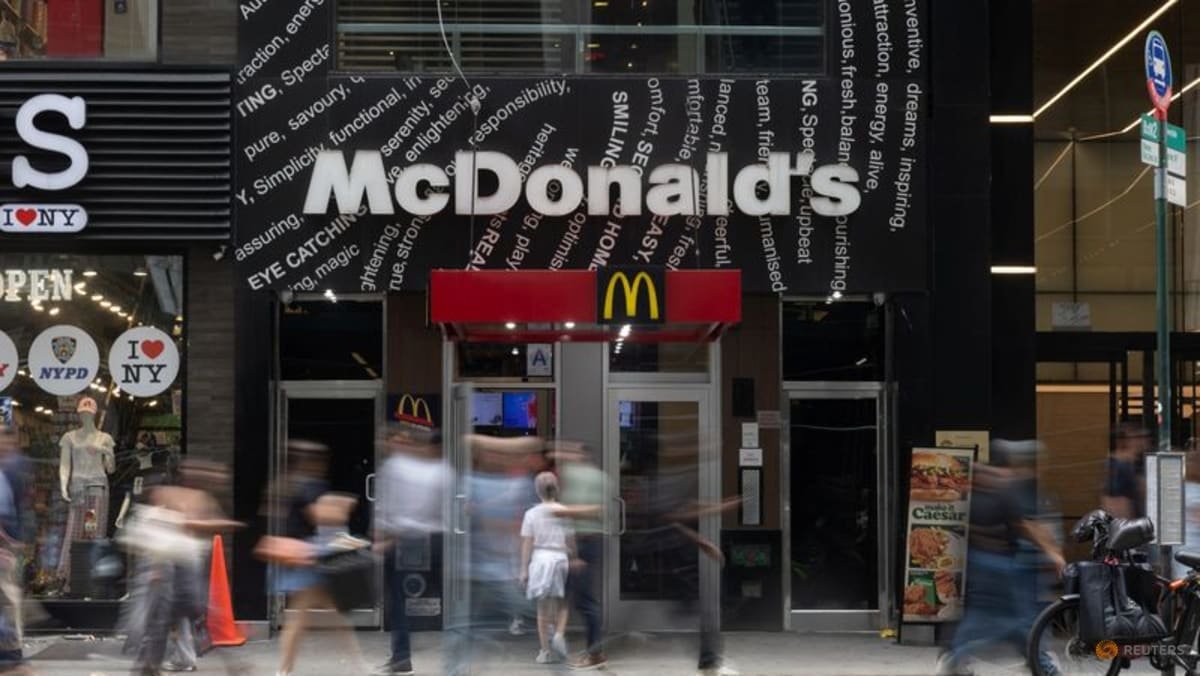
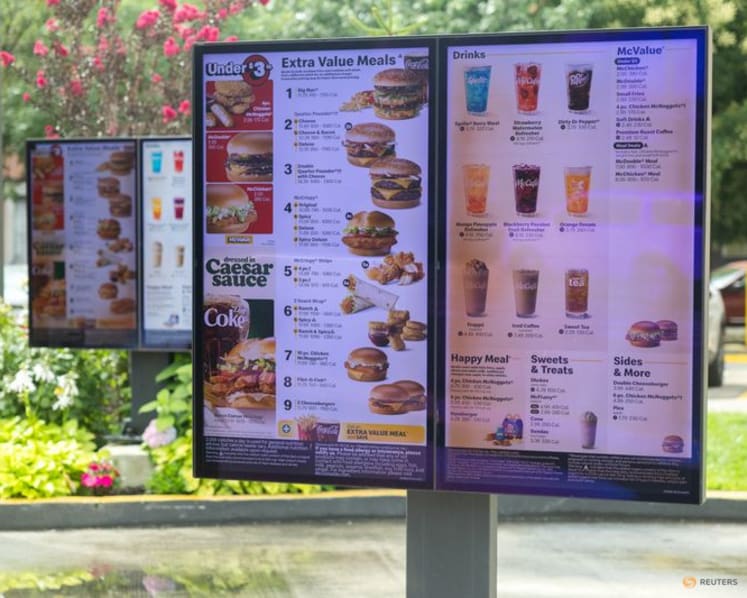
NEW YORK, Sept 29 : McDonald’s is increasingly using artificial intelligence to guide menu prices across the U.S. and some global markets, a plan that aims to boost headquarters’ profit but risks alienating customers and attracting antitrust scrutiny.
One pricing factor supercharged by AI: an estimate of how much each store’s patrons are willing to pay.
The details of how that pricing system works, its extensive use of AI, the company’s regulatory concerns and the tensions with its franchisees haven’t been previously reported. For this story, Reuters reviewed screenshots of the company pricing engine taken in August and interviewed nine sources with first-hand knowledge of the burger chain’s strategy.
McDonald’s pricing engine uses machine-learning algorithms to continually analyze data from millions of daily transactions across McDonald’s nearly 14,000 restaurants and generate what the company calls “the optimal price” at each location for each menu item, from Big Macs to discounted coffee for seniors.

Guess Word
Crack the word, one row at a time

Buzzword
Create words using the given letters

Mini Sudoku
Tiny puzzle, mighty brain teaser

Mini Crossword
Small grid, big challenge

Word Search
Spot as many words as you can
The engine has widened existing price differences for the same product between restaurants, including from neighborhood to neighborhood within the same area, three franchisees told Reuters.
Screenshots of the interface franchisees use, reviewed by Reuters, show messages including: “Your restaurant is showing MEDIUM SENSITIVITY to Price” based in part on “customer willingness to pay in your area.” The platform also contains public price information pulled from online menus of nearby restaurants of competitors including Wendy’s and Burger King. Those chains said they do not use AI in pricing decisions.
A Reuters check of prices in September on the McDonald’s mobile app showed price differences. For example, a company-run store in Fresno, California sells a Big Mac for $5.69, but another company-run restaurant two miles away sells the same sandwich for $6.89, a 21 per cent premium. Reuters could not confirm if the price difference is the result of the price engine’s recommendations or other factors.
McDonald’s says its franchisees are free to set their own prices, but five store owners told Reuters the company pressured them to use the AI-pricing tools. A franchisee document from June reviewed by Reuters shows McDonald’s records franchisees’ deviations from the recommendations in detail.
In January, McDonald’s started requiring franchisees to be “constructively engaging with McDonald’s approved Pricing Consultant and Tools” as part of its new business standards, according to an internal communication sent to franchisees and reviewed by Reuters.
McDonald’s said in a statement costs and other factors vary across its stores, and that restaurants even a few miles apart can belong to distinct markets.
Its pricing portal is “a tool, not a mandate, designed to provide restaurant-specific recommendations to help franchisees deliver value for customers and make informed business decisions,” McDonald’s said. The company also described Reuters reporting as “speculative and uninformed” claims that “attempt to recast a standard business practice as something controversial.”
Other fast food companies are turning to AI to help with pricing and other operations, including Yum Brands, the world’s largest restaurant company by location count, which owns the KFC and Taco Bell brands. Yum did not immediately respond to a request for comment.
In a meeting with investors on Wednesday, McDonald’s said its “industry-leading” pricing engine was important to a larger corporate bet on affordability, and that franchisees see the need for inexpensive menu items to lure low-income consumers.
McDonald’s deeper push into AI pricing has potential regulatory and reputational risks.
Other consumer companies have faced swift public backlash after disclosures that they may use algorithms to price the same product differently.
Wendy’s endured a wave of criticism over the potential for unfair price fluctuations in 2024 after its CEO announced plans to test “dynamic pricing.” Wendy’s said its comments were misconstrued and told Reuters it did not implement the system. Instacart in December ended its use of AI tools that showed different grocery prices to different shoppers in a limited test, after a study disclosing the practice sparked criticism from consumers and lawmakers. Instacart said it will never use personal information to determine item prices.
“It’s in the interest of the company to know where there’s (customer) demand and to get that feedback in real time,” said Brooklyn resident Diane Bezucha. But if that technology is used to raise prices simply because of more demand, “that doesn’t really help me as a customer.”
As the use of AI becomes more widely adopted, U.S. courts and regulators are scrutinizing whether certain algorithmic pricing practices can facilitate illegal coordination between competitors – which franchisees are sometimes considered.
McDonald’s cautions that franchisees accessing its pricing engine portal risk scrutiny related to antitrust prohibitions because its restaurant owners “may be competitors,” according to screenshots of the legal terms for the portal Reuters reviewed in August.
THE MAKING OF AN $18 BIG MAC
In 2023, McDonald’s CEO Chris Kempczinski told investors that McDonald’s had developed proprietary tools to evaluate pricing at individual restaurants.
That same year, the pricing tools suggested to Connecticut franchisee George Michell that he charge about $18 for a Big Mac meal sold off a state turnpike, according to the restaurant owner’s lawsuit alleging that the brand tried to push him out of the franchisee system for discriminatory reasons. Reuters could not independently establish what the tool recommended to Michell.
McDonald’s has disputed the lawsuit and said Michell repeatedly breached his franchise agreements. Although the price went viral and sparked widespread consumer outrage, the price “caused no loss of sales” at the restaurant, according to a filing from the franchisee in December. The case is ongoing, but courts have dismissed claims related to McDonald’s breach of contract.
Some franchisees say the engine recommended large price increases during the pandemic and afterwards, as inflation soared. But in recent months the engine has pushed more conservative pricing – including some decreases – causing friction between franchisees and corporate headquarters. McDonald’s has used some form of an AI pricing tool since at least 2019.
Pushing lower prices to attract more customers and lift sales can boost the corporation’s bottom line because the headquarters makes the vast majority of its money from taking a percentage of its franchisees’ total revenue – regardless of individual-store profit margins. Franchisees, by contrast, have stronger incentives to raise prices to help cover the rising wages, rent and other restaurant expenses, which are up 36 per cent since 2019, the National Restaurant Association estimates.
Despite the engine’s consumer-friendly push for more conservative pricing, U.S. foot traffic at McDonald’s has declined year-over-year for every complete month since March, according to estimates from data analytics firm Placer.ai.
MCDONALD’S TRACKS ‘PRICING NON-COMPLIANCE’ BY FRANCHISEES
McDonald’s sends AI pricing guidance to franchisees at least three times a year, company documents show.
One former franchisee said she didn’t feel compelled to take the prices but five others described various forms of pressure from the company to use them. Karen King – a former store owner who retired from the franchise system last summer – and other franchisees described phone calls from corporate officers to discuss pricing when they strayed from those recommendations.
“You don’t really have much of a choice anymore” about pricing, King said. McDonald’s did not address her specific claims.
McDonald’s has power over decisions that can make or break a franchisee’s business, such as their eligibility to renew or open new stores. CEO Kempczinski told investors in August that, because of recent changes to the way the company conducts business reviews of its franchisees, “pricing non-compliance in certain cases is part of those conversations.”
At the same time, the company also warns the system may create potential legal risk for owners. The pricing portal’s terms of service warn that owners “may be competitors of each other” and therefore “it is particularly important for all Users of the Tool to understand and comply fully with anti-trust and competition laws.” The terms say that for additional guidance, franchisees should consult with their own attorneys. The document also says franchisees are “always free to determine the final price.” Reuters reviewed the pricing portal’s terms of service in August.
That language is “an acknowledgment there’s a potential problem” given recent scrutiny of pricing algorithms by the Federal Trade Commission and other antitrust regulators over collusion concerns, said William Kovacic, director of the competition law center at George Washington University and a former commissioner of the Federal Trade Commission appointed by Republican President George W. Bush.
Other experts countered that the legal and regulatory risk to McDonald’s is low because the competitors are franchisees, and courts in recent decades have given wide latitude for brands to exert control over their franchisees’ pricing.
McDonald’s said in a statement it takes antitrust compliance seriously and that the guidance in its terms of service is not evidence of anticompetitive behavior.
The FTC and the U.S. Department of Justice, which also enforces antitrust regulations, did not respond to a request for comment.
HOLDING THE LINE ON SUMMER ICE CREAM PRICES
McDonald’s influences the pricing engine’s recommendations by working closely with Tiger Analytics, which runs the AI platform, according to two former Tiger employees. The former employees said McDonald’s regularly provided rules and corporate targets, such as attracting more customers or boosting profits. Tiger declined to comment on its work for McDonald’s.
Examples of McDonald’s parameters for the price engine included, according to the two employees: focusing increases on menu items that have not had a price increase in at least two years; only increasing prices on items that have had recent price increases in at least 30 per cent of stores; excluding ice creams and drinks from price increases during summer months.
Some franchisees, facing rising costs, resist such guidance. At the company’s August earnings call, CEO Kempczinski called out store owners who didn’t comply with the chain’s under-$3 menu pricing guidance – about a third of total franchisees. He said their “business results (were) a lot softer” without disclosing how the company reached that conclusion.
Source: Reuters
Sign up for our newsletters

Get the CNA app
Stay updated with notifications for breaking news and our best stories
Get WhatsApp alerts
Join our channel for the top reads for the day on your preferred chat app

Get bite-sized news via a new
cards interface. Give it a try.
Click here to return to FAST
Tap here to return to FAST
FAST