‘They think it’s just a picnic spot’: Kusu Island regulars lament its declining appeal among youth
About 15,500 people visited during the pilgrimage last year, roughly half the 30,000 recorded in 2019.
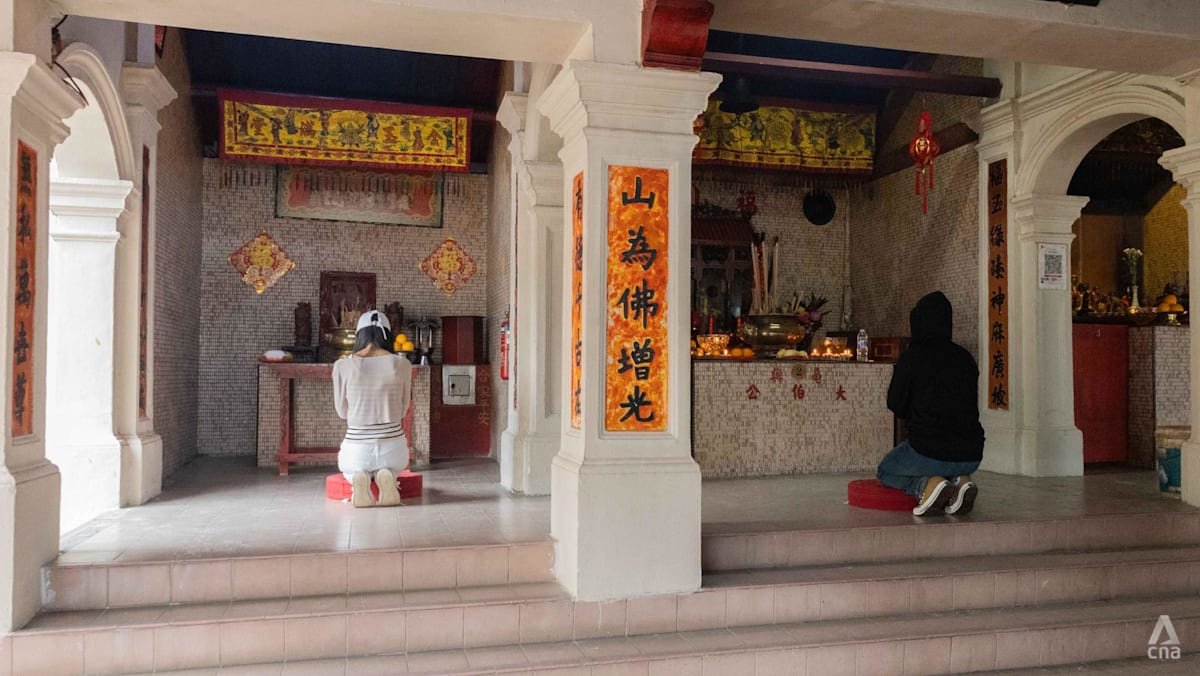
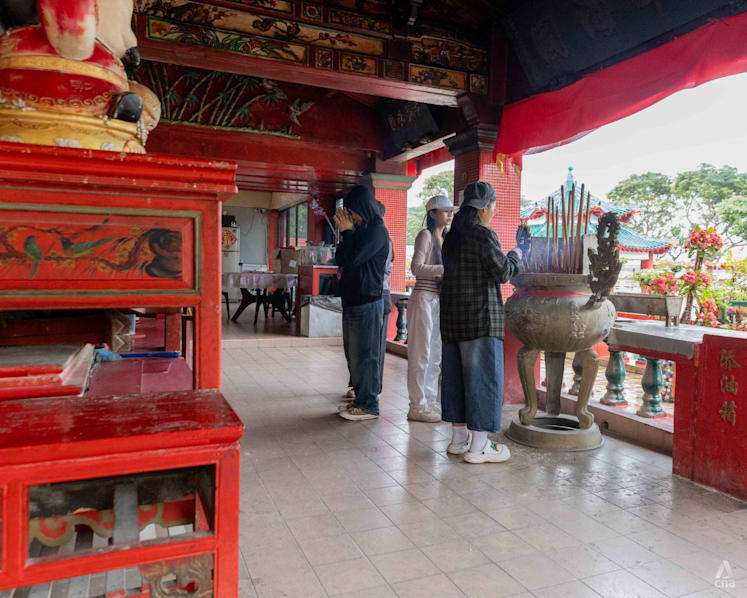
Devotees at the Tua Pek Kong Temple on Kusu Island, on Sep 27, 2026. (Photo: CNA/Ili Mansor)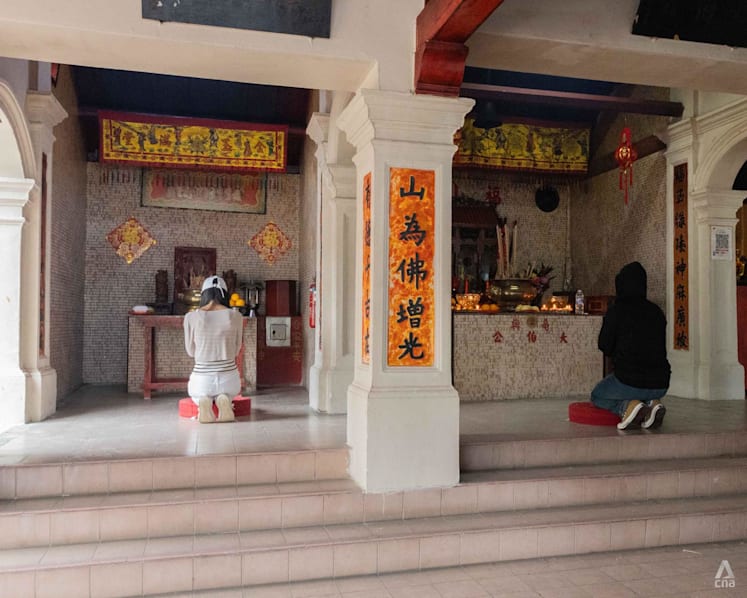
New: You can now listen to articles.

This audio is generated by an AI tool.

Read a summary of this article on FAST.
Get bite-sized news via a new
cards interface. Give it a try.
Click here to return to FAST
Tap here to return to FAST
FAST
SINGAPORE: For Mr Hoo Tiang Lai, the Kusu pilgrimage used to mean a bustling month-long event, with hawker stalls and souvenir shops serving thousands of pilgrims who descend on the island to visit its two religious sites.
These days, the annual pilgrimage is a quieter affair, with declining attendance and fewer stalls, said the 65-year-old, who has run hawker stalls at the pilgrimage for over 40 years.
“Last time there were 20 stalls, with many different owners. It was competitive and we had to tender for the stalls,” said Mr Hoo, who sells drinks, noodles and finger food. “People would think that Kusu season got a lot of people sure visit, so they will spend the money to tender.”
This year’s edition, which starts on Oct 10, will have just three food and beverage stalls and one souvenir stall.

Guess Word
Crack the word, one row at a time

Buzzword
Create words using the given letters

Mini Sudoku
Tiny puzzle, mighty brain teaser

Mini Crossword
Small grid, big challenge

Word Search
Spot as many words as you can
This follows a downward trend in attendance over the years. Visitorship in 2019 was about 30,000, according to the Singapore Land Authority. Under safe management restrictions during the COVID-19 pandemic, attendance fell to about 11,200 in 2020 and about 9,400 in 2021, before rising to about 20,000 in 2022.
It reached 22,500 in 2023, when the Tua Pek Kong Temple celebrated its centennial. Numbers then declined to about 18,500 in 2024 and 15,500 in 2025.
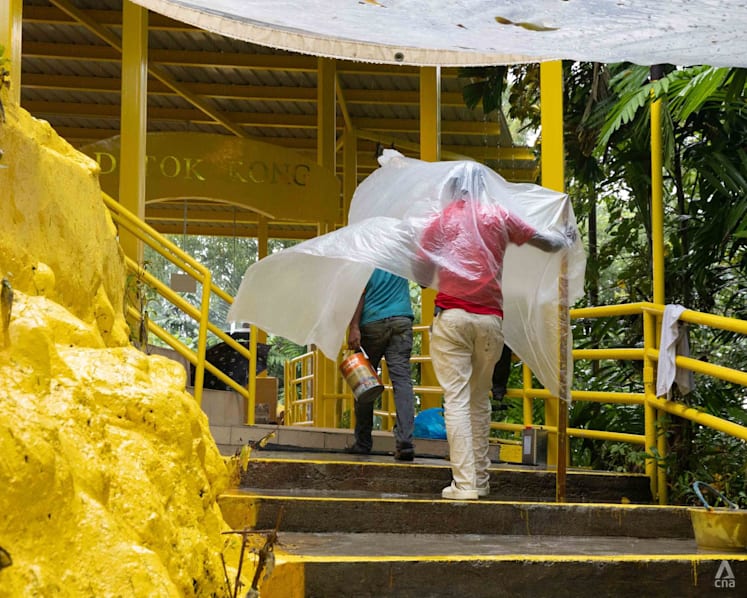
During the annual pilgrimage, devotees visit the temple and climb 152 steps to a keramat, offering joss sticks and prayers at both sites.
AGEING PILGRIMS
Those involved point to an ageing pilgrim population and a lack of awareness among the younger generation as reasons for the declining numbers.

“The older people have passed away. Younger people don’t really know about Kusu. They think it’s just a picnic spot,” said Mr Hoo.
Mr Ishak Samsudin, caretaker of the keramat on Kusu Island, echoed the sentiment.
“All the kids just usually follow their parents. So when their parents pass away, they stop coming, so the crowd is growing lesser and lesser,” said the 65-year-old.
Tua Pek Kong Temple caretaker Seet Seng Huat said the fall in visitors is driven in part by the lack of knowledge among the younger generation.

“They don’t know the significance of the pilgrimage, and the older generation have also not managed to convince them to come along or learn more about it,” said the 78-year-old, who has been caretaker since 1986.
“The Kusu pilgrimage is actually very meaningful. It’s been passed down for so many generations, and has been taking place even before we were born.”
Mr Seet and Mr Ishak said Malaysian visitors have dropped significantly over time; they once made up at least half of all pilgrims, Mr Ishak recalled.
Mr Li Guoli, manager of Singapore Island Cruise and Ferry Services, which operates ferries to Singapore’s southern islands, said his firm has also seen fewer Malaysian visitors over the years.
“The stronger Singapore dollar against the Malaysian ringgit may be one contributing factor, as travelling to Singapore has become relatively more expensive for Malaysian visitors,” he said.
Heritage observers also noted the generational shift. Darma Persada University visiting professor William Gibson said: “Younger people probably look at this as kind of an old-fashioned superstition, and something that isn’t as important in their own spiritual lives, and something that’s kind of a cultural event that becomes optional, as opposed to something that would be a necessary event in the calendar.”
Mr Ho Yong Min, founder of The Urbanist Singapore, which leads learning walks and curates heritage experiences for schools and organisations, added that accessibility is another issue.
“You can only get there by ferry, there’s no overnight stay, and the keramat sits atop more than 100 steps – a real barrier for the ageing devotees who are often the most committed ones,” he said.
DECLINING STALLS, DONATIONS
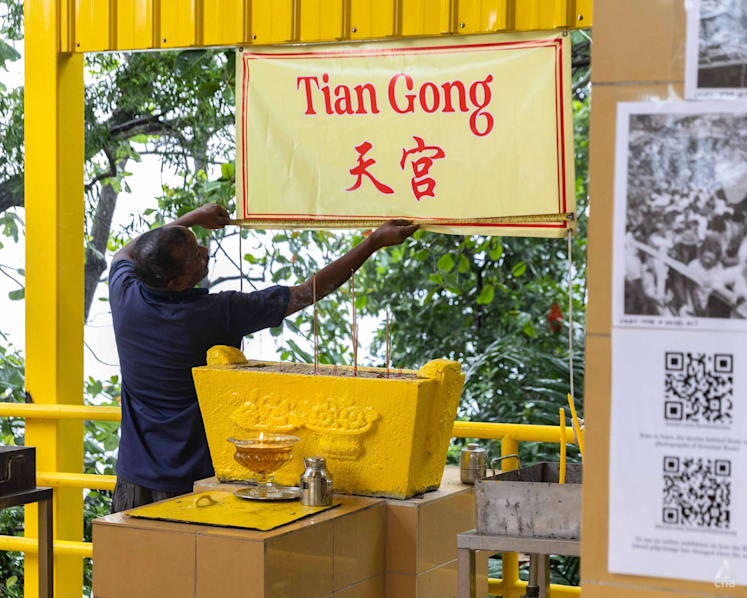
Smaller crowds have also thinned the pilgrimage’s surrounding ecosystem, such as hawker stalls and souvenir shops.
Mr Hoo said around 12 souvenir stalls used to sell items like keychains, amulets and merchandise featuring the tortoise, a Kusu Island icon – a stark contrast to the sole one this year.
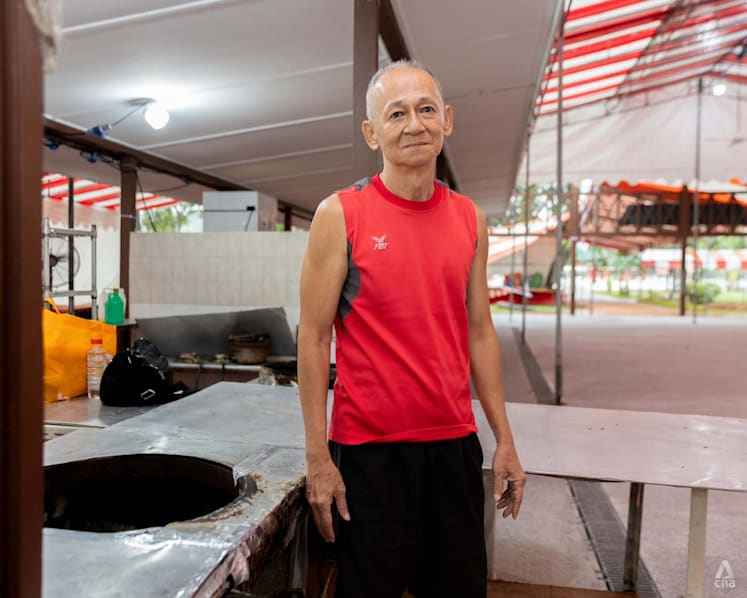
The 65-year-old employs about five full-time staff members on weekdays, with the team boosted to 10 on weekends with help from his family members.
The decline began about 20 years ago, when stall numbers fell to about five, he recalled.
“Nowadays, nobody wants to do this. Last time, there were two old-timers. They did this for very long, but after they passed away, nobody took over their businesses,” he said.
Hidden costs, such as transport and setting up equipment like tables, make the business hard to sustain long term. Some first-timers have learnt the hard way, barely breaking even by the end of the pilgrimage month, said Mr Hoo.

Supplies also need careful planning because of the distance from the mainland, he said.
“It’s not like on the mainland, where if I want five packets of kway teow, I can just place an order with suppliers. Over here, if you don’t have enough, you call already then have to wait here for three hours.”
Donations at the temple and keramat have also dropped significantly alongside the falling visitorship.
The pilgrimage month typically brings Kusu Island its peak crowd of the year, and the keramat its highest donations, said Mr Ishak, who took over the role from his father more than 20 years ago.
He said donations have fallen by “a lot” over the years. “Actually, when we are selling the joss sticks, we can see the size of the crowd from the day’s sales,” he said.
His father used to employ 20 full-time staff members at the keramat, maintaining the place by day and guiding devotees when they came to pray. When Mr Ishak took over, he cut the headcount to 10 to manage costs, reducing it further to five in the last two years.
Monthly costs, including tenancy to the government, insurance and transport, total about S$20,000, he said.
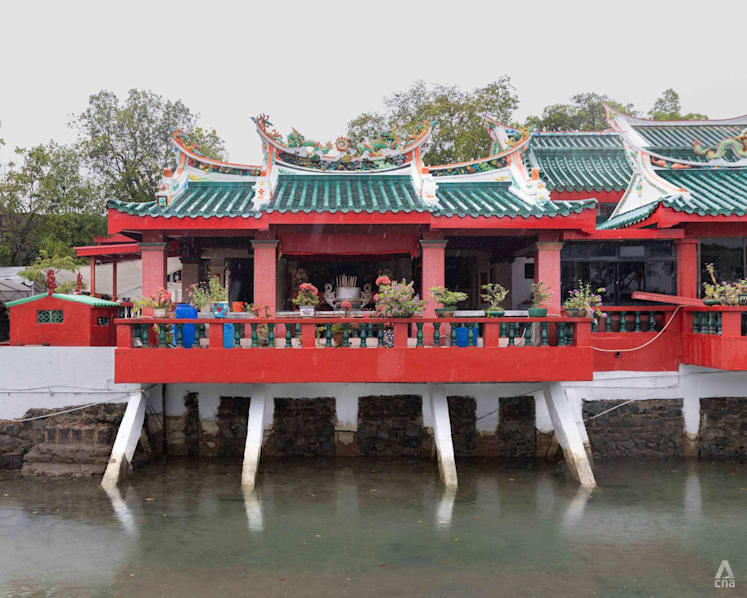
Mr Seet said the Tua Pek Kong Temple’s donations have similarly declined. “Donations have dropped by a lot, but we try our best to manage,” he said.
He noted, however, that the temple now relies less on the pilgrimage season for visitors and donations, as more frequent ferry services mean people visit on other days of the year too.
“Those who come and pray daily, will also donate a bit. Last time, only during the Kusu pilgrimage will we have people coming. Nowadays, the ferry runs every day and almost every hour, so we don’t need to depend on the pilgrimage crowd only,” said Mr Seet.

“ONE YEAR MEET ONE TIME”
For Mr Hoo, setting up shop at Kusu during the pilgrimage season is not for profit, but to gather with old friends and serve the pilgrim community.
“We stay here for one month and never go back (to the mainland),” he said. “We all know each other, including the people from the temple and the keramat. So every night, we will gather and chit-chat; it’s like some sort of friendship. One year we meet one time.”
Mr Ishak said the pilgrimage is a unique event that captures Singapore’s multiracial and multi-religious identity, drawing visitors from beyond either religion to the island’s two sites.
“They may come here not exactly to pray, but just to pay their respects,” he said. “It’s very important we have to maintain this heritage, because if this type of place is no more, means no more, it’s gone already.”
Mr Victor Yue, 75, has made the annual journey to Kusu Island for about two decades.
Since 2006, he has coordinated trips for the Siong Leng Musical Association, which puts up a traditional Nanyin performance on the island each year. The group typically numbers about 100 people, said Mr Yue. A few return faithfully every year, while others are locals and foreigners curious about what takes place.
“Most Singaporeans when they go to Kusu pilgrimage, they will go down to pray to Tua Pek Kong, and they also go up to the keramat to pay respects to Datuk Nenek, which is also very interesting because the people up there will help you to petition to Datuk for blessings, in a mix of mixture of Malay and Hokkien,” he said.

Younger visitors especially find this unique, he said, and often record the process as it unfolds. “So it’s more like a fun thing rather than a very serious religious thing for them,” said Mr Yue.
For 15-year-old Dylan Sim, the pilgrimage carries a different weight.
The Secondary 3 student has made the trip twice: first with his maternal grandparents at age 10, and again last year with his Taoist group, the Quan Zhen Cultural Society.
Last year’s visit was bittersweet, he said.
“When I was young, my grandparents brought me there. My grandfather is no longer around. He passed away a year after that trip we made,” he said. “So when I went back there, it brought back memories for me, and it was quite meaningful to retrace the steps we took together.”
He knew little about the pilgrimage’s significance on that first trip, he said; his grandparents explained it to him on the ferry over.
Dylan believes most of his peers know even less.
“I realise that in my generation, not many people will go and learn about such traditions, like the story of the Tua Pek Kong Temple and how the island is a ‘turtle island’ and stuff like that,” he said.
Social media content about the pilgrimage tends to draw older audiences rather than his own age group, he added.
“I think it is quite important for more youth or teenagers to participate and acknowledge this island, and for people to go there and understand its history and past stories. It’s quite special that there’s such a place on this island far away from the mainland,” he said.
FEW REMAINING PILGRIMAGE TRADITIONS
The Urbanist’s Mr Ho said it would be fair, if understated, to describe the Kusu pilgrimage as one of Singapore’s few remaining local pilgrimage traditions.
“For well over a century, Chinese and Malay devotees have made the same sea crossing to Kusu, often visiting sacred spaces associated with traditions beyond their own,” he said.
“Most of our religious calendar plays out within the city. Kusu Island asks for an actual journey out to sea to a place you can’t casually wander into. That separation from everyday life is what makes it an intentional pilgrimage.”

Kusu means “tortoise” in Hokkien, and legend has it that a giant tortoise transformed itself into land to save two shipwrecked sailors, one Chinese and one Malay.
If participation continues declining, what Singapore risks losing is not the legend of the island itself, which can still be told in a book or online, said Mr Ho.
“What’s at risk is the legend as something believed and enacted, kept alive by people choosing to go every year and be part of it.”
Prof Gibson said the pilgrimage, which can be traced back to the 1840s, also links Singapore to the wider region. Sites off Malacca and in North Jakarta have similar keramat and Tua Pek Kong Temple combinations.
“We’ll always have those kinds of memorialisations of the event. But if the event itself ceases to happen, or becomes only kind of perfunctory or something done for tourists, then it loses something quite intangible.”
Heritage observers said efforts should focus on preserving the pilgrimage’s meaning and continuing the tradition, even as the community shrinks.
“I don’t think numbers will recover, and I’d question chasing them as the goal. The forces behind the decline, secularisation and an ageing devotee base, are structural, not sentimental. Sadly, I don’t think a campaign can reverse that,” said Mr Ho.
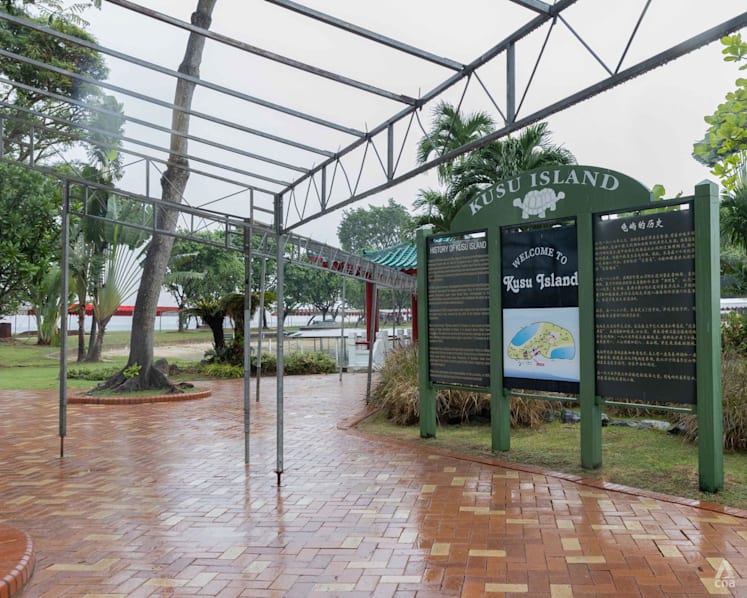
Still, he called efforts to help the Kusu story find new life, including its inclusion in this year’s Singapore Night Festival, “heartening”.
Prof Gibson said the decline in pilgrim numbers is something “any cultural institution that represents the past has to deal with” as it seeks relevance in the modern world.
“If you turn it into a tourist attraction more than it already is, then I think it gets watered down and becomes a kind of simplistic gesture, and I don’t think that would be a very good solution either.”
However, Mr Ho said the island’s recreational draw offers an opportunity to keep the Kusu story alive, noting that some younger Singaporeans already bring their children to the island for the lagoons and the tortoise sanctuary.
“The gap is connecting that visit to the history sitting right next to it, through better on-site interpretation, documenting the oral histories while the older devotees are still around to tell them, and giving schools and heritage groups more reason to build a proper visit around the pilgrimage season,” he said.
Prof Gibson suggested that beyond government initiatives, preserving the pilgrimage could be a grassroots effort, with participants themselves controlling its direction.
“The loss would be profound, but ultimately, if people no longer are interested in participating in that as an important part of their daily life, then you can’t force them to do it,” he said.
Source: CNA/fb(cy)
Sign up for our newsletters

Get the CNA app
Stay updated with notifications for breaking news and our best stories
Get WhatsApp alerts
Join our channel for the top reads for the day on your preferred chat app

Get bite-sized news via a new
cards interface. Give it a try.
Click here to return to FAST
Tap here to return to FAST
FAST