Tuz Golu, one of Turkey’s largest salt lakes, is threatened by drought and groundwater extraction. The water crisis is endangering wildlife, tourism, and the salt industry. What does the future hold for the lake?
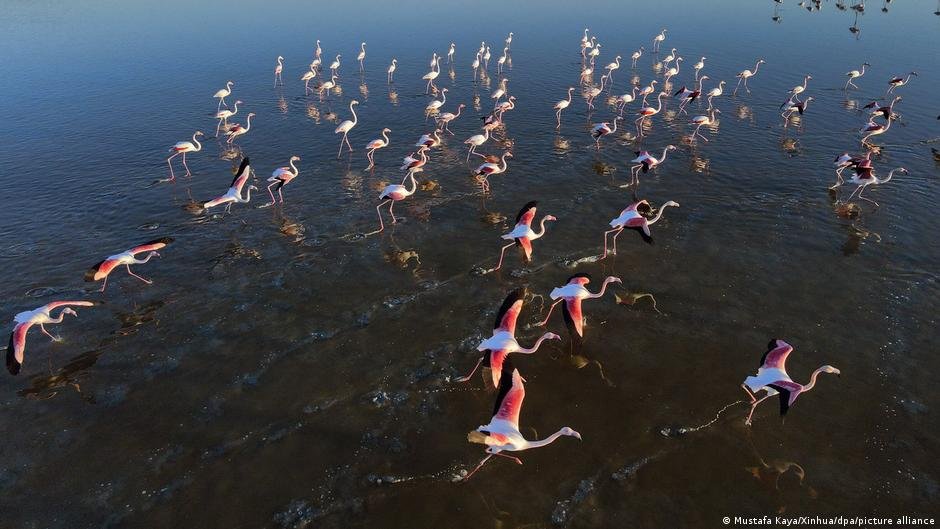
Image: Mustafa Kaya/Xinhua/dpa/picture alliance
Tuz Golu, which translates to “Salt Lake,” is located on the Konya Plateau in the heart of Central Anatolia, about 150 kilometers (93 miles) south of Ankara. It is known for its stunning natural landscape and is one of the world’s most saline lakes. Also known as Lake Tuz, it is considered one of the world’s most important breeding and nesting grounds for flamingos.
Image: Ozan Kose/AFP
In the soft light of the evening sun, hundreds of flamingos forage for food in the lake’s waters. But this idyll is deceptive: Lake Tuz is threatened by a worsening water crisis. During the drought-stricken summer of 2021, the lake ― which is already very shallow ― had almost completely dried up.
Image: Ozan Kose/AFP
The salt lake, which covers an area of about 1,500 square kilometers, is located in a region with low precipitation and has neither an inflow nor an outflow. In the summer, its water level drops significantly. According to official figures, about 1,000 young flamingos died five years ago as a result of water scarcity and rising salinity.
Image: Mustafa Kaya/Handout/Xinhua/IMAGO
Intensive groundwater extraction for agricultural purposes in the Konya Basin is exacerbating the water crisis and making Lake Tuz increasingly vulnerable to droughts. Two years ago, researchers at the Middle East Technical University in Ankara found that only about 3% of the precipitation in the basin actually reaches the lake.
Image: Ozan Kose/AFP
But there is also cause for hope: Conservation efforts and, above all, the heavy rains last winter and spring have breathed new life into Lake Tuz. The flamingos are back, and their numbers are higher than they have been in many years. This is an encouraging sign of the recovery of this important breeding ground.
Image: Seyit Konyali/Anadolu Agency/IMAGO
Following the flamingos’ return, it remains uncertain how the lake in the heart of Anatolia will fare in the event of future rainfall shortages. Climate change and water scarcity continue to threaten the habitats of many animals. At least for now, the lake is recovering: In addition to the flamingos, rare steppe eagles have also returned.
Image: Ozan Kose/AFP
Elsewhere along the lake’s shore, heavy machinery travels across the salt flats to harvest salt. It is transported to facilities where it is processed, refined and shipped to customers both domestically and abroad. The lake is Turkey’s most important source of salt: It accounts for about two-thirds of the country’s annual salt production and is a major source of local jobs.
Image: Ismail Aslandag/Anadolu/picture alliance
The unique landscape also attracts visitors from all over Turkey and beyond. They wade through the shallow water and take pictures of their reflections on the smooth surface of the lake. But behind this impressive backdrop lies a fragile ecosystem whose future is uncertain in the face of increasing water scarcity.
Image: Ozan Kose/AFP8 images1 | 88 imageshttps://p.dw.com/p/5OTQp