Analysis:Musk pushes regulatory limits with Tesla’s Cybercab robotaxi service
Read a summary of this article on FAST.
Get bite-sized news via a new
cards interface. Give it a try.
Click here to return to FAST
Tap here to return to FAST
FAST
SAN FRANCISCO, Sept 4 : Tesla’s race to deploy Cybercab robotaxis will put regulatory limits to the test as the EV maker begins rides in the sporty, two-seaters that run without a steering wheel, pedals or mirrors.
Just hours after an event in downtown Austin, Texas, to mark the rollout, the National Highway Traffic Safety Administration said it opened an audit of about 1,000 Cybercab vehicles to assess how Tesla determined the cars comply with federal vehicle-safety regulations.
U.S. regulators limit commercial deployment of vehicles that do not adhere to decades-old federal safety standards that were written for human-driven vehicles and require manual controls. But industry experts said regulatory gray areas and Elon Musk’s litigious track record could give Tesla a chance to force the Cybercab into broad use anyway.
Amid a frenzy of fans and social media influencers in downtown Austin, Texas, Cybercabs were added to Tesla’s robotaxi fleet that now operates its best-selling Model Y SUVs. Tesla said Cybercab rides were open to everyone and executives described pricing plans, without specifically saying whether they were starting to charge.

Guess Word
Crack the word, one row at a time

Buzzword
Create words using the given letters

Mini Sudoku
Tiny puzzle, mighty brain teaser

Mini Crossword
Small grid, big challenge

Word Search
Spot as many words as you can
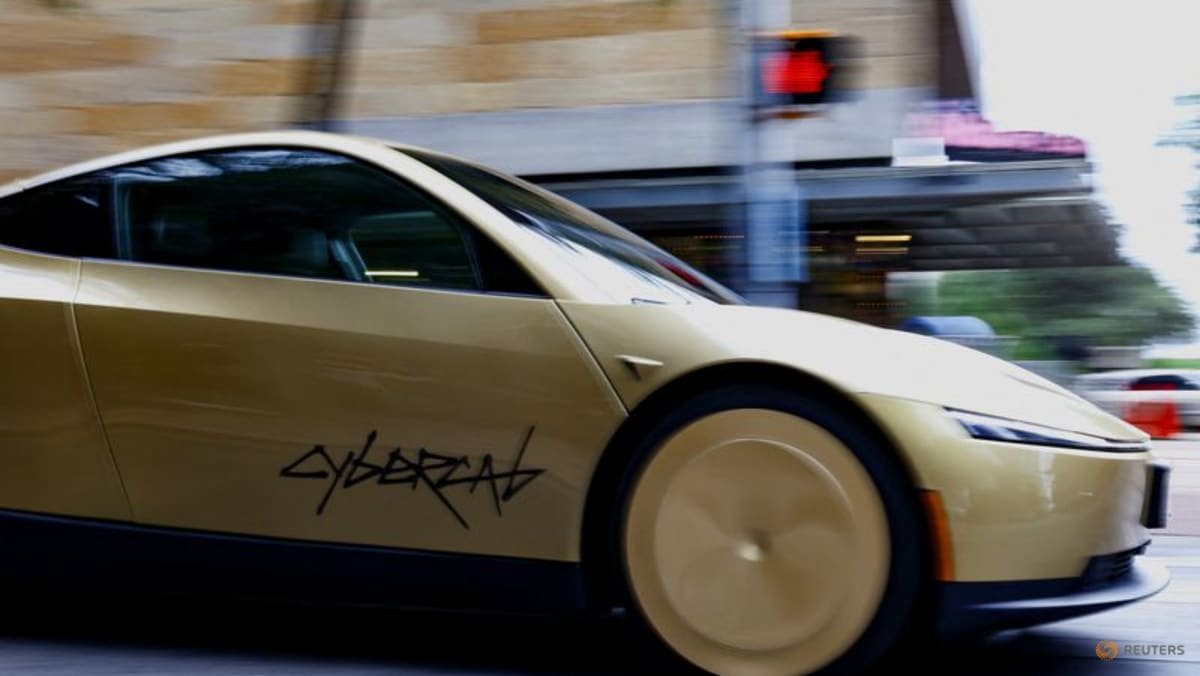
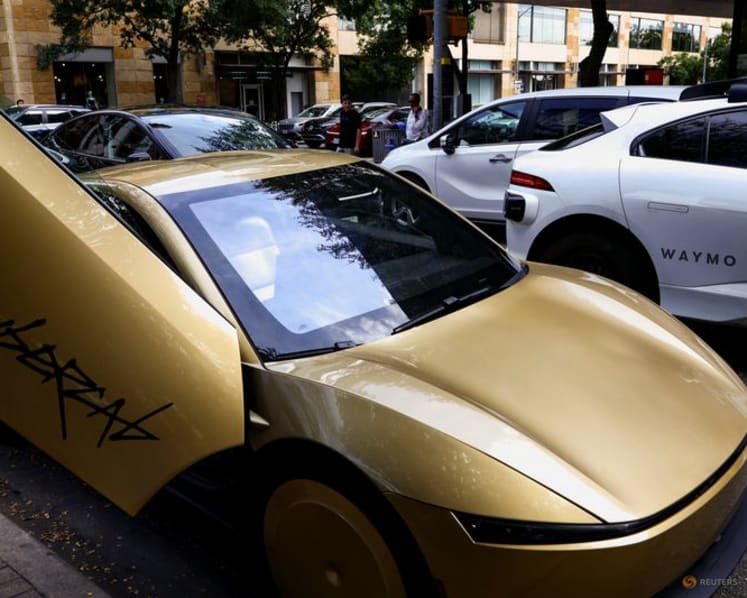
The golden, butterfly-door Cybercab embodies Musk’s strategy of betting the company on self-driving software and robotics. That bet has pushed its stock valuation to $1.4 trillion, more than the top several global automakers combined.
Unlike most other countries, where new vehicle models and technology need regulatory clearance ahead of launch, automakers in the United States can deploy them on the public roads by self-certifying that they meet federal standards.
“I don’t think there is a reasonable interpretation that can be made to suggest that the Cybercab can comply with the Federal Motor Vehicle Safety Standards,” said Michael Brooks, executive director of the Center for Auto Safety, a consumer advocacy group.
While NHTSA is pushing faster than usual to change vehicle-safety standards and separately drafting new rules to accommodate driverless vehicles, its efforts, experts have said, are likely to take longer to kick in than what Musk is promising.
Musk is not known to wait for regulations, though. “Tesla historically has tested limits and pushed boundaries on regulations,” said Philip Koopman, a Carnegie Mellon University engineering professor and autonomous-vehicle safety expert. “I fully expect Tesla to test the limits.”
Musk could come up with a “creative interpretation” of vehicle regulation, say that Cybercabs comply with federal standards and “flood the market” with them, Koopman said. “That could take NHTSA or state regulators years to resolve. Meanwhile, Tesla could be operating on public roads.”
Tesla did not respond to requests for comment.
A VEHICLE WITHOUT CONVENTIONAL CONTROLS
Tesla started manufacturing the Cybercab in April, and Musk promised production would grow “exponentially” later in the year or next. During its unveiling in 2024, Musk had said that the company would also sell them for less than $30,000.
Since then, Tesla launched a limited, paid robotaxi service in Texas and Florida with its best-selling Model Y SUVs. The Model Y robotaxi drives itself, but it has the manual controls required by federal safety standards, as well as human backup drivers in some cars.
Experts have questioned how well Teslas can drive themselves. Tesla has said its Full Self-Driving software, a version of which runs Cybercabs, is up to 10 times safer than human drivers, and its Austin service has operated without a fatal accident. But Reuters interviews with multiple former Tesla employees who trained the company’s self-driving software showed it continued to struggle with basic maneuvers.
“No public information about Tesla’s capabilities suggests that Tesla is anywhere close to being able to safely and reliably deploy an automated driving system over the wide range of conditions that would be required for a vehicle without conventional controls,” said Bryant Walker Smith, a University of South Carolina law professor focused on autonomous-driving regulation.
A PATH TO PUBLIC ROADS
For vehicles that do not comply with safety standards, NHTSA offers an exemption process that automakers can apply for. The catch: it caps deployment to 2,500 vehicles annually.
Tesla’s Cybercab will not be subject to that cap, the company’s engineering chief Lars Moravy said on social media platform X earlier this year without offering details. In the past, NHTSA has said that Tesla had not applied for it.
That has sparked speculation that Tesla has chosen to self-certify, as Koopman suggested.
Precedent does not bode well, however: Amazon’s Zoox, which is rolling out a vehicle resembling a toaster oven on wheels, with two bench seats facing each other and no driving controls, tried the self-certification route and failed.
After Zoox certified its vehicle, NHTSA launched an investigation that ended with Zoox withdrawing the claim. Still, about a year after that, Zoox received the federal exemption for limited commercial deployment in July.
Any clash between NHTSA and Tesla over the company’s self certification could land in court, three former senior NHTSA officials told Reuters before Thursday’s event. “It does happen from time to time and NHTSA, importantly, has not always won these cases,” one of them said.
Source: Reuters
Sign up for our newsletters

Get the CNA app
Stay updated with notifications for breaking news and our best stories
Get WhatsApp alerts
Join our channel for the top reads for the day on your preferred chat app

Get bite-sized news via a new
cards interface. Give it a try.
Click here to return to FAST
Tap here to return to FAST
FAST