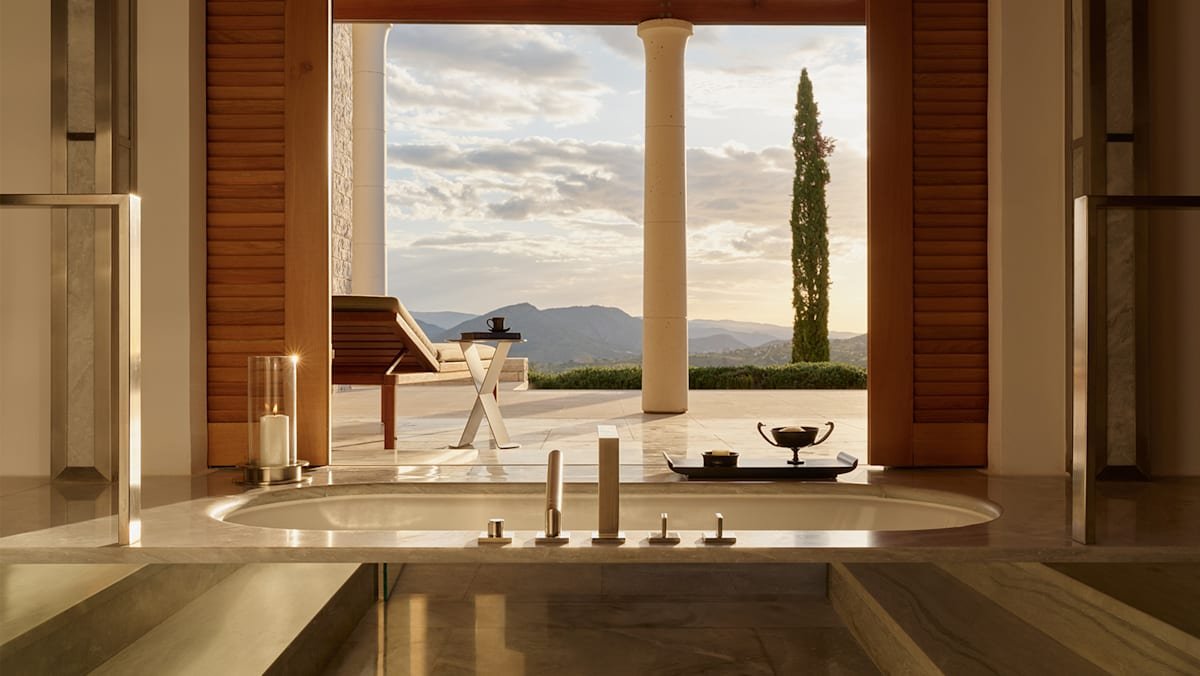
Amanzoe: The Greek resort where architecture, art and landscape come together
Set high above the Peloponnese, Amanzoe pairs Ed Tuttle’s monumental architecture with sweeping sea views, serene gardens and a new exhibition of contemporary Greek art.
Amanzoe combines monumental design with a strong sense of stillness and connection to the landscape. (Photo: Amanzoe)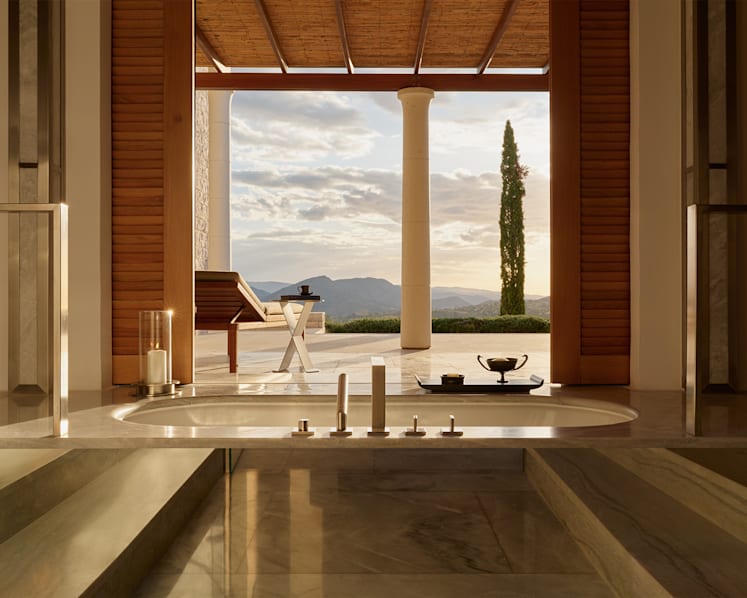
New: You can now listen to articles.

This audio is generated by an AI tool.

By
Read a summary of this article on FAST.
Get bite-sized news via a new
cards interface. Give it a try.
Click here to return to FAST
Tap here to return to FAST
FAST
The drive from Athens to Amanzoe takes the better part of three hours – south-east through the Peloponnese, past concrete toll plazas and the scruffy outskirts that gradually give way to dry hills and olive groves, the Saronic and Argolic Gulfs winking occasionally through gaps in the scrub.
History looms in this part of Greece. Not far from here, Mycenae’s Cyclopean walls still stand on the plain where, according to legend, Agamemnon once raised his armies to rescue Helen and beneath the clear waters of Porto Heli Bay lie the submerged ruins of Halieis, a city that flourished from the seventh to the third century BC. Porto Heli itself comes and goes in a flash of marina and whitewash. The road climbs across switchbacks and ancient hills, the sea never far away, until Amanzoe eventually comes into view.
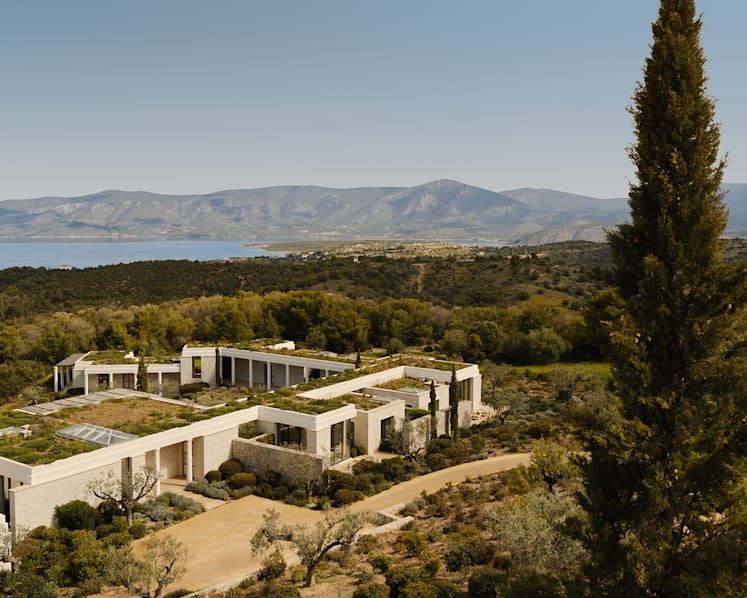
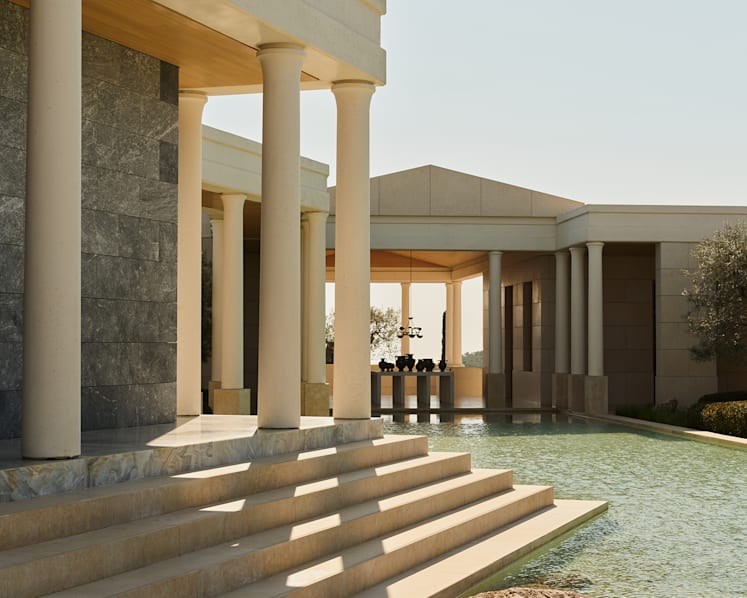
No photograph prepares you for the resort. Not because the photographs lie, exactly. They simply can’t capture what is fundamentally a spatial experience – a grand confluence of light and stone that needs to be walked through. From the marble porte-cochere onwards, Ed Tuttle’s architecture is a showstopper. The Seattle-born, Paris-based designer invented the modern Aman idiom: Amanpuri conjures the serene pavilion temples of Ayutthaya; Amanjiwo rises from the Javanese mist as a distant echo of Borobudur. For Amanzoe, which opened in 2012, he turned to ancient Greece and produced a hilltop acropolis of sprawling gardens, pale Sinai Pearl marble, fair-faced concrete columns and covered colonnades that step down through terraces toward the Aegean.
Clipped mounds of rosemary line the marble walkways, their grey-green bulk offset by magenta and violet bougainvillea cascading in great curtains over dry-stone walls. Beds of lavender run in long purple rows beside parterre hedges of box, the stray bee buzzing quietly in the afternoon heat. Ancient olive trees – gnarled twisted trunks, spectacularly silver-leafed – shade gravel paths edged with feather grass that stirs at the faintest breeze. Pencil-thin cypresses punctuate the hillside at intervals, pointing skyward against a blue so saturated it stuns the eyes.
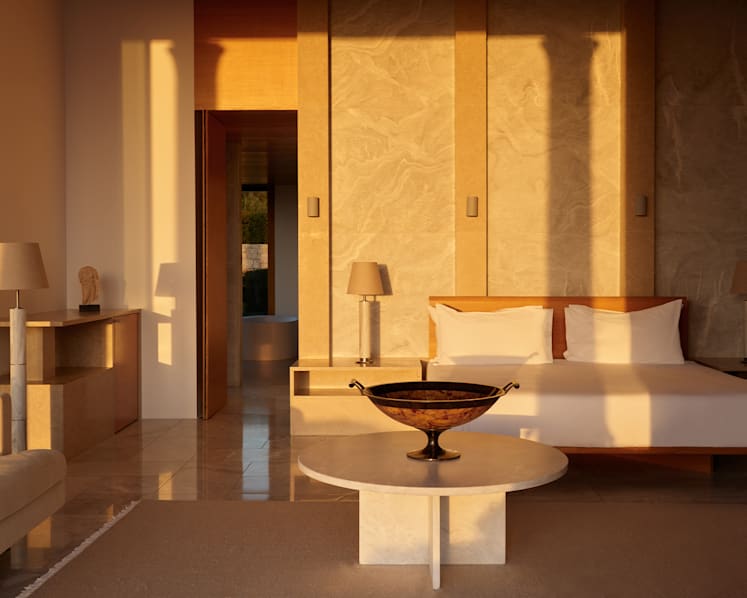
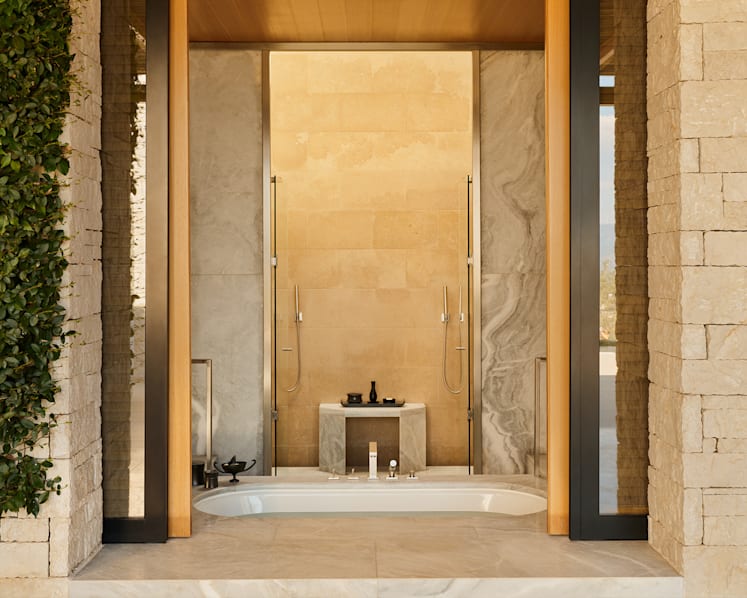
Amanzoe’s 38 stone pavilions sit below the main acropolis complex, each tucked into the hillside for privacy, each fronted by a shaded terrace with daybed, sun loungers and a private pool – either 6m or 12m, heated, and lined with dark Guatemala Verde marble that turns the water an unexpected deep jade. Bathrooms are among the most capacious of any Aman property: his and hers vanities positioned at opposite ends of a recessed bathtub, a shower for two (or three) beneath a glass roof framing the Greek sky. Pocahontas marble – naturally veined, exotic in its patterning – lines the dressing alcoves alongside warm oak. The custom-designed furniture sits on pale Silver Cloud marble floors beneath timber plank ceilings.
From the pavilion terraces, the view rolls out across wild scrubland – lavender and sage, lemon groves, and more olive trees – to the layered mountains of the Peloponnese, with a slice of sea glittering at the horizon. Stillness accumulates here in a way that is difficult to account for. Then a breeze comes through and stirs the surface of the pool, and everything briefly shifts.
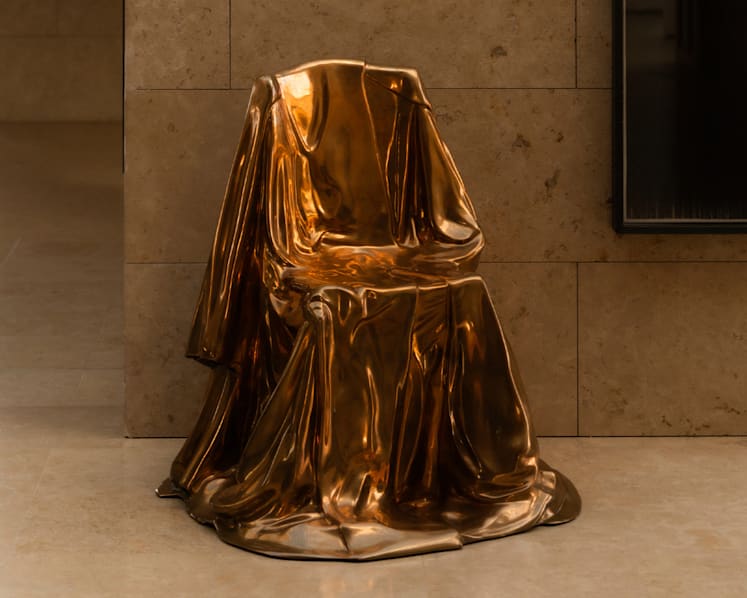
Until Oct 31, Amanzoe is hosting Life Cycles, a collaboration with Zoumboulakis Galleries that places sculptures by four Greek female artists across the property. The works leave a particular imprint – a way of seeing the resort that persists in the mind. In the massive two-storey library and restaurant, where light is filtered through panels of translucent marble, the legendary Marina Karella’s drapery sculptures fold and gather as if caught mid-movement, classical in their references yet entirely contemporary in feel. Alexandra Athanassiades’ hand-hammered bronze horse heads, mounted on iron rods above the lavender gardens, have the effect of making you look past them: to the sea, to the hills, to the Argolic plain beyond, and to the thought that this ancient landscape once sent men to Troy.
Nikomachi Karakostanoglou’s marble Sacred Vessels by the pool draw on ancient votive forms, their smooth silhouettes providing a sleek counterpoint against Tuttle’s Guatemala Verde-lined water and Sinai Pearl terraces. And laid out on the garden grounds and inside the library, Despina Flessa’s aluminium fossils and sculptures folded like old battle shields, resemble objects that might have been excavated or might not yet exist – time rendered ambiguous in a way that feels entirely native to a coastline where a submerged city lies just offshore, its walls still visible through the water on a calm day.
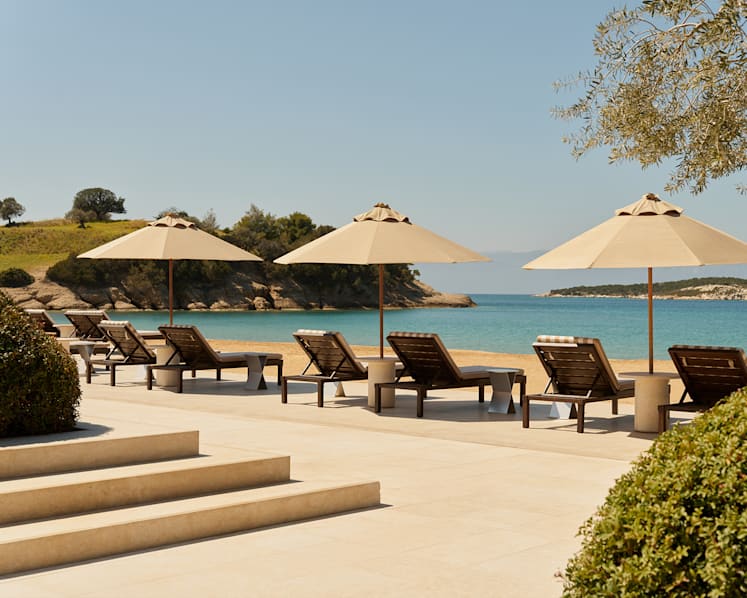
New this season: an omakase menu at the poolside restaurant Akari, shaped by fire and washoku principles; a sun-dappled beach club at Nura, which shifts from lazy coastal lunch to convivial dinner as the light drops; and a new hammam ritual that draws on Greek apothecary tradition featuring wild mountain tea, olive leaf soap, a grape-seed scrub, alongside a morning yoga programme.
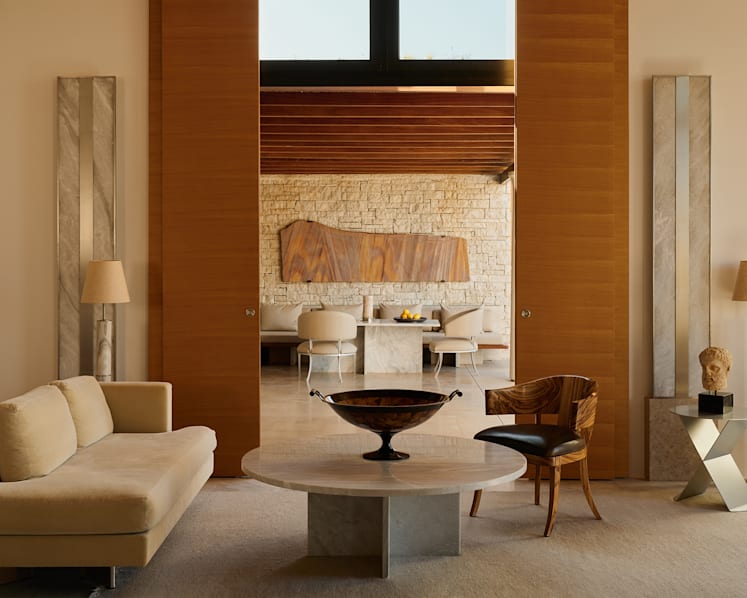
Amanzoe is at its best, though, when nothing is happening. A morning spent in the spa. A late-afternoon siesta on the pavilion terrace, the Aegean going gold in the distance, the cypresses motionless, the lavender spent and faintly fragrant. Cocktails on the moon-shaped terrace by the pool, a black velvet sky above. It’s easy to imagine that there is wild magic here, amid all that marble and stone which hold the warmth of the day long after dark, long after the stars are out.
All credit to Ed Tuttle, whose talent lay in staging the improbable. At Amanzoe, he arranged space, material and landscape with such precision that after a day or two, the architecture itself disappears from notice, leaving you standing simply on a hillside in Greece, the marble warm underfoot, the sea catching light – all that light.
Source: CNA/bt
Get bite-sized news via a new
cards interface. Give it a try.
Click here to return to FAST
Tap here to return to FAST
FAST
About The Author