
Are you losing muscle without knowing it? These tests can detect sarcopenia as you age
You may look the same on the outside but your muscles could be shrinking without you knowing it. Doctors explain the signs of age-related muscle loss, the tests that can detect it, and whether strength training and nutrition can really help reverse the damage.
From age 40 onwards, you’re losing up to 8 per cent of your muscle mass per decade. (Photo: iStock/pocketlight)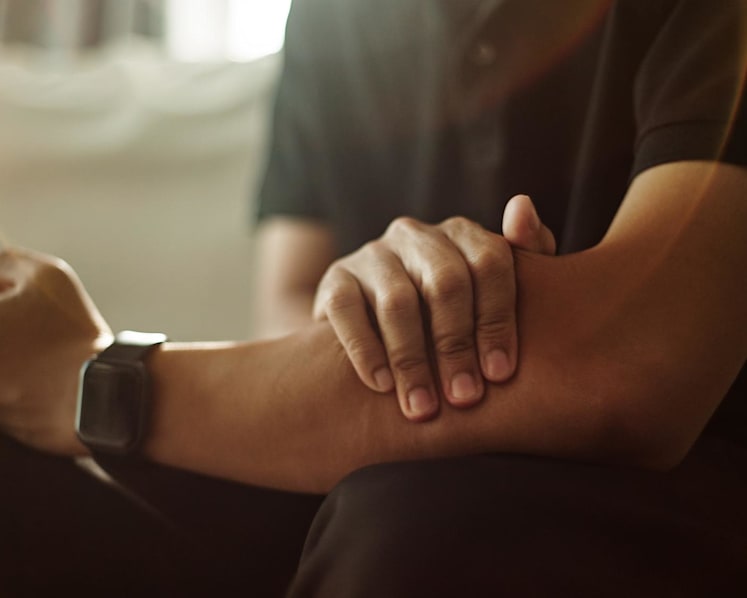
New: You can now listen to articles.

This audio is generated by an AI tool.

Read a summary of this article on FAST.
Get bite-sized news via a new
cards interface. Give it a try.
Click here to return to FAST
Tap here to return to FAST
FAST
When we think about muscles, we often think about bodybuilders and avid gym bros. But muscles for the average person matter a lot as well, especially if you’re 50 years old and above.
Muscles are needed for the most basic of everyday tasks. Like getting up from a chair, climbing the stairs, or carrying your groceries home from the market – activities that you may take for granted in your early years.
But as you age, that independence can be slowly eroded by sarcopenia, otherwise known as age-related muscle loss. Your body’s ability to build and repair muscle becomes less efficient due to changes in “muscle protein synthesis, declining levels of hormones that support muscle growth, and reduced physical activity”, said Clinical Associate Professor Frederick Koh, Sengkang General Hospital’s Deputy Research Director.
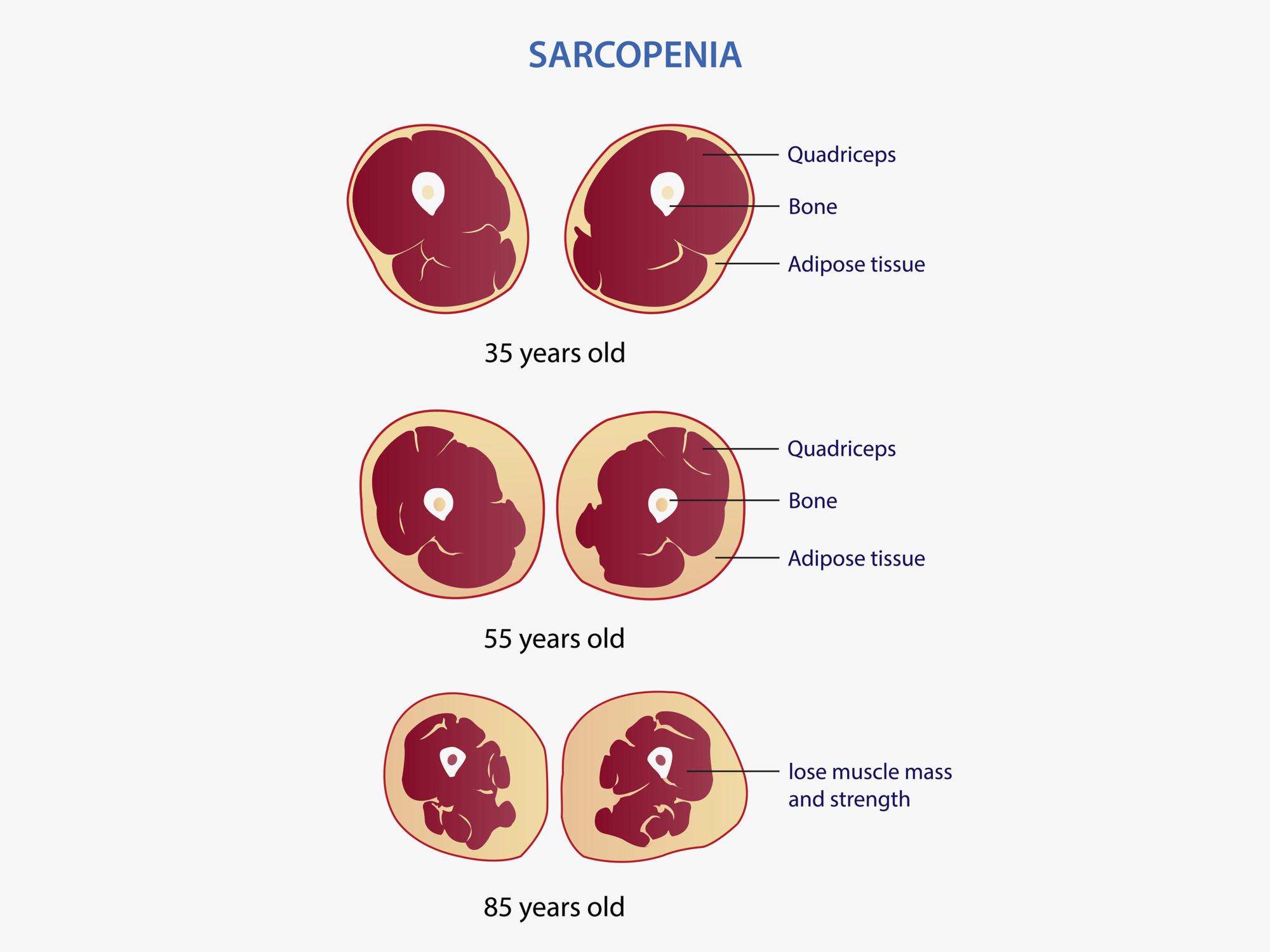
As a result, your “skeletal muscles gradually reduce in size and mass as the muscle fibres shrink and are lost over time”, he said. “Additionally, fat may accumulate within and around the muscles, resulting in poorer muscle quality.”
The thing is, you can’t tell from the outside. Your body doesn’t appear any differently in shape nor circumference, “resulting in sarcopenia remaining undetected till a much later stage”, said Dr Koh.
ISN’T SARCOPENIA AN OLDER PERSON’S PROBLEM? WHO IS AT RISK?
Consider the numbers. In those aged 60 years and above, the condition is estimated to affect approximately one in three adults. However, “sarcopenia is not solely a condition of older adults”, said Dr Koh. From age 40 onwards, you’re losing up to 8 per cent of your muscle mass per decade.
If you’ve only just entered your third decade of life and thinking: I still have some ways to go before sarcopenia affects me – it actually starts where you are. Your body loses 3 to 5 per cent of your muscles per decade after the age of 30.
“Using data from the PRECISE-SG100K cohort, we observed that approximately 25 per cent of adults below 39 years old had sarcopenia.” For context, PRECISE-SG100K is a large-scale Asian population cohort dataset in Singapore that contains data from approximately 100,000 residents aged 21 to 84.
In fact, Dr Agnes Siew Ling Tey, a Volwiler associate research fellow in Clinical Science and Nutrition at Abbott Nutrition Research and Development, said that in some individuals, sarcopenia may even start in their 20s. “Some young adults may already have lower than optimal levels because of physical inactivity, inadequate good nutrition, or underlying health conditions.”
WHAT DOES SARCOPENIA HAVE TO DO WITH DIABETES, MENOPAUSE AND JOINT PAIN?
Men may have higher rates of sarcopenia compared to women. “This differs from the pattern more commonly reported in international studies, where sarcopenia is often thought to be more prevalent among women,” said Dr Koh. “Further research is needed to better understand these findings in the Singapore population.”
He is referring to the preliminary findings of Project MAGNET (short for Mechanistic Investigation and Clinical Innovation for Sarcopenia Diagnosis and Therapy), a research initiative by Duke-NUS Medical School and SingHealth to tackle age-related muscle loss using Asia’s largest sarcopenia biobank.
Dr Koh, who is also Project MAGNET’s clinical lead and principal investigator, said that the need for Asian-specific reference values and diagnostic criteria is important because “Asians generally have different body composition profiles compared to Western populations”.
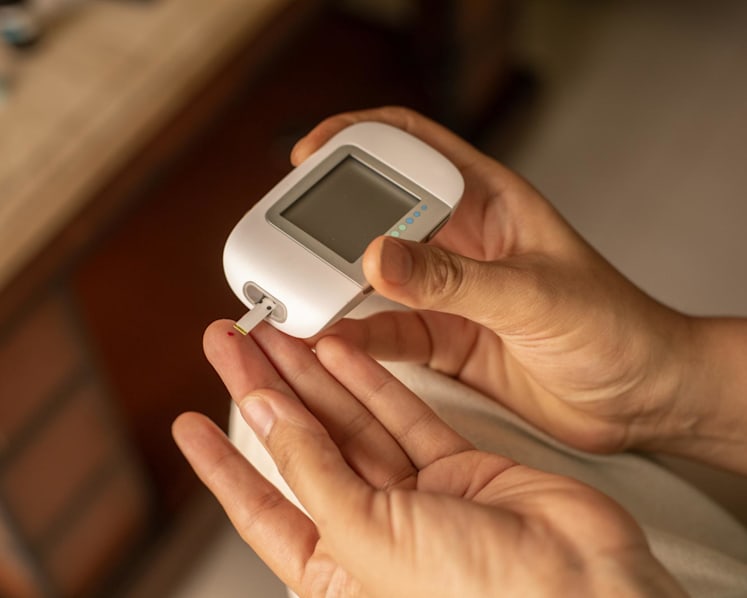
And since Asians are more prone to developing type 2 diabetes than Caucasians, the link between diabetes and sarcopenia is also studied. “Insulin normally helps muscles to take up glucose, and support muscle growth and repair,” explained Dr Koh. But insulin resistance reduces the muscles’ ability to effectively use glucose and maintain themselves.
“Type 2 diabetes is also associated with chronic inflammation, which can impair muscle regeneration and contribute to increased muscle loss over time,” he added. “Consequently, those with type 2 diabetes have a higher risk of developing sarcopenia compared to those without diabetes.”
What about the link between sarcopenia and menopause? Changes during menopause may contribute to an increase in sarcopenia risk, said Dr Koh. “Studies have shown that declining oestrogen levels may be associated with increased abdominal fat, reduced bone density, and declines in muscle mass and strength.”
However, he added that “the exact role of oestrogen in the development and progression of sarcopenia remains an area of ongoing research”. “As sarcopenia is a multifactorial condition, factors such as ageing, physical activity, nutrition, and chronic diseases also play important roles.”
And while joint wear and sarcopenia are different conditions, they can be closely related, said Dr Koh. “When the muscles around a joint become weaker, they provide less support and shock absorption, which may place a greater stress on the joint and potentially worsen symptoms of joint degeneration.” A painful joint can also cause you to reduce your workout intensity, which then leads to further muscle loss over time, he added.
In women, “declining oestrogen levels have been associated with reduced bone density as well as declines in muscle mass and strength, which may further affect mobility, balance, and overall physical function”, said Dr Koh.
WHAT ARE THE TESTS THAT CAN DETECT SARCOPENIA?
Typically, you can expect the clinics and hospitals in Singapore to administer the Short Physical Performance Battery (SPPB), which assesses three components: your ability to maintain balance in different stances, gait speed, and repeatedly rising from a chair.
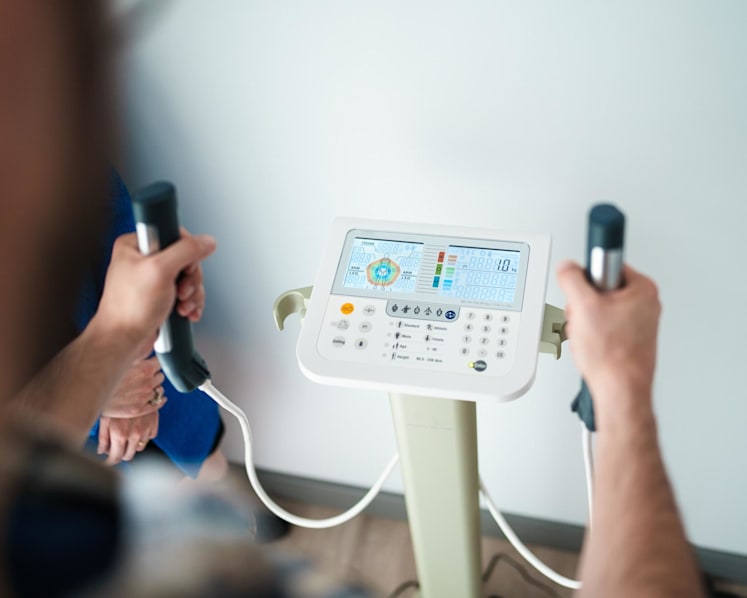
Some hospitals such as Tan Tock Seng Hospital (TTSH) also offer body composition tests such as DEXA (Dual-energy X-ray Absorptiometry) and BIA (Bioelectrical Impedance Analysis), along with blood test and handgrip strength test.
Sometimes, the patient’s tongue pressure may be assessed as well, especially in those with oral frailty and dysphagia “as systemic sarcopenia can also affect the muscles involved in swallowing and chewing”, said Dr Daphne Yang, a consultant in Geriatric Medicine at TTSH.
At Alexandra Hospital, the SARC-F questionnaire is used in addition to the SPPB to identify potential individuals with sarcopenia, said Dr Jeremy Teng, an associate consultant with Alexandra Hospital’s Healthy Ageing Programme. “SARC‑F is a five‑item screening questionnaire for sarcopenia, scored zero to 10, where a score of four and above indicates high risk of sarcopenia and a need for further assessment.”
AT WHAT AGE SHOULD YOU START ASKING ABOUT THE TESTS?
“Muscle loss is accelerated after the age of 60. Older adults aged 65 years and above, especially those with chronic diseases, recurrent falls, malnutrition or functional decline, should be assessed,” said Dr Tay Yu Ling, a consultant from Singapore General Hospital’s Department of Geriatric Medicine. Signs to seek help, she said, include weakness, having difficulties carrying a 4.5kg load, walking, rising from a chair, climbing stairs, and falls.
But you can consider asking about the tests at an earlier age, said Dr Teng. “Skeletal muscle mass declines more quickly after 50 years old. Given this data, the Asian sarcopenia guidelines have since recommended a case-finding approach for the detection of sarcopenia from the age of 50 onwards.”
In fact, Dr Siew opined that “muscle health should be viewed like other important health indicators”. “We monitor blood pressure before hypertension develops, and assess bone health before fractures occur. Muscle health should be no different.”
Here’s a further look at the various tests:
Dual-energy X-ray absorptiometry (DEXA)
If you’ve had a bone density scan before, you might find the machine familiar. “Bone density and body composition DEXA can be performed using the same scanner,” said Dr Yang. “However, the images are acquired using different scan modes; hence, the images for bone density cannot be used to interpret body composition and vice versa.”
The criteria for sarcopenia have been updated in 2025 by the Asian Working Group for Sarcopenia (AWGS) to adjust for height and body mass index, “given that individuals who are taller, and have larger body build would naturally have more absolute muscle mass compared to a shorter or smaller person”, said Dr Yang.
According to Dr Teng, DEXA uses a small dose of ionising radiation to produce pictures within the inside of the body. The numbers from AWGS that indicate a higher risk of sarcopenia are:
| 50 to 64 years old | 65 years old and above | |
| Skeletal muscle mass (height-adjusted) |
Men <7.2 kg/m2 Women <5.5kg/m2 |
Men <7.0 kg/m2 Women <5.4 kg/m2 |
| Skeletal muscle mass (body mass index-adjusted) |
Men <0.80 Women <0.55 |
Men <0.73 Women <0.52 |
Bioelectrical impedance analysis (BIA)
It uses a low-intensity alternating current to measure muscle mass, said Dr Teng, cautioning that because of the use of current, individuals with pacemakers or cardiac devices should avoid using the device.
BIA machines are everywhere, from the gym to the hospital. “There are many BIA machines in the market, including clinical and professional brands versus home-use brands,” said Dr Teng. “The accuracy will differ depending on the type of machine used.”
Between BIA and DEXA, the latter is more accurate in terms of measuring muscle mass. Hence, for better accuracy, Dr Yang advised using a BIA machine that has strong correlation with DEXA-based measurements. Also, compare your muscle mass values on the same BIA machine as different machines have different cut-off points.
The numbers from AWGS that indicate a higher risk of sarcopenia are:
| 50 to 64 years old | 65 years old and above | |
| Skeletal muscle mass (height-adjusted) |
Men <7.6 kg/m2 Women <5.7kg/m2 |
Men <7.0 kg/m2 Women <5.7 kg/m2 |
| Skeletal muscle mass (body mass index-adjusted) |
Men <0.90 Women <0.63 |
Men <0.83 Women <0.57 |
Handgrip strength
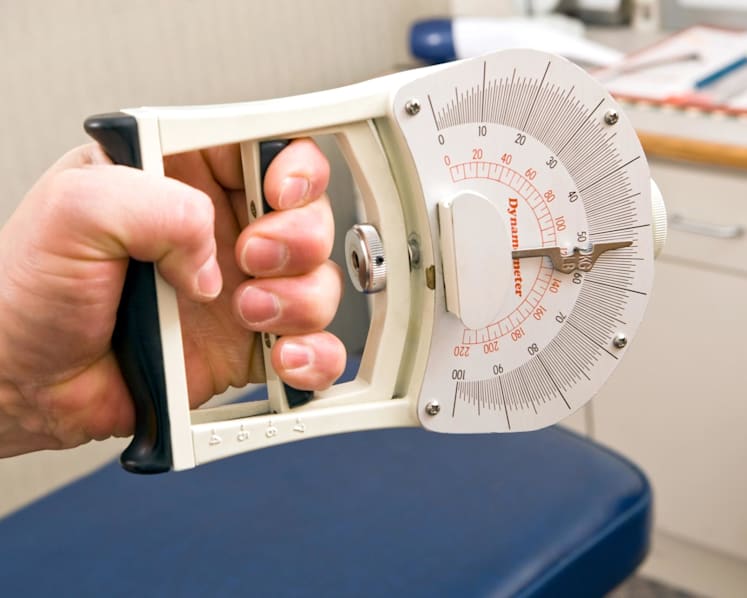
Sarcopenia doesn’t only involve the loss of muscle mass; it also affects strength, which leads to physical fatigue, said Dr Yang. In fact, “muscle strength has been shown to be a more consistent predictor of poor health outcomes compared to muscle mass alone”.
Grip strength is used since it is easy to measure with the Jamar or Smedley dynamometers, said Dr Yang. The two dynamometers have different measurements and are not interchangeable, with the Smedley showing consistently lower readings, she said.
For a better predictive value, Dr Yang recommended recording the maximum value of at least two readings per hand, rather than the average value.
The numbers from AWGS that indicate a higher risk of sarcopenia are:
| 50 to 64 years old | 65 years old and above | |
| Handgrip strength |
Men <34kg Women <20kg |
Men <28kg Women <18kg |
Gait speed
This test measures your usual walking pace. Walking is used as “It reflects your mobility status, lower limb function and overall functional reserve”, said Dr Yang. A gait speed of less than 1.2m per second for both men and women from ages 50 to 64 is indicative of a higher risk for sarcopenia, according to the AWGS. For those 65 years old and above, the gait speed is slower than 1m per second.
Calf circumference
The calf is measured because it represents the truest degree of muscle mass compared to other body parts such as the thigh, said Dr Teng. “This is especially relevant since you may have both obesity and sarcopenia at the same time, and measuring the thigh muscle may be less accurate.”
However, said Dr Teng, the calf circumference is still a very rough measurement – and less accurate than BIA and DEXA. “It is mainly used for screening of possible sarcopenia, but it is not diagnostic.”
You may be at risk of sarcopenia if your calf circumference measures less than 34cm for men and 33cm for women.
Blood test
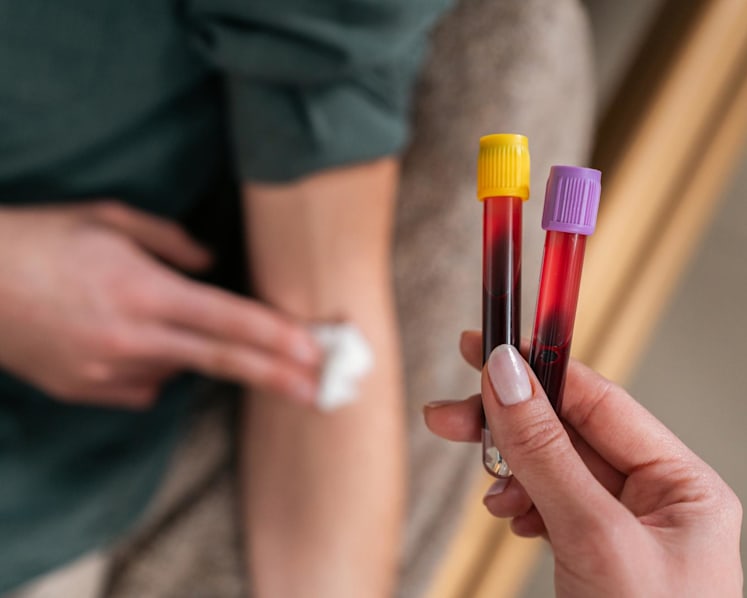
“Blood tests may be done to assess medical conditions that are associated with sarcopenia such as diabetes mellitus; chronic heart, lung, liver and kidney disease; osteoporosis or malnutrition,” said Dr Yang.
“An adequate Vitamin D level is important for both muscle and bone health,” she said. In your blood report, your level of 25-hydroxyvitamin D should be 30ug/L or higher.
TO WHAT EXTENT CAN NUTRITION AND STRENGTH TRAINING REVERSE SARCOPENIA?
Strength training can improve the effects of sarcopenia or so we’ve been told. But can it really?
Yes, said Dr Koh, but the muscle-building process will be generally less efficient compared to someone without sarcopenia.
“In the early stages of muscle loss, these compensatory mechanisms can still help preserve muscle health,” said Dr Koh. “However, as sarcopenia progresses, the body’s ability to repair and regenerate muscle becomes impaired.” This is caused by the decline in the number and function of muscle stem cells.
“At the same time, fat and scar tissue can accumulate within the muscle, and muscle fibres that lose their nerve supply may eventually be lost,” continued Dr Koh. “As a result, individuals with sarcopenia often experience slower or smaller gains in muscle mass and strength compared with those without sarcopenia.”
But there is a silver lining. Muscles remain responsive to intervention, even in the presence of sarcopenia, said Dr Koh. “Resistance exercise and adequate nutrition, particularly sufficient protein intake, can improve muscle strength, physical function and mobility.”
Such short-term interventions may not fully restore the lost muscle mass, said Dr Koh, but they can help the body make better use of the existing muscles and improve resilience during periods of stress, such as surgery or illness.
Source: CNA/bk
RECOMMENDED
Get bite-sized news via a new
cards interface. Give it a try.
Click here to return to FAST
Tap here to return to FAST
FAST