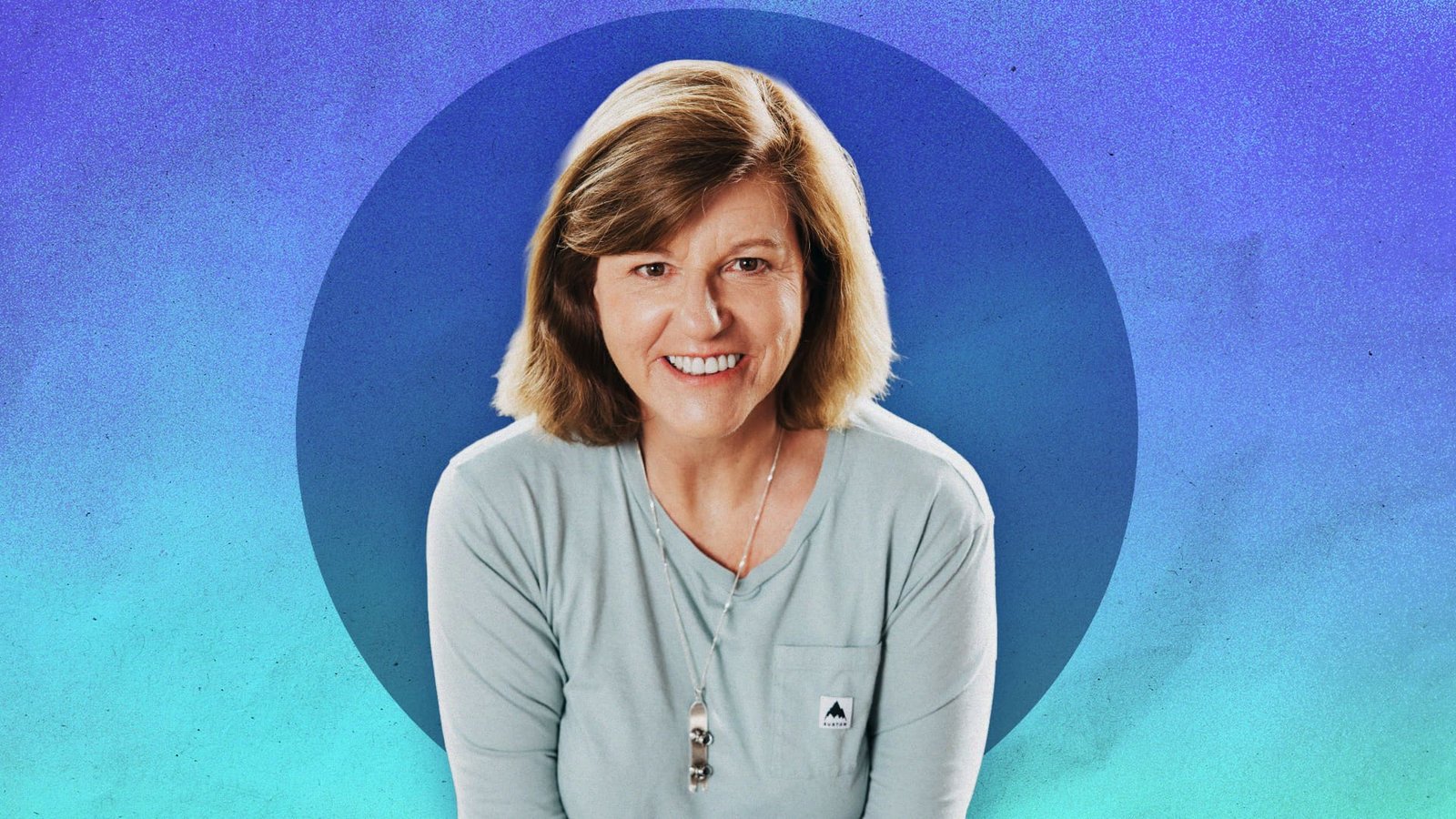
Skip NavigationDonna Carpenter is the co-founder and chair of Burton Snowboards.Burton | Maryvit Luna | Christina Locopo
Multiple times over the last five decades, from building a business in a practically non-existent market to losing funding in the middle of a loan crisis, Donna Carpenter thought Burton Snowboards might not survive another day.
Instead, the snowboard and apparel company started by Carpenter’s late husband, Jake Burton Carpenter, is poised to celebrate its 50th anniversary in 2027. Now as Carpenter steps down as interim CEO, a role she’s held since June after previously serving as CEO between 2016 and 2020, the business stands out as a market leader in the $4.35 billion global industry that the Burlington, Vermont-based brand helped create.
Few family-owned consumer brands survive so long, let alone maintain cultural relevance along the way. Nearly half of all new businesses in the U.S. don’t even make it five years, according to the U.S. Bureau of Labor Statistics data. When Burton first launched, some in the winter sports community looked down on snowboarding. The stigma helped imprint a stamp of rebelliousness on the brand which lives on today, says Carpenter, even as Burton has become a fixture on resort slopes across the world and within the annals of Olympian history.
Mari Fukada of Team Japan competes on a Burton snowboard in run three of the Women’s Snowboard Slopestyle Final on day twelve of the Milano Cortina 2026 Winter Olympic games at Livigno Snow Park on February 18, 2026 in Livigno, Italy.David Ramos | Getty Images Sport | Getty Images
The company’s longtime profitability has allowed Burton to remain private and family-owned, eschewing outside investors while growing, says the 63-year-old Carpenter. “And we are riders,” she says, using the term to refer to the company’s customers and snowboarders more generally. “I ride as much as possible, staying connected, listening to that voice of the rider. I think they’re the ones who are deciding where the sport goes.”
It’s also been helpful for the business to maintain its own inner compass: You have to understand what your brand stands for, and stick to it, because chasing relevance is a surefire recipe for losing it, says Carpenter, who declined to provide annual revenue information. It’s a lesson that’s sure to resonate with any current and would-be leader.
Here, Carpenter discusses why chasing cultural relevance is a surefire recipe for losing it, how she handles “oh s—” moments as a leader, and the traits she looks for in the next generation of leaders.
CNBC Make It: You’re celebrating 50 years in business next year, and Burton remains a market leader. How does the brand continue to stay relevant today and going forward?
Donna Carpenter: First of all, it’s really important that you don’t chase cultural relevance, right? As soon as you’re doing that, you’re probably not relevant anymore.
Our role as a brand is creating the opportunity for what we like to call “collision”: collision between the riders and the designers, collision between sport and art and culture, the collision between mountain and urban street-style.
The riders are really those cultural creators. Part of my mission is to keep reminding people that every single decision should be focused on: Does this make it better for the rider? Is this something the rider needs or wants? We create the opportunities for these things to collide, but we also make sure that there’s enough diversity and difference of opinions and voices in there to stay culturally relevant.
CNBC Make It: Along with cultural relevance, is there a secret to just building a brand that lasts for five decades?
Carpenter: I think it’s knowing what to hold on to, what to preserve, and then change everything else. We call them “unf—able truths” — the values that you have and what you stand for. Those aren’t going to change, but everything else has to change. Those values, that core DNA, is that the rider is at the center of it all.
It’s also how you measure success. Obviously, profitability has been important to us because we have funded growth through our own profitability, and that has been key because we haven’t taken out long-term debt. We haven’t had to take on partners.
But just as important was the strength of the brand. You know, it’s got Jake’s name on it. We want to preserve the strength of the brand, and then the strength of the culture and the community.
We call them ‘unf—able truths’ — the values that you have and what you stand for. Those aren’t going to change, but everything else has to change.Donna CarpenterCo-founder, Burton Snowboards
CNBC Make It: What are some of the biggest changes you’ve had to make?
Carpenter: I define my career in those ‘oh s—‘ moments, where we need to course correct.
Inclusivity is one of our biggest values, and I think that’s probably because we were excluded in the beginning: from the mountains, the trade shows, the ski shops. So we became this really strong community, and we saw ourselves as really inclusive.
But we weren’t doing enough. [Today] we’re at about 50% [female] leadership. We were 10% female leadership in 2002, probably very typical of male-dominated action sports. But we were very intentional and thoughtful about bringing more women into the company in leadership roles. We started offering [expanded maternity and paternity] leave. We have childcare subsidies.
The policies that make it a better company for women make it a better company for everybody. We’re all going to benefit. And I’m a real believer that who’s sitting around the table making decisions about women’s product or women’s marketing has a huge impact on whether you can really reach the women’s market.
CNBC Make It: What about sustainability?
Carpenter: Another ‘oh s—‘ moment. Back in 2011, there was a very intentional decision to take less of a margin on product to use bluesign material as much as we can. [Bluesign is a global production standard for environmentally sustainable textiles. Ninety percent of Burton’s product materials are bluesign-approved, according to the company.]
There are decisions that you have to make that affect profitability. But if you stick with it long enough, what you’re doing is you’re creating consumer loyalty and belief in your brand and what you’re doing. Consumers today want to see behind the curtain.
We work like we ride: You fall down. You get up. You learn. That’s how you progress as a snowboarder, and that’s how you progress as a company. You admit the mistake: “Hey, we f—ed up here. We’re going to correct for it, and we’re going to do better next time, and we’re going to live up to those values.”
Source: Burton
CNBC Make It: Did you and your husband initially imagine Burton would be around for 50 years, much less become a global brand?
Carpenter: No. But it was always bigger than us. We’ve been stewarding this sport … to share the joy and love and freedom you get from snowboarding with the world. [We never thought]: “Oh, we have a plan to sell this in 10 years and get rich.”
When anybody ever asked Jake what he was most proud of, he would say persevering through the tough times. And there were some really tough times. There were times when we weren’t sure the company would make it.
CNBC Make It: Like when?
Carpenter: I’ll tell you a big one. It was 1989. I was chief financial officer. I had negotiated an incredible bank deal, a non-collateralized [short-term loan to fund a six-month production window]. All we had to do was show a profit and grow, which we were doing. Part of the terms of the loan was I had to keep [our balance sheet] clean for 30 days, so I kept us clean for 45 days. I’m feeling good.
It was in the middle of the savings and loan crisis. Our bank came to us in the middle of our loan term and said, “Sorry, we’re looking at all of our loans because of this crisis, which has nothing to do with you, and we’re getting rid of all loans we consider risky. We consider you risky. Sorry, we’re out.”
I was eight months pregnant with my first child, and I had to walk around to 50 employees and say, “You know that paycheck you got? You can’t cash it. I’ll let you know when you can cash it.” And nobody left.
I always say that was the moment I realized we were a family, because it can be really easy to talk about being a family when things are good, right? People say to me, “How do you make a culture like a family?” I say, “You put them through hell. You get to the other side, and you’re a family.”
Burton Snowboards co-founders Jake Burton Carpenter and Donna Carpenter on May 16, 2013 in New York City.Bryan Bedder | Getty Images Entertainment | Getty Images
CNBC Make It: What made you decide to bring in a new CEO, Denny Bruce, and what were the most important traits and skills you looked for when searching for one?
Carpenter: Honestly, I think that [for me] the role of a good leader is to know when somebody else can run it better than I can.
Denny really had a rare combination. He was a sponsored Burton rider as a kid, and then his first job out of college was as a Burton sales rep. He also had the experience of growing iconic brands. A lot of them were founder-led brands [including Dickies and Gozney].
He can scale a company without losing its heart and soul, by really understanding that consumers want to buy into what they loved about the brand in the first place. I wasn’t sure we were going to find that combination — somebody who could grow and scale a company, who has that operational rigor, leading teams and being embedded in the culture. So, I’m pretty happy.
CNBC Make It: What are the qualities you value most in a leader? Do you have any unique tricks for spotting them when looking to promote internally?
Carpenter: One of our biggest values is humility. That’s why I love Denny so much, he’s such a humble guy. Leading shouldn’t be about you. It should be about the people you’re leading, and how you can make their lives better and lead this company. Humility and empathy, as well as a commitment to what’s made Burton Burton.
I don’t know if I really have any tricks [to spot a promising leader]. I think you can get a pretty good sense of somebody’s ego when you’re talking to them about their accomplishments. If somebody’s [only] telling me about their accomplishments, that’s great. But I’d rather hear about what mistakes you made and how you learned from them.
This interview has been edited and condensed for clarity.
 VIDEO13:38I bring in $20,000 a month selling Turkish baklavaOn The Job