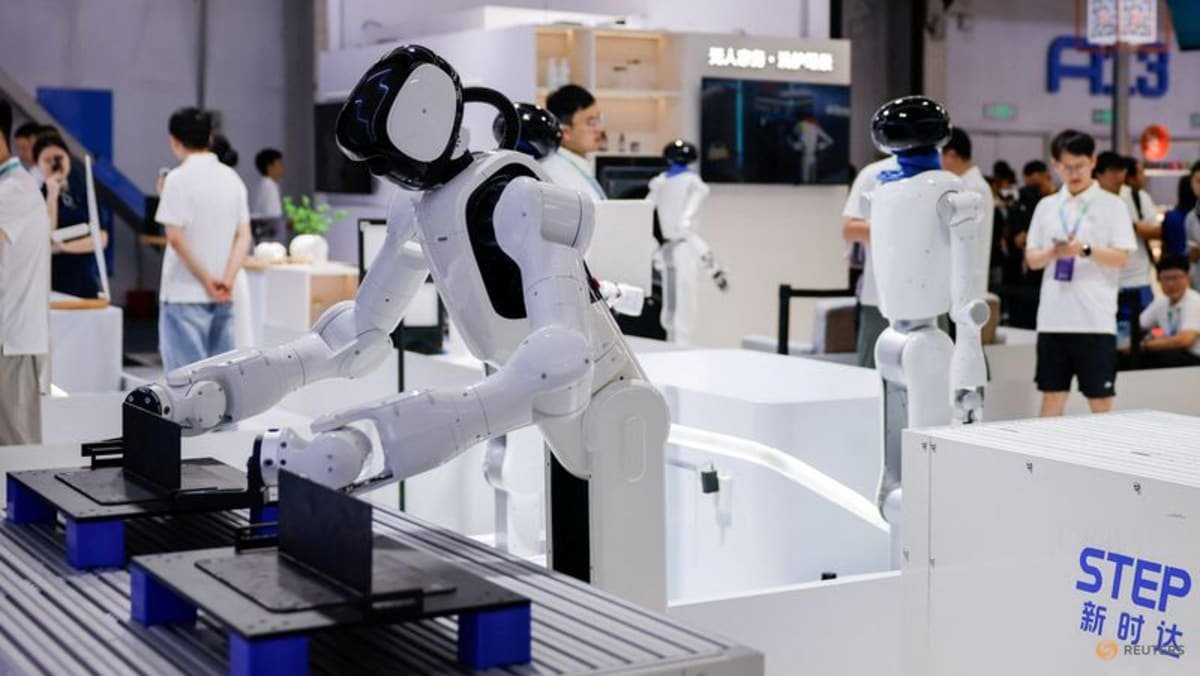
China’s robots are leaving the exhibition floor. Now comes the hard part
From factories to homes, Chinese companies are pushing robots into the real world. But turning increasingly capable machines into viable businesses remains a major test for the industry.
New: You can now listen to articles.

This audio is generated by an AI tool.


Read a summary of this article on FAST.
Get bite-sized news via a new
cards interface. Give it a try.
Click here to return to FAST
Tap here to return to FAST
FAST
BEIJING: At the World Robot Conference in Beijing last week, there seemed to be a robot for almost everything.
One arranged flowers, identifying objects around it and adapting when things moved. Another dog-like machine was designed to cross rough terrain for jobs such as industrial inspections, logistics and emergency rescue.
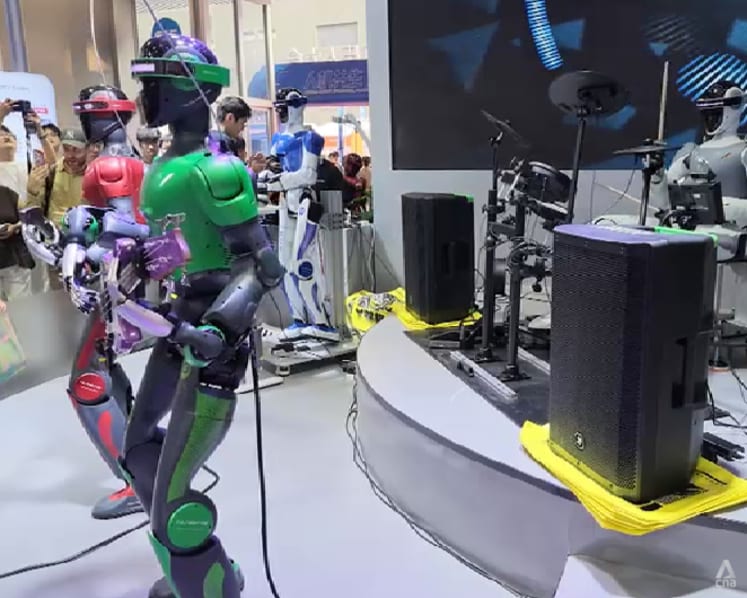
Elsewhere, a group of robots played instruments together as a band.
The displays offered a glimpse of how quickly China’s robotics industry is developing.
But they also highlighted a much harder challenge facing companies – taking robots from the exhibition floor to the real world.
That challenge is becoming increasingly important as China seeks to turn its robotics industry into a new source of economic growth.

Guess Word
Crack the word, one row at a time

Buzzword
Create words using the given letters

Mini Sudoku
Tiny puzzle, mighty brain teaser

Mini Crossword
Small grid, big challenge

Word Search
Spot as many words as you can
FROM DEMONSTRATIONS TO THE REAL WORLD
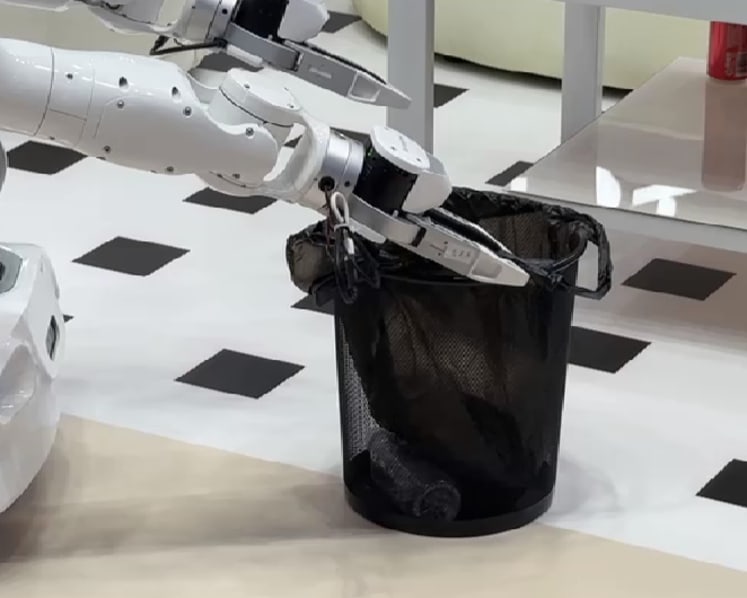
Tasks that humans find simple – opening a bag of chips or taking out the trash, for example – can take a robot considerably longer.
For Shenzhen-based X Square Robot, the challenge is getting its machines to perform such tasks reliably in unpredictable environments such as factories and people’s homes.
“We’re currently working with one of China’s leading home-services companies. We send the robots into people’s homes together with cleaners to carry out different tasks, for example, tidying up shoes, or organising children’s toys,” said Xu Menghong, the company’s director of strategy and investment.
“At that point, the robots are completely outside our company’s direct control. They may encounter all kinds of unexpected tasks, so we need them to respond very flexibly to whatever comes up.”
Another Shenzhen firm, Lumos Robotics, has deployed robots for tasks including quality inspection and material handling.
Its machines currently work at roughly the same pace as human workers, and getting them to work faster and at greater scale will take time, the company says.
Unlike an artificial intelligence chatbot, which can be trained on vast amounts of text and information available online, a robot needs data from interactions with the physical world, such as how to move, handle objects and respond to its surroundings.
“We need to collect more real-world data. That’s why we’ve developed a number of data-collection tools,” said Yu Chao, founder and CEO of Lumos Robotics.
“The challenge is how to speed up training and iteration … and ultimately produce usable robot skills.”
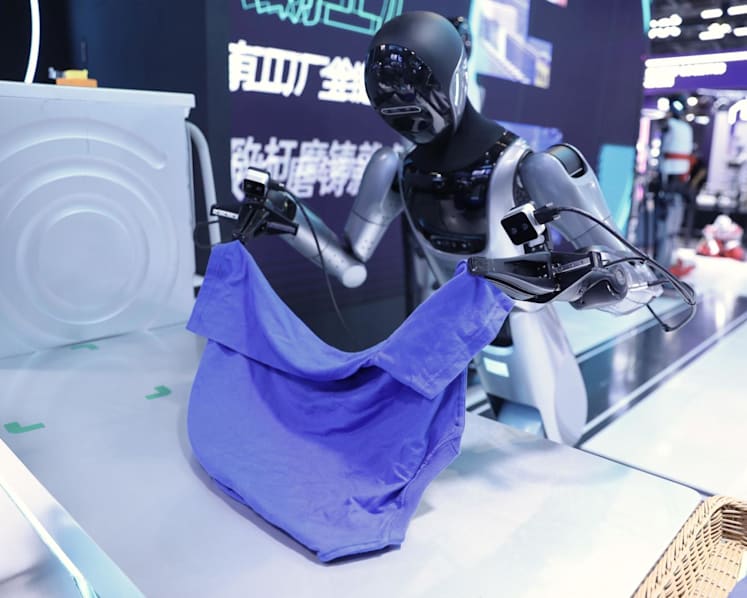
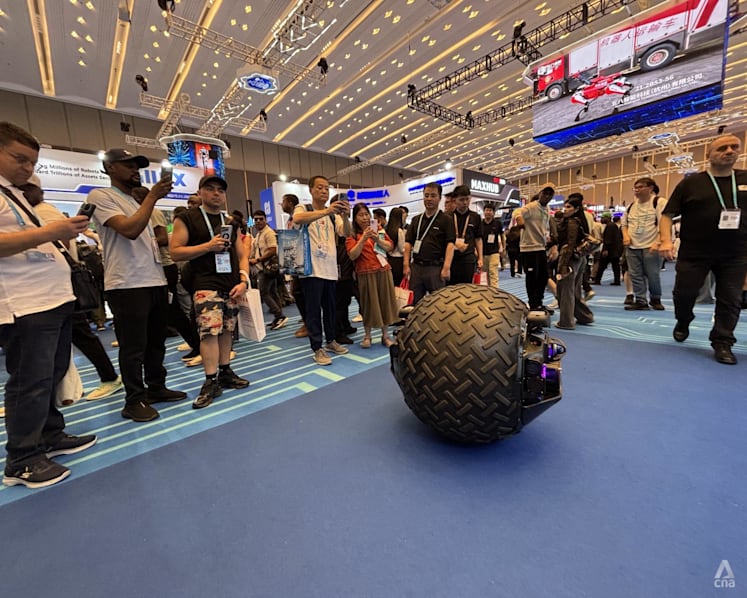
For component suppliers such as Kinco Automation, the industry’s shift towards commercial applications is changing what customers demand.
“From the beginning, when companies were rushing into the humanoid robot sector and focusing on performances and dancing, we’re now seeing companies generally looking for scenarios where the technology can be commercially deployed,” said Xu Ji, the company’s humanoid robot marketing manager.
As demand begins to converge, Xu said suppliers are increasingly focused on “mass-production consistency, delivery times and quality control” to better serve robot manufacturers.
WAITING FOR ROBOTICS’ “CHATGPT MOMENT”
For all the progress, industry leaders acknowledge that robots have yet to reach what some describe as their “ChatGPT moment”.
Wang Xingxing, founder of Hangzhou-based robotics firm Unitree Robotics, has said such a moment would come when a robot can enter an unfamiliar environment and reliably carry out most of the tasks it is given.
At the earliest, he said, that breakthrough could still be two to three years away.
But investors are already betting on that future.
Shares in Unitree closed 460 per cent above the offer price in its Shanghai debut on Aug 19, although they have since fallen about 45 per cent from their peak. The pullback has raised questions over whether investor enthusiasm may be running ahead of the business itself.
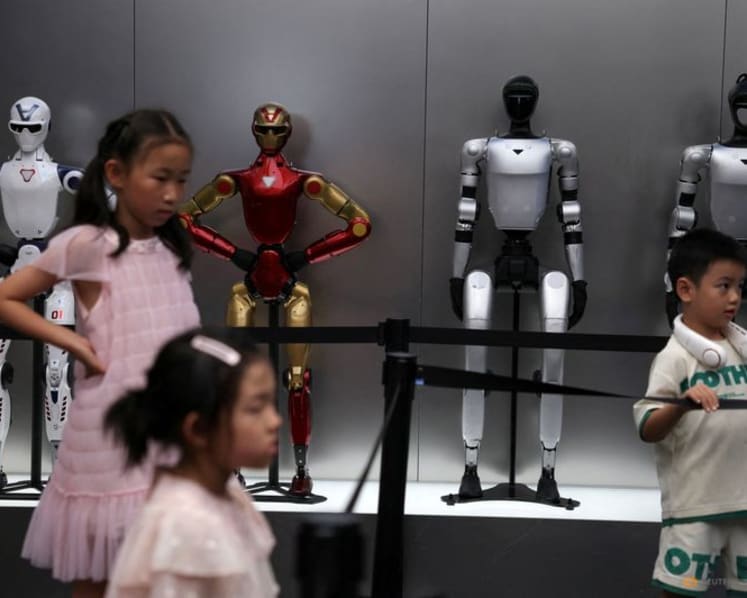
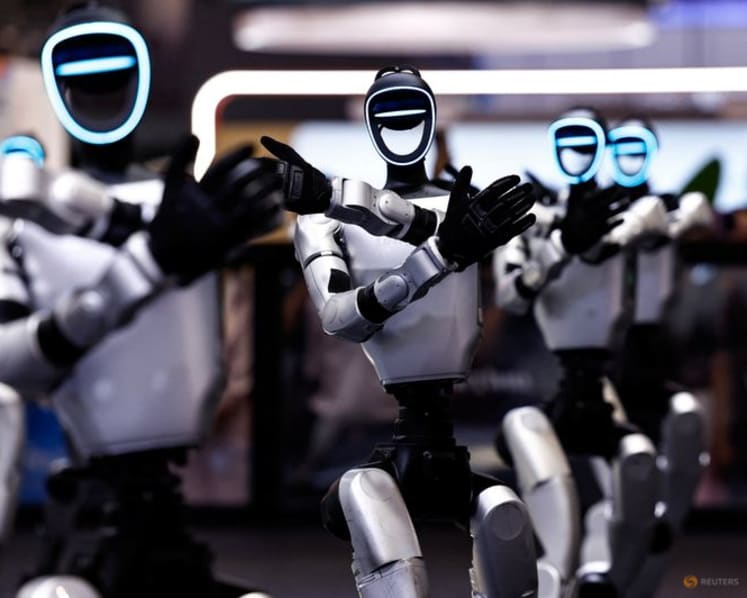
With more Chinese robot makers eyeing public listings, analysts say the boom could eventually produce a shakeout.
“When you have more than 100 humanoid robot companies, and valuations are reaching tens of billions of yuan … or even higher, the question is: how do you deliver on those expectations for investors?” said Ethan Qi, associate director at technology market research firm Counterpoint Research.
“We all believe the prospects for humanoid robots are very strong. But turning that promise into reality more quickly, and proving it in a relatively short period of time, is a very big challenge.”

WINNING OVER THE PUBLIC
Commercial success will not depend on factories and investors alone. Robot makers will eventually need to convince ordinary consumers that their machines are useful in daily life.
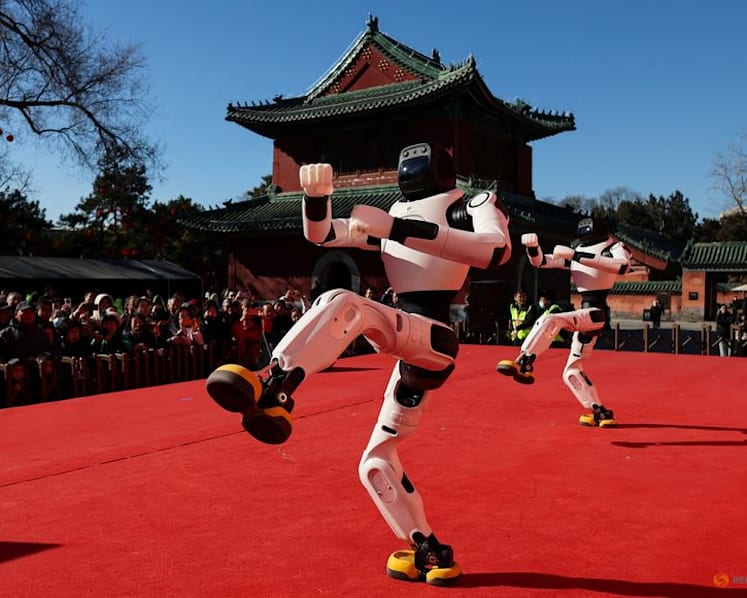
This potential was on display at the World Humanoid Robot Games in Beijing, which ended on Wednesday (Aug 26).
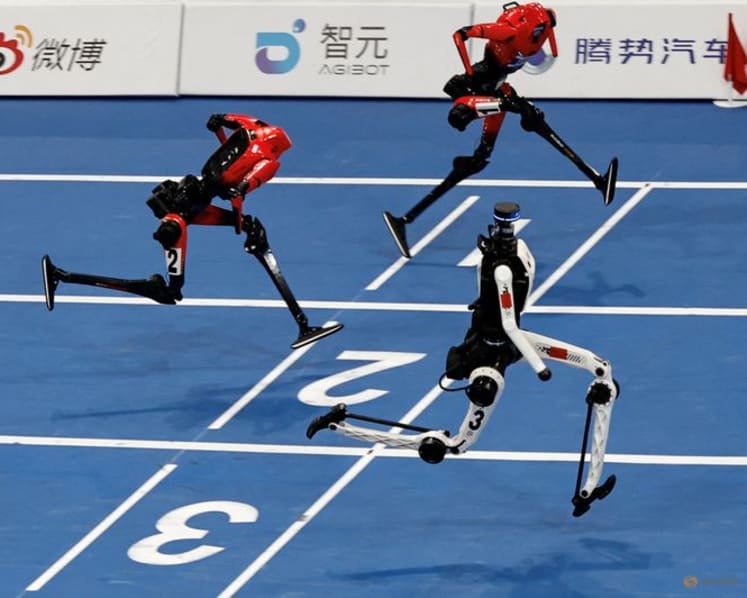
Humanoid robots raced, fought, played sports and performed routines in front of crowds.
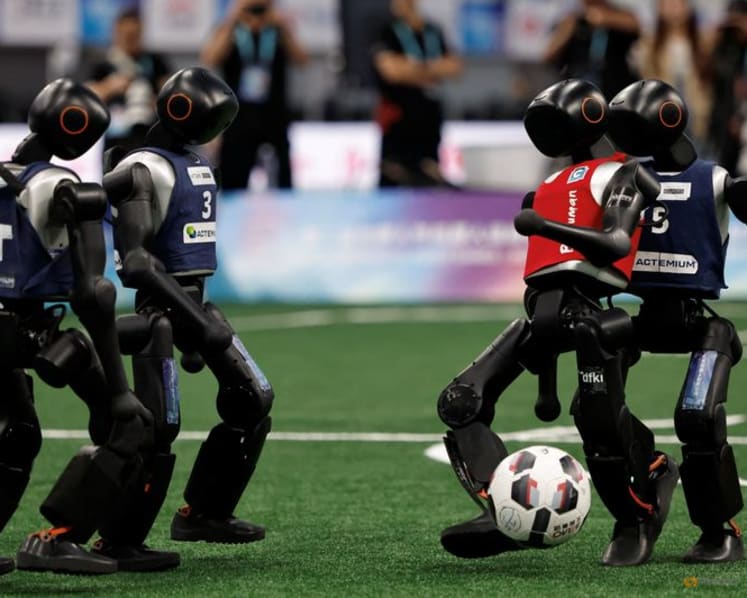
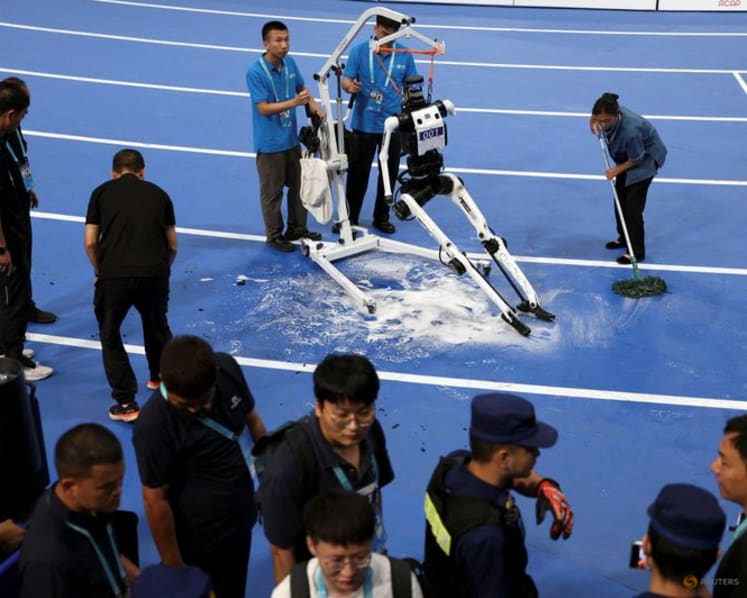
There were impressive displays – and plenty of crashes and falls – a reminder that the technology remains a work in progress.
But teams say mistakes can be just as valuable, providing real-world data that can be used to improve the robots’ performance.
The Games also tested robots on practical tasks such as picking up beans with tweezers and packing medicine boxes, showing visitors how the technology could eventually be used at home.
One spectator already had a morning routine in mind.
“When I wake up, I’d like a robot to make breakfast for me. And when I go to work, if I don’t want to make the bed, maybe the robot could do it for me,” he said.
An elderly visitor saw another possibility.
“As our abilities decline, it would be good to have a robot help with things around the home and provide companionship,” she said.
Morgan Stanley in June estimated that China’s humanoid robot market would grow from about US$2 billion in 2026 to US$15 billion by 2030, with annual shipments reaching 446,000 units by then.
But getting there will depend on turning today’s investment and excitement into robots that people and businesses actually want – and can use at scale.
Source: CNA/mp(oc)
Sign up for our newsletters

Get the CNA app
Stay updated with notifications for breaking news and our best stories
Get WhatsApp alerts
Join our channel for the top reads for the day on your preferred chat app

Get bite-sized news via a new
cards interface. Give it a try.
Click here to return to FAST
Tap here to return to FAST
FAST