Commentary: A US$2,000 iPhone gives Apple’s new CEO his Steve Jobs moment
Apple will need to spend a great deal of energy explaining the “why” of a foldable iPhone that costs at least US$2,000, says Bloomberg Opinion’s Dave Lee.
New Apple CEO John Ternus holds the new foldable iPhone Duo during Apple’s event at the Steve Jobs Theater in Cupertino, California, US on Sep 9, 2026. (Photo: Reuters/Carlos Barria)
Read a summary of this article on FAST.
Get bite-sized news via a new
cards interface. Give it a try.
Click here to return to FAST
Tap here to return to FAST
FAST
NEW YORK: When John Ternus succeeded Tim Cook as chief executive officer of Apple at the start of this month, he needed no introduction to the company’s more than 160,000 employees. The same can’t really be said of the public, most of whom will be meeting, and sizing up, Apple’s new top boss for the first time on Wednesday (Sep 9), as he makes the case for buying an iPhone that costs at least US$2,000.
How Ternus does that will set the tone for his tenure. Looking back on Tim Cook’s first public address as CEO in October 2011, the contrast to his predecessor, Steve Jobs, was immediately apparent. Cook, in a black shirt and dark jeans, sticks rigidly to the script and walks deliberately from one side of the small stage to the other, a man well trained in polished public speaking. Cook’s more drab fashion choices and measured style heralded a less bold and more predictable Apple – though one, of course, that printed money.
I should note, Jobs was gravely ill and died the day after Cook’s presentation. Cook, surely aware of Jobs’ fragility, perhaps shouldn’t be judged too heavily on this presentation. Still, over the years, Cook’s launch events would become ever more rigid – slick, prerecorded shots in and around the Apple campus in Cupertino. No room for error as the stakes for each launch rose ever higher. Since the day of Cook’s first presentation as CEO until now, he added more than US$4 trillion – that’s with a T – to Apple’s market capitalisation.
COMPETITION IN THE FOLDABLES MARKET
With Ternus taking the stage, many Apple watchers hope for a return to the presentational style of Jobs, who could carry a crowd effortlessly, like a preacher, through sheer enthusiasm for his products. This was in no small part due to his deep knowledge in what it took to make those products a reality. Ternus, formerly Apple’s senior vice president of hardware engineering, is a return to this “product guy” heritage that many will welcome.

Guess Word
Crack the word, one row at a time

Buzzword
Create words using the given letters

Mini Sudoku
Tiny puzzle, mighty brain teaser

Mini Crossword
Small grid, big challenge

Word Search
Spot as many words as you can
Because of Cook’s credentials as a businessman rather than a product guy, there was a lag in credit for the devices that came out under his tenure. It wasn’t until the iPhone 6 in 2014, three years after he took the helm, that Cook was acknowledged as having overseen its development from start to finish rather than picking up from where Jobs left off.
This archive clip of Bloomberg’s Tom Giles discussing that 2014 iPhone, and Cook’s role in making it, brings to mind a journalism adage that there are no new stories, only new ways of telling them. Discussed that day was whether Apple was simply catching up with Samsung Electronics. Apple’s South Korean competitor had come out with a “phablet”, as we were unfortunately calling them back then, long before Apple got its act together.

In the foldables market, as with larger smartphones, Samsung again made its move much earlier, offering a foldable Galaxy since 2019. Apple’s competitors in China have their own, well-received offerings. In that time, those companies have made great strides in refining the technology, seeking to address the primary and persistent complaint of a crease that emerges down the centre of the folded screen. Has Apple solved that problem? Or at least greatly minimised it? Expect that to be the focus of the flood of hands-on videos that will follow the announcement.
Unlike Cook, Ternus can credibly call these products his own, having been intimately involved in product development over his 25 years at the company across all of Apple’s biggest product lines. How he approaches this event could tell us just as much about the future of Apple, and his leadership, as Cook’s debut did in 2011.
Some point to the launch of the MacBook Neo, the laptop that takes aim at the budget Windows laptop market, as a hint as to how Ternus will pitch his tent. Not only was the Neo Apple’s cheekiest product in years, it was introduced by Ternus himself on stage. Ternus is a man more comfortable in the “nitty-gritty” of products, noted the trendy tech commentator Marques Brownlee, as demonstrated in a number of interviews Ternus has done since being announced as CEO.

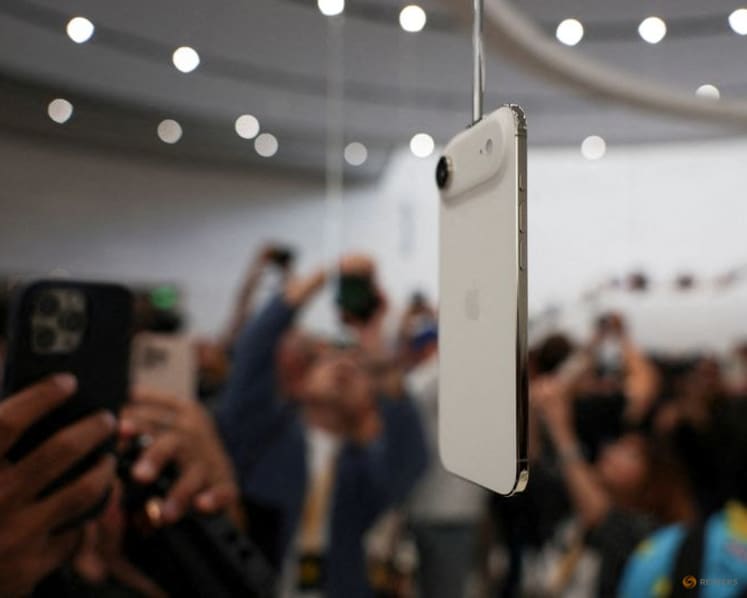
HIGH STAKES FOR APPLE
What makes this launch so interesting is that, for arguably the first time since the first iPhone launch in 2007, Apple – perhaps Ternus himself – will need to spend a great deal of energy explaining the “why” of this new device.
I recently had a vigorous debate with a friend over breakfast who argued there was no compelling need for a foldout smartphone screen, at least not one that warranted the extra bulk and, more to the point, the extra cost – the phone will be around double the average selling price of the current iPhone range. Beyond larger video (though not much larger than my current iPhone turned to landscape) and more space for reading, or multitasking, I admit I came up a little blank.
Ternus needs to convince people like my friend – and me, I guess – for whom the utility of a larger screen isn’t as instantly appealing. This is borne out in the numbers: For all the acclaim from gadget reviewers for the foldables already on the market, sales make up just 2.2 per cent of the global smartphone market, according to IDC.
The stakes for Apple are high. IDC estimates the foldable can sell 10 million units in its first 12 months of release. With Apple’s AI efforts still lagging, the company’s fortunes for the rest of this year and into the next rest heavily on whether the foldable iPhone breathes new life into the iPhone segment’s slowed revenue growth when consumers might be turned off by the rising cost of devices because of inflated component costs. Apple has already increased prices on a number of its products.
Whipping up Apple superfans into a frenzy around a foldable iPhone will be the surest way to navigate these headwinds. Somehow I feel Jobs would know just what to say to ignite excitement around this new (to Apple) form factor. We’ll see whether Ternus has the same flair for salesmanship.
Source: Bloomberg/sk
Sign up for our newsletters

Get the CNA app
Stay updated with notifications for breaking news and our best stories
Get WhatsApp alerts
Join our channel for the top reads for the day on your preferred chat app

Get bite-sized news via a new
cards interface. Give it a try.
Click here to return to FAST
Tap here to return to FAST
FAST