


Commentary: China-Laos military facility is a clear win for Beijing
The joint military facility will trigger concern among Laos’ neighbours, says this ISEAS – Yusof Ishak Institute academic.
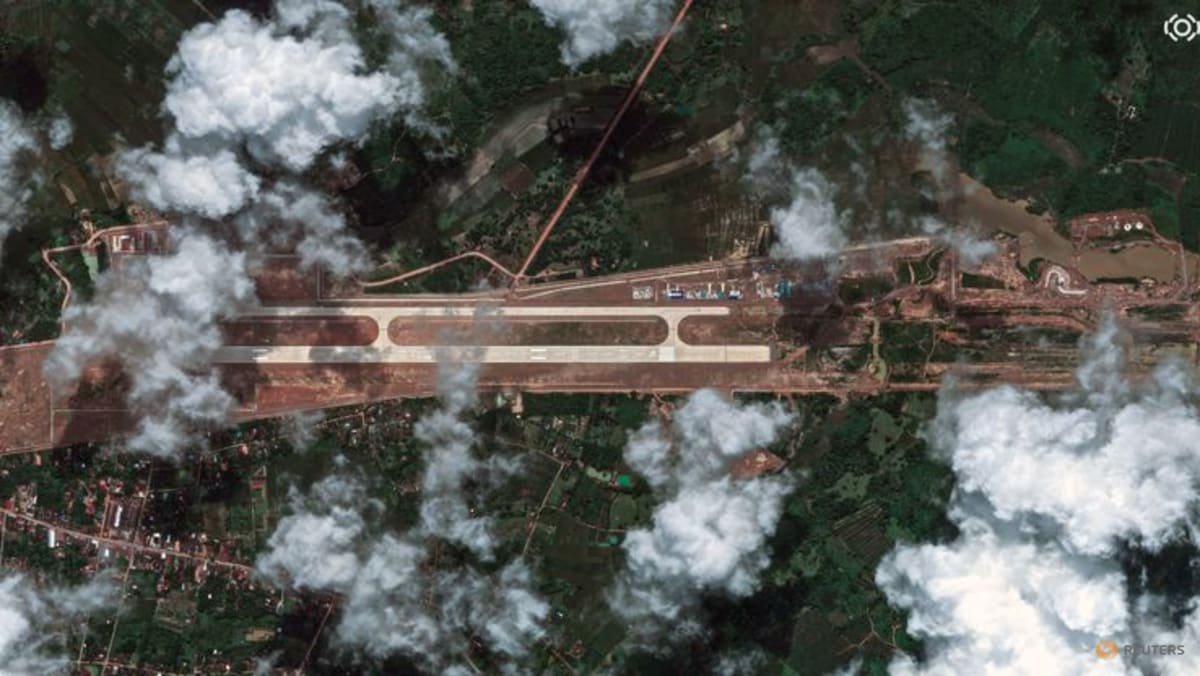
A satellite image shows construction of an airport in Ban Keun, where China’s Ministry of National Defense says it has opened a joint military support and training centre, in Vientiane Province, Laos, Sep 2, 2026. Vantor/Handout via REUTERS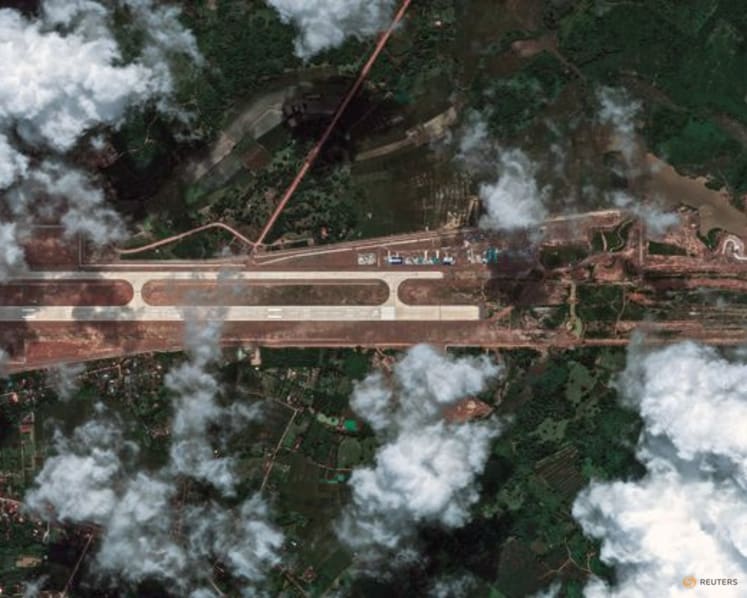
Read a summary of this article on FAST.
Get bite-sized news via a new
cards interface. Give it a try.
Click here to return to FAST
Tap here to return to FAST
FAST
SINGAPORE: On Sep 29, China opened a joint military facility with Laos at Ban Keun airport, 50km north of the capital Vientiane.
The inauguration of the facility, which took most security analysts by surprise, represents a significant gain for China’s defence diplomacy in Southeast Asia, a recalibration of Laos’ military relationships and a concern for neighbouring countries, particularly Vietnam.
According to Beijing, the China-Laos Joint Support and Training Centre and the China-Laos Friendship Aviation Academy serve two purposes: to provide training for Laotian air force pilots and to act as a logistical hub for China’s defence cooperation activities with Laos.
Work on refurbishing the airstrip began in October 2025 and was finished in under a year. The facility has some historical significance: It was used by America’s Central Intelligence Agency (CIA) during the Vietnam War.

Guess Word
Crack the word, one row at a time

Buzzword
Create words using the given letters

Mini Sudoku
Tiny puzzle, mighty brain teaser

Mini Crossword
Small grid, big challenge

Word Search
Spot as many words as you can
Ban Keun is not China’s first overseas military facility. In 2017, China set up a base in Djibouti, ostensibly to support its anti-piracy patrols in the Gulf of Aden. Last year, China and Cambodia opened a Joint Training and Support Centre at Ream Naval Base in Cambodia which Beijing had also financed.
Ban Keun, however, will be the People’s Liberation Army Air Force’s first dedicated overseas outpost.
LEANING TOWARDS CHINA FOR DEFENCE NEEDS?
Laos has close military ties with China and Russia. Since 2017, the Lao People’s Armed Forces (LPAF) has conducted eight military exercises with China’s People’s Liberation Army (PLA) and six with Russia’s armed forces.
In terms of military hardware, Laos has tended to favour Russian-made equipment. Of the air force’s 37 aircraft, more than half were made in Russia, including 19 helicopters and four fixed-wing aircraft.
But the opening of the Ban Keun facility suggests that Laos may be leaning more towards China for its defence needs. If China is to train Laotian pilots, it suggests that Vientiane may consider procuring Chinese-made aircraft in the future, such as the Hongdu JL-10 supersonic training aircraft followed by more advanced fighters such as the Chengdu J-10 (which Indonesia will reportedly receive soon).
If Laos has decided to prioritise military ties with China over Russia, it should not come as a surprise. Since its full-scale invasion of Ukraine in 2022, Russia has become a less reliable defence partner. Western sanctions have caused production problems for the country’s defence industry, while the tempo of combat operations means Russia has fewer trainers to send overseas.
Laos provides a good example of Russia’s problems. In 2018, Laos ordered 10 Yak-130 training aircraft from Russia. Thus far, only four have been delivered (and one crashed in 2024).
There was also an agreement between Laos and Russia in 2019 to establish a pilot training facility at Xieng Khouang air base in northeastern Laos (of the same kind as Ban Keun) but it appears to be in limbo.
APPREHENSION IN VIETNAM
Laos’ defence ties with external powers are, of course, a domestic matter. But for Laos’ neighbours, China’s presence at Ban Keun, which reportedly already includes PLA attack jets, is bound to raise apprehensions.
And nowhere more so than in Hanoi.
Cambodia and Laos constitute Vietnam’s western flank, an area Hanoi views as its traditional sphere of influence. To preserve its strategic interests, Vietnam maintains friendly relations with both countries and tries to ensure neither becomes a forward operating area for geopolitical rivals, especially Beijing which has overlapping territorial claims with Hanoi in the South China Sea.
But as China’s economic heft in Indochina has grown, so too has its political clout, sometimes at Vietnam’s expense.
Since the late 1990s, China has become Cambodia’s closest economic and security partner, and recently gained privileged access to the Ream Naval Base.
Over the past two decades, Laos’ economic dependence on China has also deepened, and due to the construction of several Chinese-funded infrastructure projects, most notably a high-speed railway, Vientiane now finds itself deeply in debt to Beijing. The Ban Keun facility suggests that China may be leveraging its economic power to advance its security interests in Laos.
Aside from the prospect of increasing Chinese arms sales to Laos, and strengthening military cooperation between the PLA and LPAF, the Ban Keun station gives China an additional strategic pressure point on Vietnam’s western flank.
It will not greatly enhance the PLA’s operational capabilities, as it has much larger air force bases in Yunnan and Hainan provinces. But together with the Ream Naval Base and new military facilities under construction in the Paracel Islands, Ban Keun shows that China is increasingly encroaching into Vietnam’s strategic space.

US CONCERNS
So far, Vietnam has not issued a formal response to the opening of the joint China-Laos airbase. Neither has Laos’ western neighbour, Thailand. A Thai military official told Reuters that it was Vientiane’s sovereign right to conduct military cooperation with another country but added that Bangkok was closely monitoring developments.
Thailand is unlikely to be overly concerned by Ban Keun, as it does not have any territorial disputes with Beijing and is China’s closest defence partner in Southeast Asia.
But the same cannot be said of its treaty ally, the US, which will view Ban Keun as less of a training facility and more of an intelligence gathering outpost for the PLA, including spying on US-Thai military exercises.
Ban Keun is a clear win for China, a potential setback for Russia, a strategic challenge for Vietnam and a security concern for the US. Whether it proves beneficial for Laos, which risks adding military dependence on Beijing to its economic dependence, is far less certain.
Ian Storey is Principal Fellow at ISEAS – Yusof Ishak Institute. This commentary first appeared on ISEAS – Yusof Ishak Institute’s site, Fulcrum.
Source: Others/el
Sign up for our newsletters

Get the CNA app
Stay updated with notifications for breaking news and our best stories
Get WhatsApp alerts
Join our channel for the top reads for the day on your preferred chat app

Get bite-sized news via a new
cards interface. Give it a try.
Click here to return to FAST
Tap here to return to FAST
FAST







