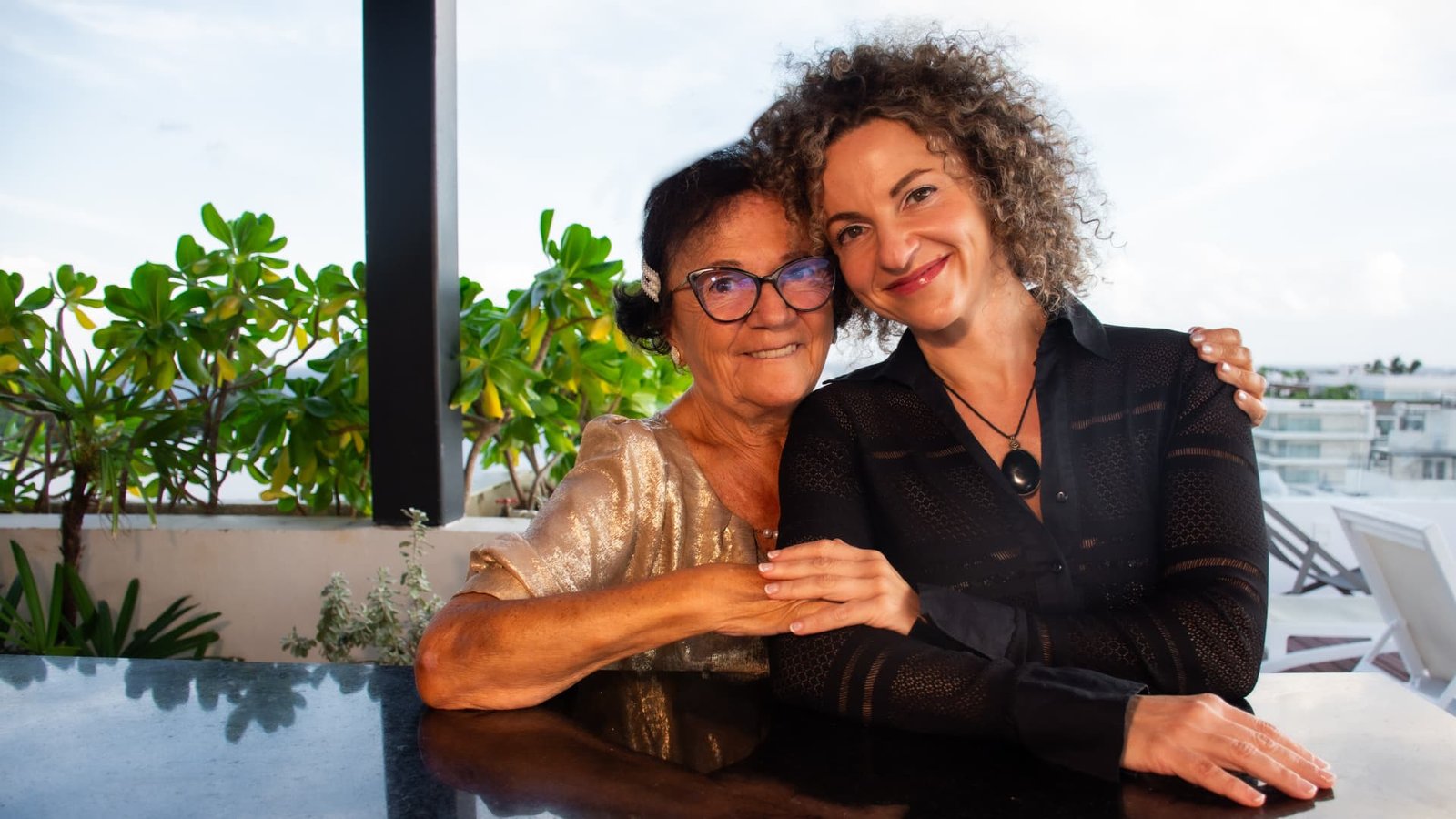
Skip NavigationMy mother and I.Photo: Lucia Aronica
I’m a Stanford researcher who has spent two decades studying epigenetics, the science of how nutrition and lifestyle affect our genes. I’ve published papers and spoken at medical conferences on four continents.
I firmly believe in knowing your numbers, like cholesterol and blood pressure. But there’s a subset of longevity culture that has drifted towards solely optimizing sleep scores, tracking biomarkers and counting macronutrients, without any additional human context.
True longevity is biological, psychological and social. Each facet informs the other, and no one believes and embodies that more than my mother, Livia.
She is 85 years old and lives in a small coastal town in Southern Italy. She doesn’t own a fitness tracker, has never taken a cold plunge, and has no idea what biohacking is. Yet she’s one of the healthiest and happiest people I know.
Here are her five simple rules for a long and happy life.
1. Eat food that makes you happy, and eat it slowly
Dinner is sacred to my mother. She never rushes through it. She puts olive oil on everything, cooks leafy greens with garlic, makes fish a few times a week and enjoys a small square of dark chocolate with her afternoon coffee.
Food is fuel and epigenetic information for your body. My mother’s instinctive Mediterranean table has always been filled with nutrients that support the genes that promote health and longevity.
2. Move naturally, not just at the gym
Exercise changes the expression of more than 800 genes in our muscles, which leads to greater cellular repair and metabolic resilience. And research has found that people who walk at a brisker pace tend to show signs of slower biological aging.
My mother recently started working with a trainer to keep her muscles strong. But for eight decades, life has been her gym. She walks to the market, to see her neighbors, and up four flights of stairs because the elevator is slow.
3. Show up for your people, and let them show up for you
Social isolation activates inflammatory genes that can lead to cardiovascular disease, cognitive decline and accelerated aging. Close relationships silence those inflammatory genes and protect us from chronic disease.
Southern Italian culture prioritizes community. You sit and eat and argue with your people, then forgive them over coffee. You show up in moments of grief and celebration.
My mother’s world is held together by small, joyful acts of togetherness. She has a daily “passeggiata,” or stroll, with her neighbor. Her sister lives in another town, and they have a standing phone call they haven’t missed in decades.
She often spends afternoons in the kitchen teaching her grandchildren recipes that were passed down to her by her mother, like crocchè, Neapolitan potato and mozzarella croquettes.
4. Have a reason to get dressed in the morning
My mother worked as a civil servant for over 30 years and retired at 58. She had every reason to slow down, but she never truly retired. She just transitioned into a new role that kept her at the center of that community she values so much.
She became the wisdom keeper, the pasta-making teacher and the storyteller for her grandchildren.
Research has found that people with a strong sense of purpose had an epigenetic age that was, on average, 2.4 years younger than those who lacked a strong sense of purpose.
5. Let pleasure be your guide, not something you restrict or avoid
My mother has what I call the “spark.” Growing up, I thought it was simply Italian exuberance. Now, after decades studying longevity, I see it differently.
The spark is her ability to find genuine pleasure in everyday life. And contrary to what many people think, pleasure is not the opposite of health. Research suggests that positive emotions, strong relationships and enjoyable experiences can support the biological pathways tied to resilience and healthy aging.
My mother savors her espresso slowly. She dresses to go to the supermarket the way others dress for a wedding, matching the flower in her hair to her purse, shoes and dress. She loves to laugh with her neighbors.
And every morning, she sends us a photograph of the sun rising over the ocean from her balcony. This is her daily “buongiorno” to the people she loves.
Dr. Lucia Aronica is a Stanford Lecturer and epigenetics researcher whose work was featured in the 2024 Netflix documentary “You Are What You Eat: A Twin Experiment.” She developed the Epinutrition framework, Stanford’s first program in nutritional epigenetics, and is the creator of the world’s first Clinical Epinutrition Certification for healthcare professionals. Follow her on Instagram @drluciaaronica.
Want to get ahead at work? Then you need to learn how to make effective small talk. In CNBC’s new online course, How To Talk To People At Work, expert instructors share practical strategies to help you use everyday conversations to gain visibility, build meaningful relationships and accelerate your career growth. Sign up today!
About The Author