Maebashi is quietly becoming one of Japan’s most creative cities
Just over an hour from Tokyo, the Gunma capital is pairing contemporary art and architecture with a broader effort to revive its city centre.
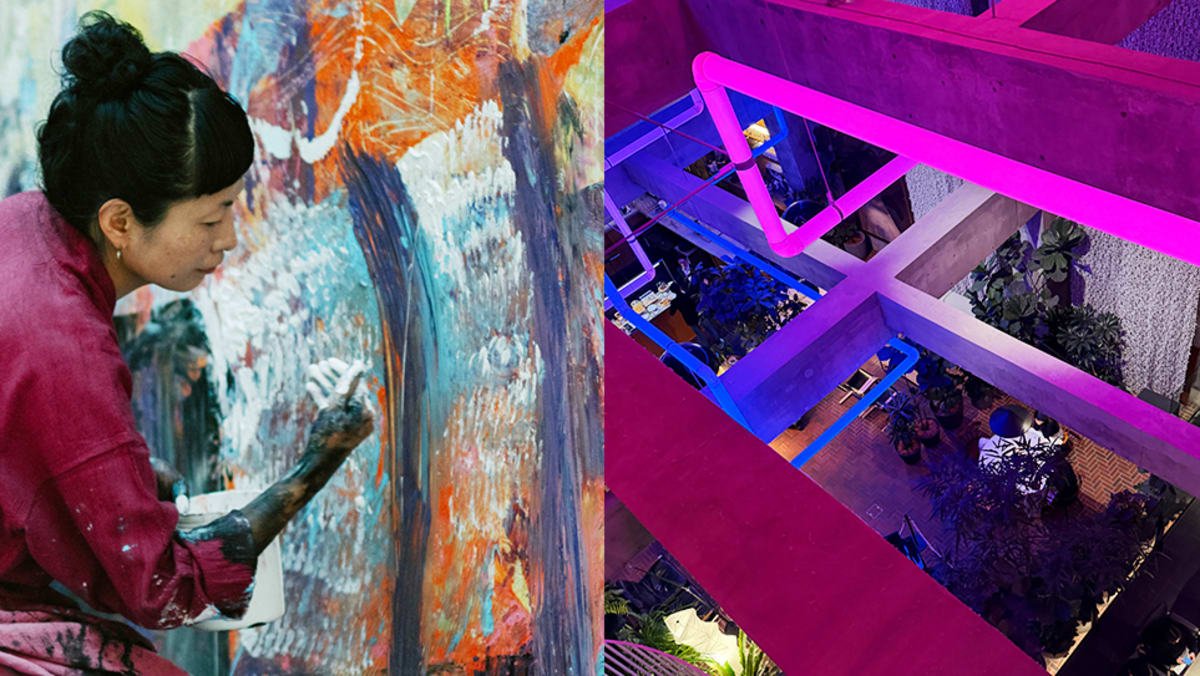
Shiroiya Hotel brings art, design and architecture together at the heart of Maebashi’s cultural revival. (Photos: Shiroiya Hotel & Luo Jingmei)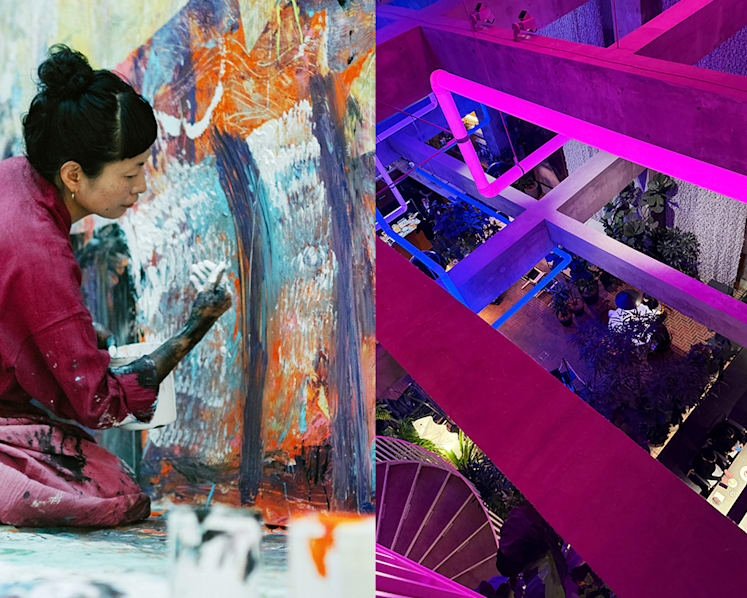
New: You can now listen to articles.

This audio is generated by an AI tool.
By
Read a summary of this article on FAST.
Get bite-sized news via a new
cards interface. Give it a try.
Click here to return to FAST
Tap here to return to FAST
FAST
Since Shiroiya Hotel opened in December 2020, Maebashi has drawn growing attention from artists, architects and design enthusiasts. Designed by Japanese architect Sou Fujimoto, the hotel has become a creative landmark in the capital of Gunma Prefecture. Fujimoto’s best-known projects include the Grand Ring at Expo 2025 Osaka, Kansai, Japan, the steel latticework of London’s 2013 Serpentine Pavilion and a series of experimental homes exploring the relationship between people, architecture and nature.
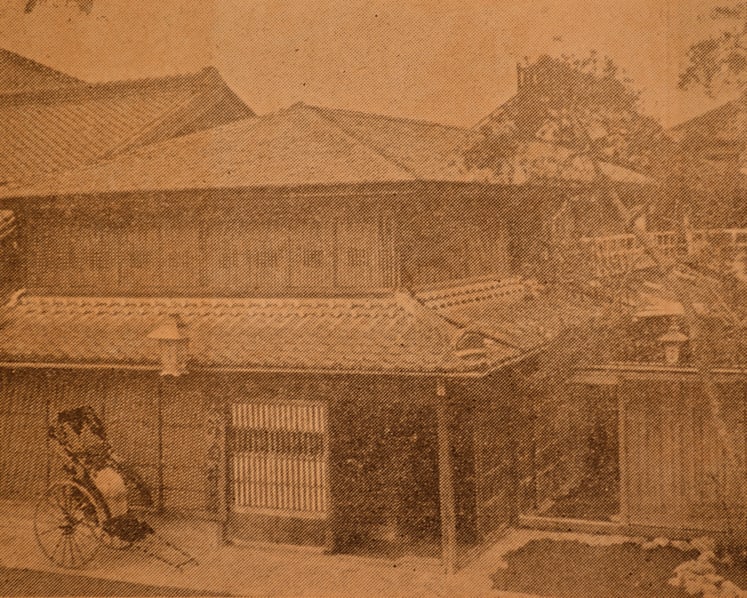
Fujimoto’s renovation continued a history stretching back more than 300 years, when Shiroiya operated as a traditional ryokan. The inn moved into a concrete building in the 1970s, but eventually struggled as Maebashi’s city centre declined and younger residents left for larger cities. Shiroiya closed in 2008, and the site was earmarked for redevelopment before Maebashi native Hitoshi Tanaka intervened.
A 300-YEAR-OLD RYOKAN BECOMES AN ART HOTEL
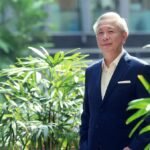
Tanaka is the founder and group CEO of Japanese eyewear company JINS, which operates more than 800 stores worldwide. The Maebashi native has since channelled his entrepreneurial experience into philanthropic and urban renewal projects in his hometown. In 2014, he bought the former hotel and commissioned Fujimoto to transform it into an art-focused destination.
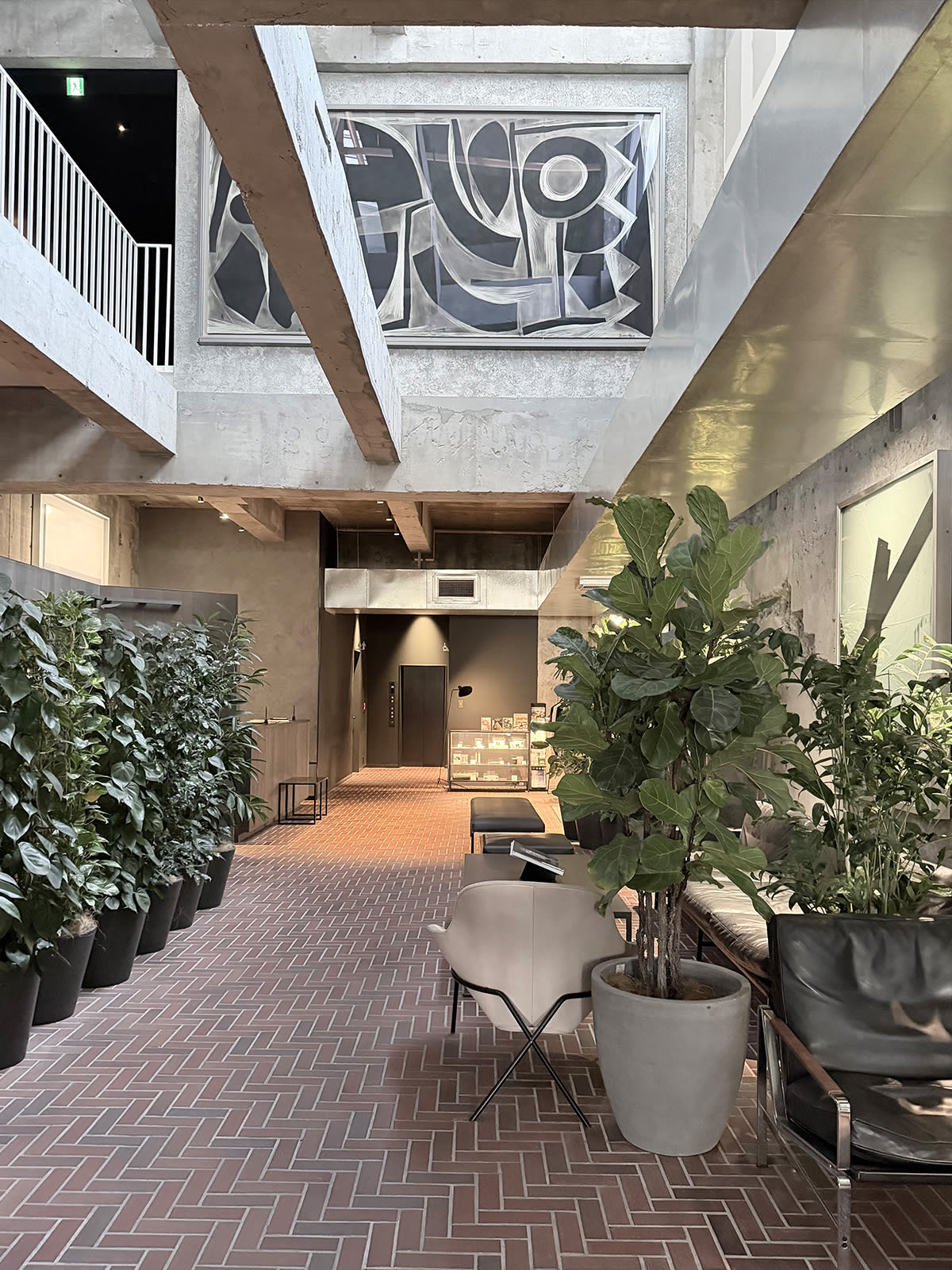
The architect kept the original Brutalist structure while introducing contemporary art throughout the building. American artist Lawrence Weiner’s bright yellow typographical artwork announces Shiroiya Hotel’s presence along Honmachi Road. Inside, sections of the floors and walls were removed to form a four-storey atrium, exposing a grid of concrete beams and columns through which Argentine conceptual artist Leandro Erlich’s Lighting Pipes installation twists. Daylight enters through skylights and reaches the ground-floor lounge, where abundant greenery softens the raw concrete.
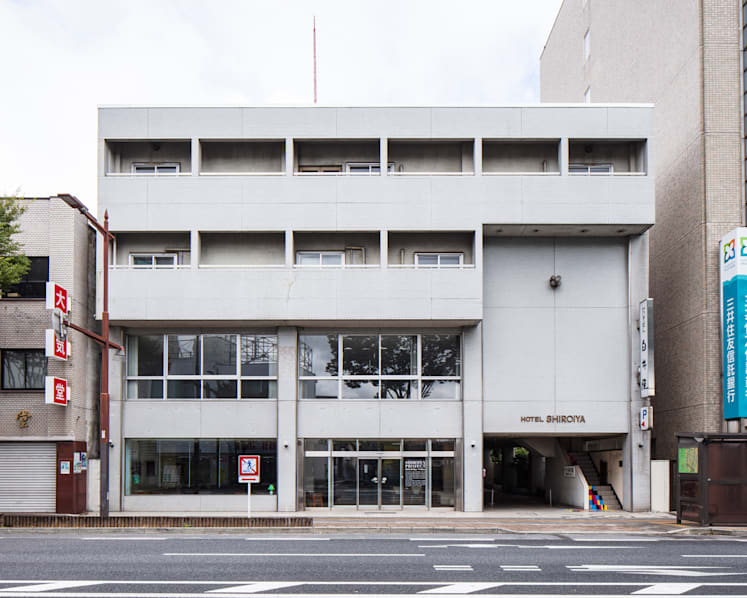
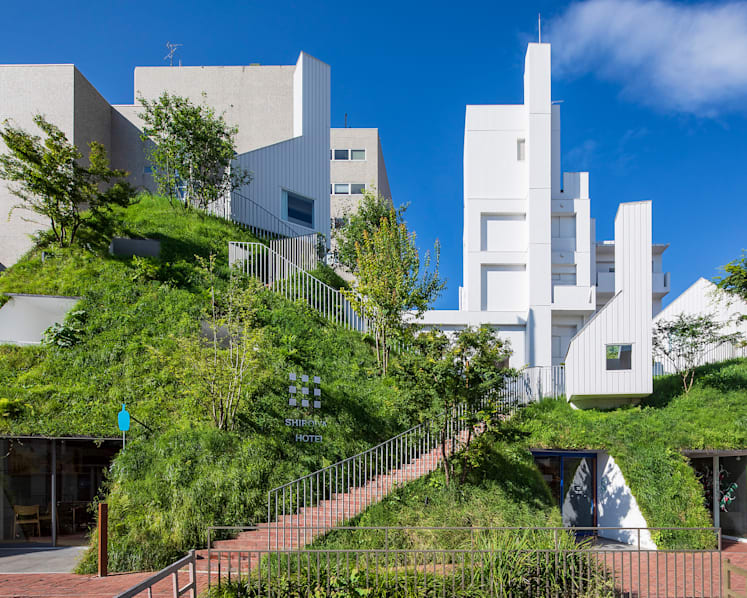
The renovated building became the Heritage Tower, with 17 guestrooms. Behind it, Fujimoto added the Green Tower, a grass-covered mound inspired by memories of the old Tone River embankment, which once ran in front of the site. It contains eight guestrooms and wellness facilities, while a Blue Bottle Coffee cafe, bakery and patisserie occupy spaces around the development. The interiors of the F&B outlets were designed by Keiji Ashizawa Design, Teruhiro Yanagihara Studio and Tripster respectively.
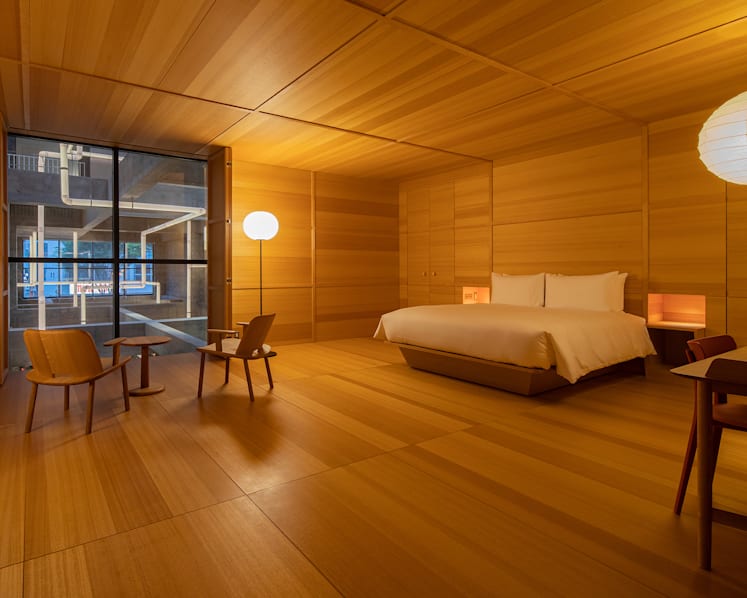
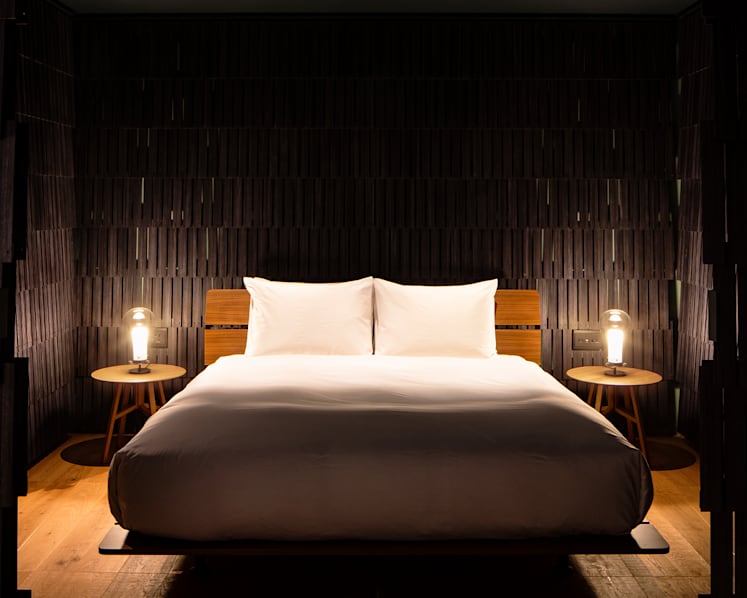
Standard rooms feature works by artists including Kengo Kito and Kenzo Onoda, while four concept rooms immerse guests in the work of their respective designers. Michele De Lucchi’s room is lined with 2,725 wooden shingles, Sou Fujimoto’s incorporates greenery into its furniture, Jasper Morrison’s is enveloped in timber, and Leandro Erlich’s extends the pipe motif of his atrium installation into the room.
ART, WELLNESS AND DINING
Next to the hotel, three residence-style rooms designed by Japanese fashion and textile label Mina Perhonen come with kitchens for longer stays and record players. A ground-floor Mina Perhonen shop in the mixed-use building facing Babakkawa-dori sells clothing, textiles and other pieces carrying the label’s distinctive motifs. Along the pedestrian street, benches overlook a narrow waterway, while the names etched into some brick pavers recognise individuals and businesses that contributed to its revitalisation.
Shiroiya Hotel’s wellness spaces located in the Green Tower are unlike typical hotel spas. One hut contains a Finnish sauna and cold plunge path as well as an artwork by Tatsuo Miyajima, while nother has a herbal mist sauna. Hotel guests can also book Room 37, a private sauna with a double bed-sized bench designed for lying down.
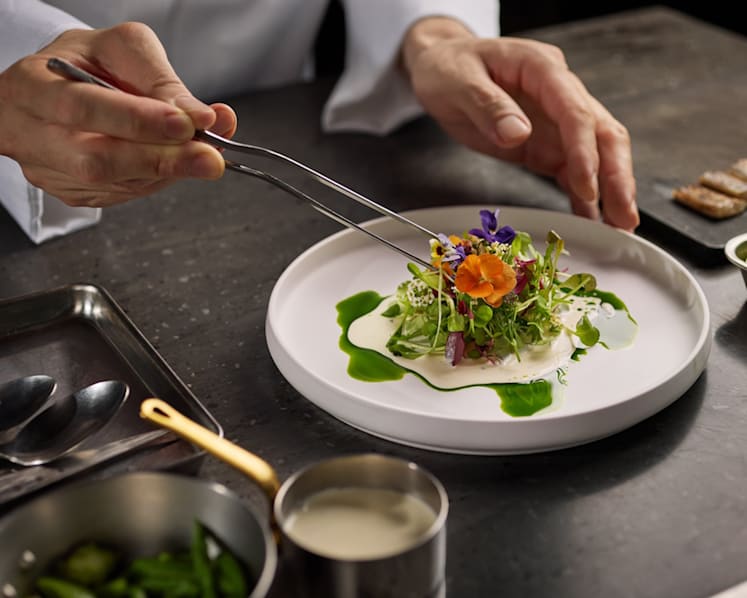
Chef Hiro Katayama, who previously worked at Tokyo restaurant Florilege, leads the hotel’s main restaurant in the atrium. The restaurant has appeared in the Gault & Millau guide for five consecutive years. Katayama’s cooking draws on Gunma’s produce and culinary traditions, with dishes built around ingredients such as Akagi beef. Another standout dish is a delicate chestnut soup and fried fish topped with pumpkin noodles and salted roe.
In the adjoining lounge, Katayama’s French-influenced take on okkirikomi, a wide-noodle dish associated with Gunma, is served until late. Overhead, Erlich’s LED installation shifts colour after dark. Elsewhere in the hotel, a multipurpose room designed by artist Hiroshi Sugimoto and architect Tomoyuki Sakakida combines glass and cedar within the Green Tower.
THE CHARM OF MAEBASHI
Around 70 minutes from Tokyo by train, Maebashi moves at a gentler pace, with tree-lined streets and Mount Akagi visible beyond the city. Asked what he remembered most about growing up here, Tanaka said: “The original landscape of my life was looking out to Mount Akagi in the distance and growing up under an expansive sky.”
Mount Akagi is a stratovolcano whose slopes turn shades of red and gold in autumn. It is also the home territory of the fictional Akagi RedSuns racing team in the manga and anime series Initial D, drawing fans who come to follow roads associated with the story. Maebashi’s creative history, however, predates its recent art projects: The city once prospered as a centre of silk production.
Shiroiya Hotel became an early anchor in a broader effort to regenerate central Maebashi. Tanaka established the Hitoshi Tanaka Foundation in 2014 to support entrepreneurship and creative projects, working alongside the local government and community. Two years later, the Maebashi Creative City initiative adopted the vision “Mebuku – Where Good Things Grow”.
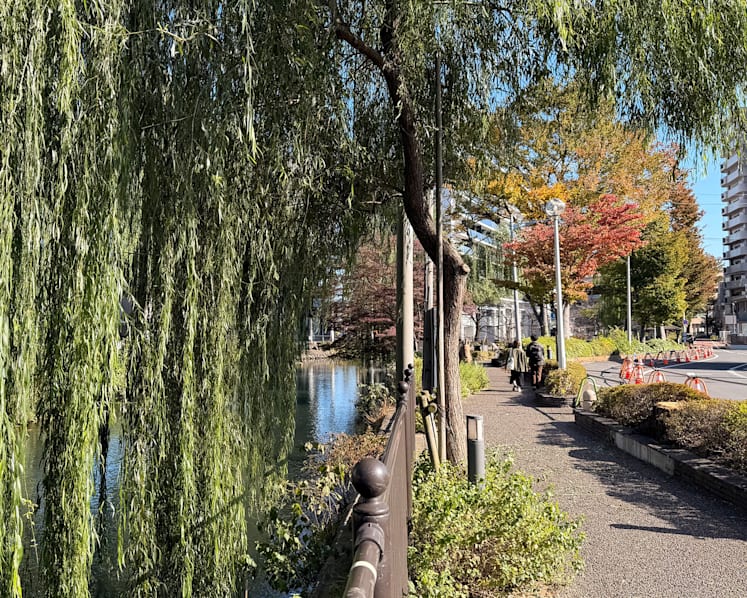
Master planned by Mount Fuji Architects Studio, this 1.5km development continually refreshes the city with public art, ground-up retail, art, urban, culture and architecture initiatives. In Japan, it has become a well-known case study of revitalisation efforts led primarily by private citizens rather than the government.
WHERE TO SEE ART
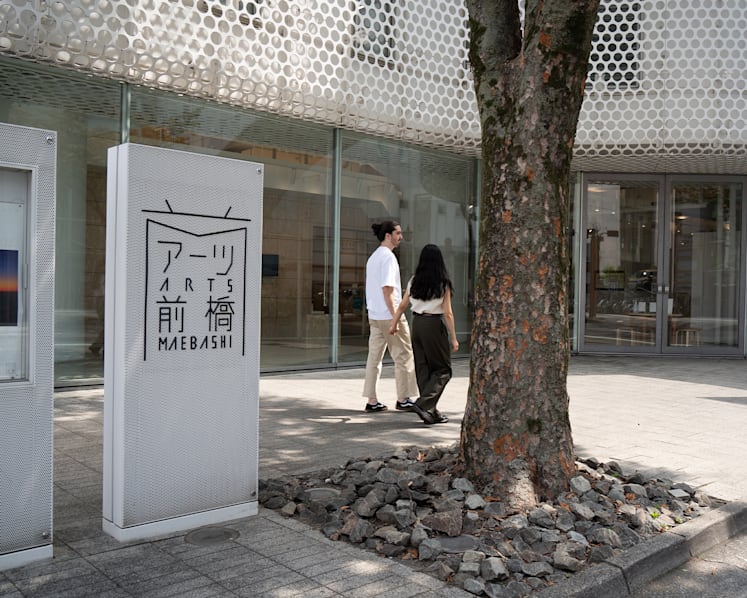
Start at Arts Maebashi, the city’s public art museum behind Shiroiya Hotel. Toshihiro Mizutani Architects converted the former shopping complex, wrapping its facade in curved, perforated aluminium. The museum is led by executive director Fumio Nanjo, a former director of Tokyo’s Mori Art Museum.
A three-minute walk away, Maebashi Galleria opened on a former car park in May 2023. Designed by architect Akihisa Hirata, the mixed-use complex places galleries and a restaurant beneath 26 residences, bringing art into the rhythms of everyday life.
The cluster of white cubes fringed with greenery has 26 apartments above and well-lit galleries on the first storey with layouts mimicking Maebashi’s alleyways. “This allows visitors to encounter art not within a static room, but through a dynamic experience, as if wandering through a natural landscape,” said Hirata. The tenants include Taka Ishii Gallery Maebashi, Maki Gallery, Tomio Koyama Gallery, Art Office Shiobara and rin art association.
Hashimoto describes projects such as Maebashi Galleria as “social condensers” – places designed to encourage interaction and activity. “Our decision to establish a presence here was driven by a desire to be an integral part of the evolution. Rather than simply creating a space to display art, we aim to transcend the conventional frameworks of the Tokyo art scene and foster a ‘new model of the cultural city’ where art and daily life are intimately intertwined,” he said.
NEW LIFE IN AN OLD BUILDINGS
The regeneration effort also extends to vacant shop units along Chuo-dori, one of the streets within Maebashi’s covered shopping arcade. Here, independent food and retail businesses have occupied older premises with the help of new design and local investment.
Tsujihan serves seafood rice bowls in an interior designed by Fumiko Takahama and Tomohiko Komatsu. Nearby, the Kabasawa family runs More Soup using pesticide-free vegetables grown at its Kaba Farm near the foot of Mount Akagi.
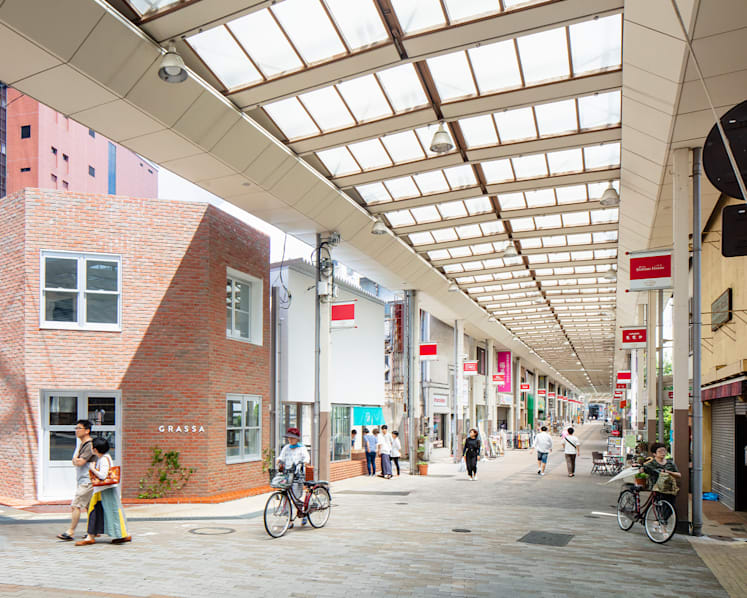
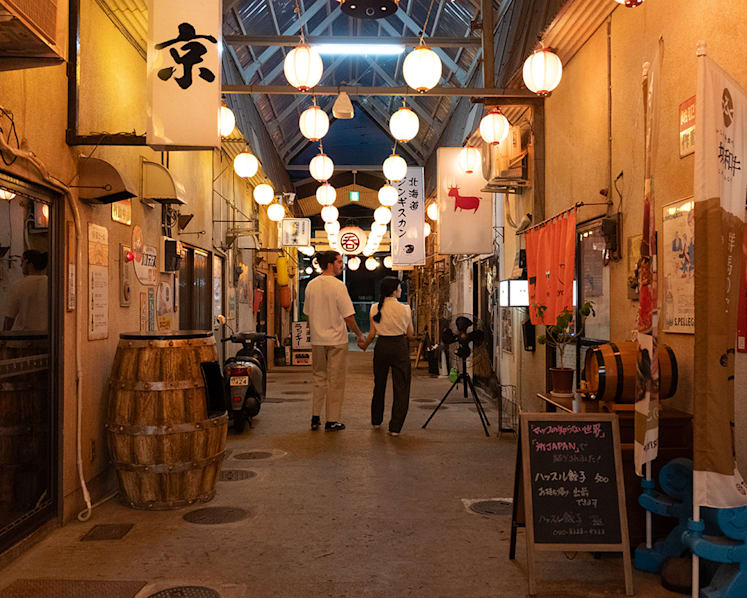
Around the corner, the local branch of Portland-founded Italian restaurant Grassa serves fresh pasta like green onion and duck Bolognese. For sweet treats, Nakamata is a confectionery shop designed by Schemata Architects, with brickwork that references buildings constructed during Maebashi’s silk-industry boom.
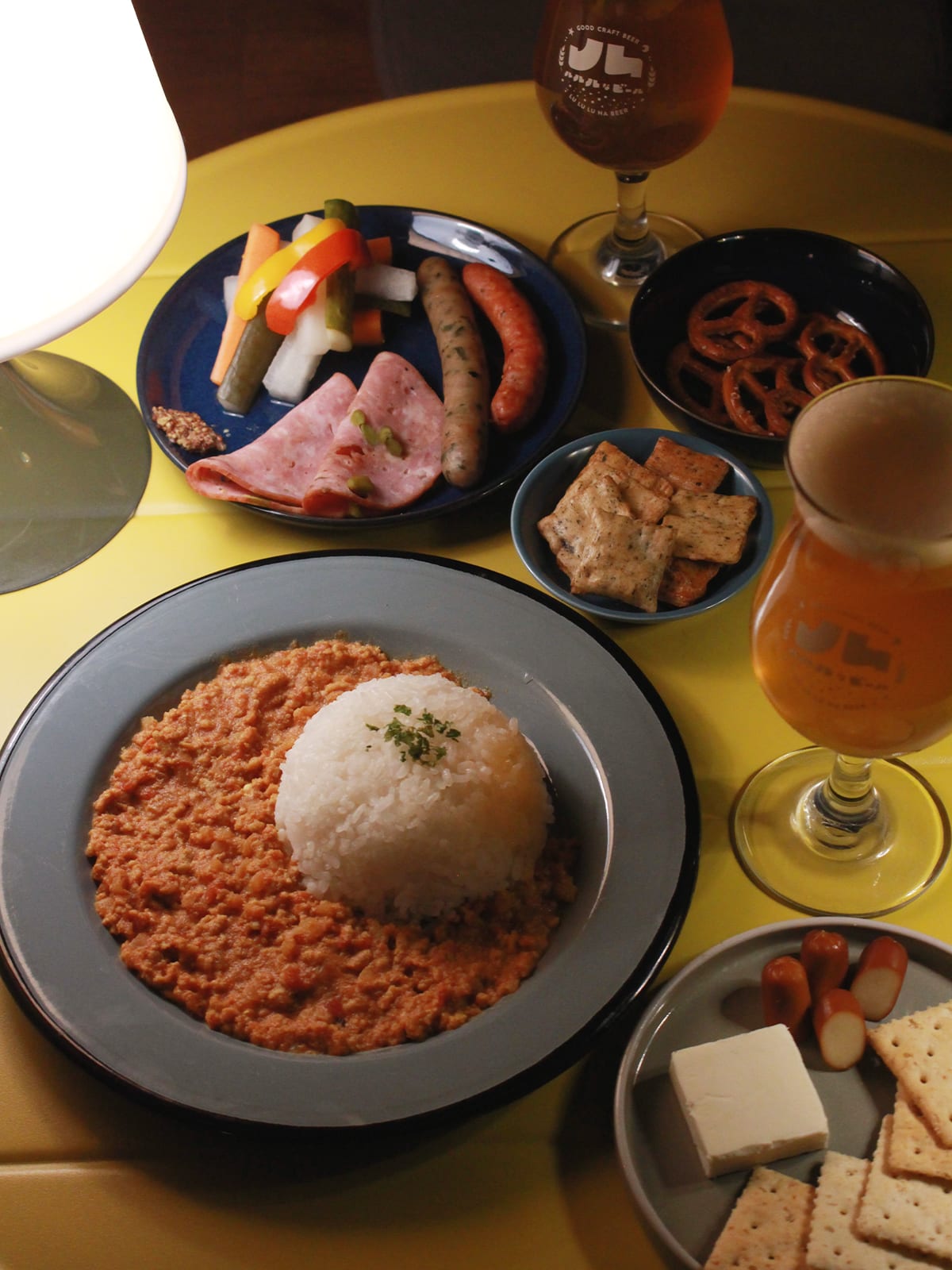
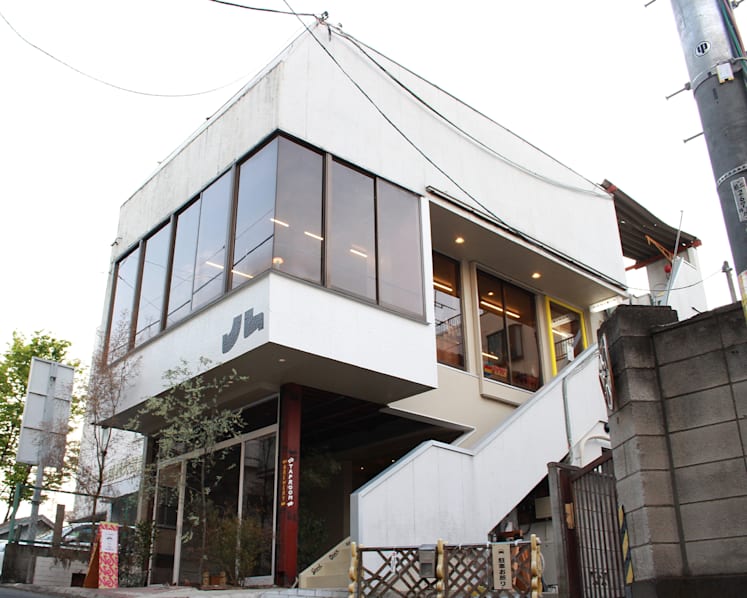
Opposite Shiroiya Hotel, Lu Lu Lu Na Beer was founded by an Aomori native who first came to Maebashi to study and later worked in radio and copywriting. Enamoured with craft beer, he learned the ropes at several breweries before opening his own space that is now a local landmark.
THE FIRST MAEBASHI BIENNALE
The inaugural Maebashi Biennale will run from Sep 19 to Dec 20, 2026, bringing art, design, food and cultural programmes to venues across the city. These will include waterfront sites, restaurants and cafes, disused public facilities, historic silk mills and established art spaces.
The biennale takes its theme, “Mebuku: Where Good Things Grow”, from Maebashi’s wider regeneration vision. Tanaka serves as executive producer and chair of the executive committee, while programme director Takenori Miyamoto is overseeing a presentation of works by more than 70 artists and groups. Among them are teamLab, which will create a site-specific digital installation on the waterfront, and photographer and filmmaker Mika Ninagawa, who will collaborate with creative collective EiM on a project presented by Hauser & Wirth. Martin Margiela is also expected to show new work at Arts Maebashi and Maebashi Galleria.
Shiroiya Hotel will participate through Art Illumination, its annual winter programme launched in 2021. Artist and picture-book author mirocomachiko will present Putting Down Roots in the Air in the Green Tower, responding to the biennale’s theme of growth. “Mebuku” means “to bud” or “to sprout”.
The event will put Maebashi on the global stage as an art and design destination outside of Tokyo. Its hard work of sustainable cultural and urban regeneration will also be showcase to new audiences, and the once-dying town will once again be filled with people.
HOW TO GET TO MAEBASHI
By train: From Tokyo Station, take the Joetsu or Hokuriku Shinkansen to Takasaki Station, a journey of about one hour. Transfer to the JR Ryomo Line for Maebashi Station, about 15 minutes away. Shiroiya Hotel is approximately a 15-minute walk from the station.
By car: The drive from Haneda Airport to central Maebashi takes about two hours, depending on traffic.
Source: CNA/bt
Get bite-sized news via a new
cards interface. Give it a try.
Click here to return to FAST
Tap here to return to FAST
FAST
About The Author