analysis
Myanmar’s Dawei port megaproject could offer a regional shipping shortcut, but viability doubts linger
Myanmar’s Dawei special economic zone could offer Thailand a shorter route to the Indian Ocean by bypassing the Strait of Malacca, but conflict, financing constraints and Russia’s role raise questions over whether the long-stalled project can be revived.
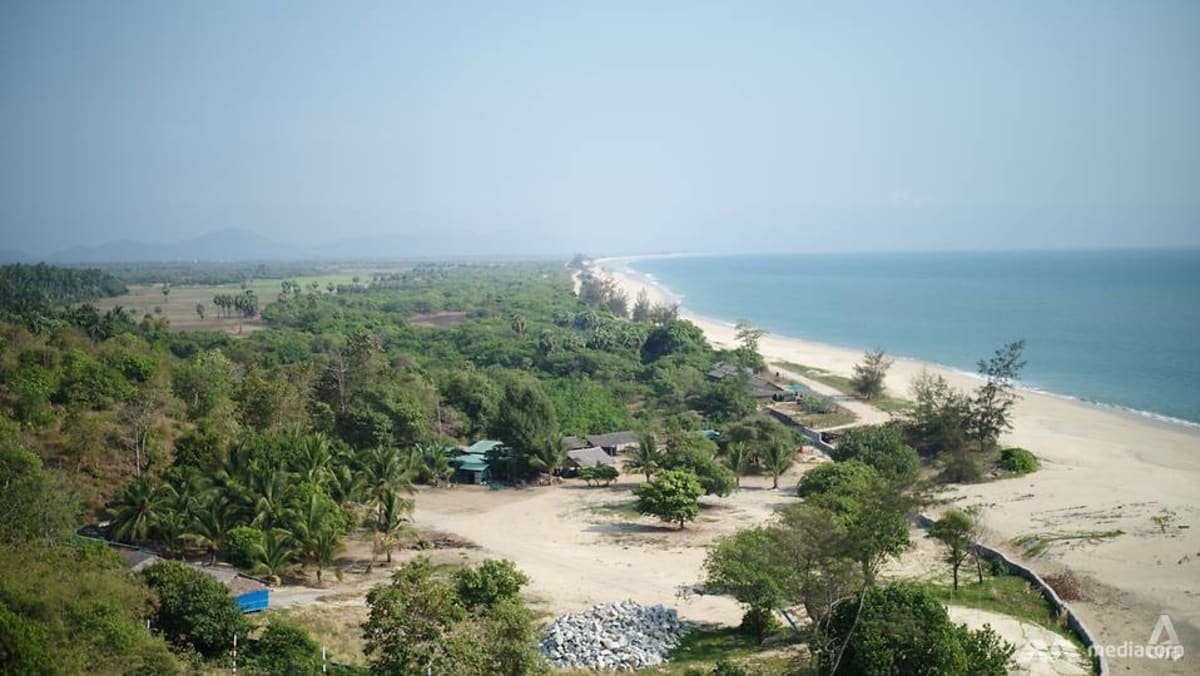
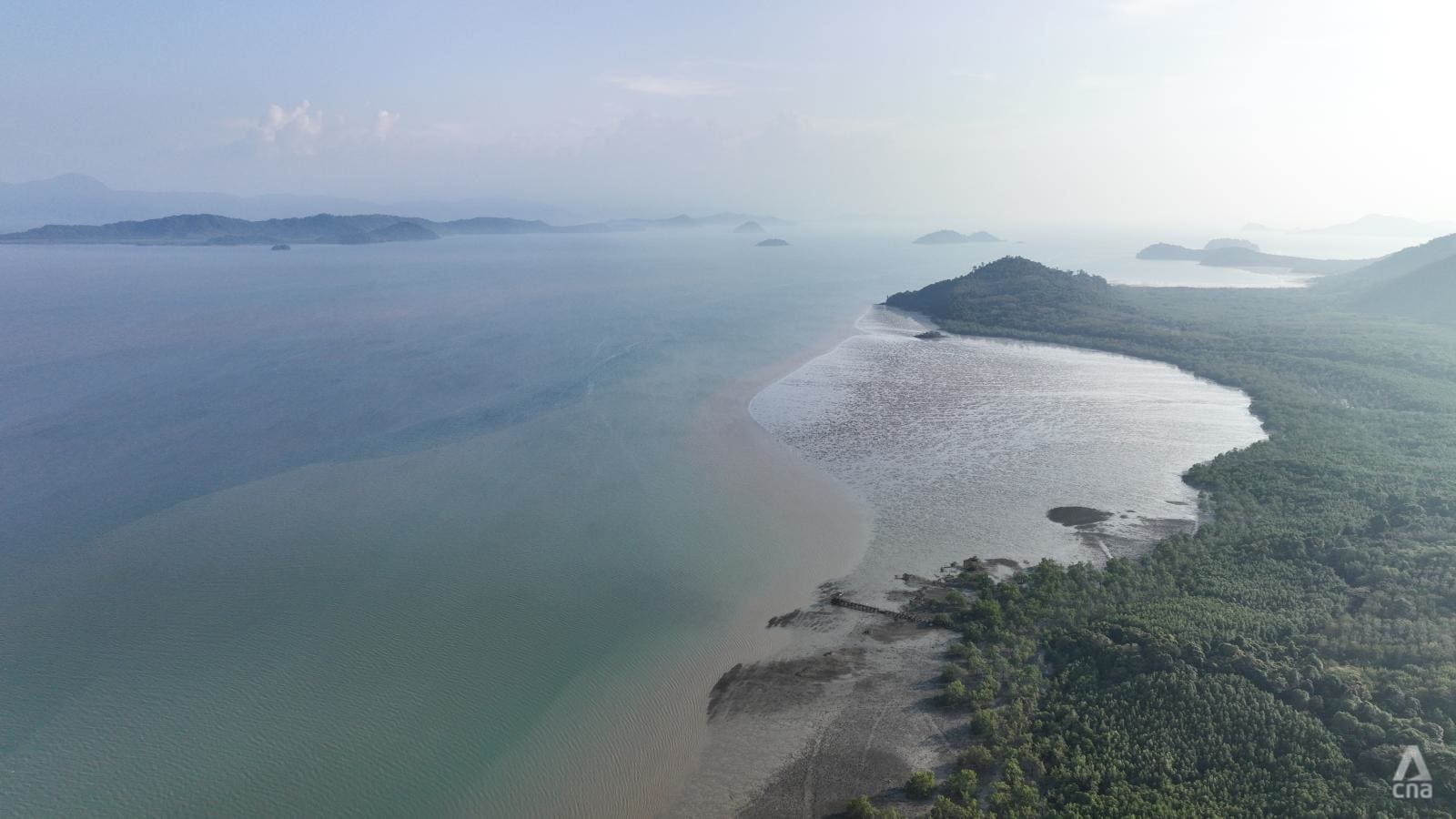
A beachfront of the Dawei Special Economic Zone as seen in 2018, where a deep-sea port could be built. (Photo: CNA/Panu Wongcha-um)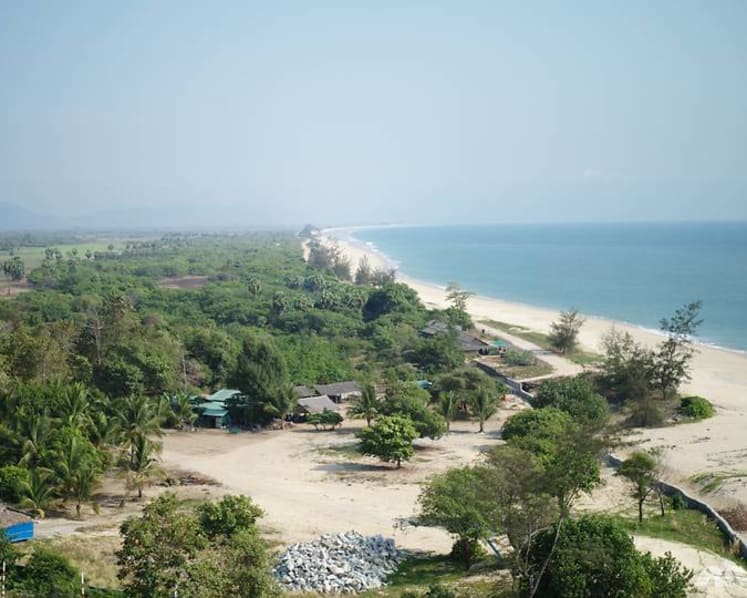
New: You can now listen to articles.

This audio is generated by an AI tool.

Read a summary of this article on FAST.
Get bite-sized news via a new
cards interface. Give it a try.
Click here to return to FAST
Tap here to return to FAST
FAST
BANGKOK: Years after ending a joint venture with Thailand to build Southeast Asia’s largest industrial zone – including a deep-sea port that could offer a regional shipping shortcut – Myanmar is looking to revive the megaproject with Russia’s involvement and renewed interest from Bangkok.
The Dawei special economic zone (SEZ) in southern Myanmar was conceived as one of Southeast Asia’s great new gateways when planning began about two decades ago.
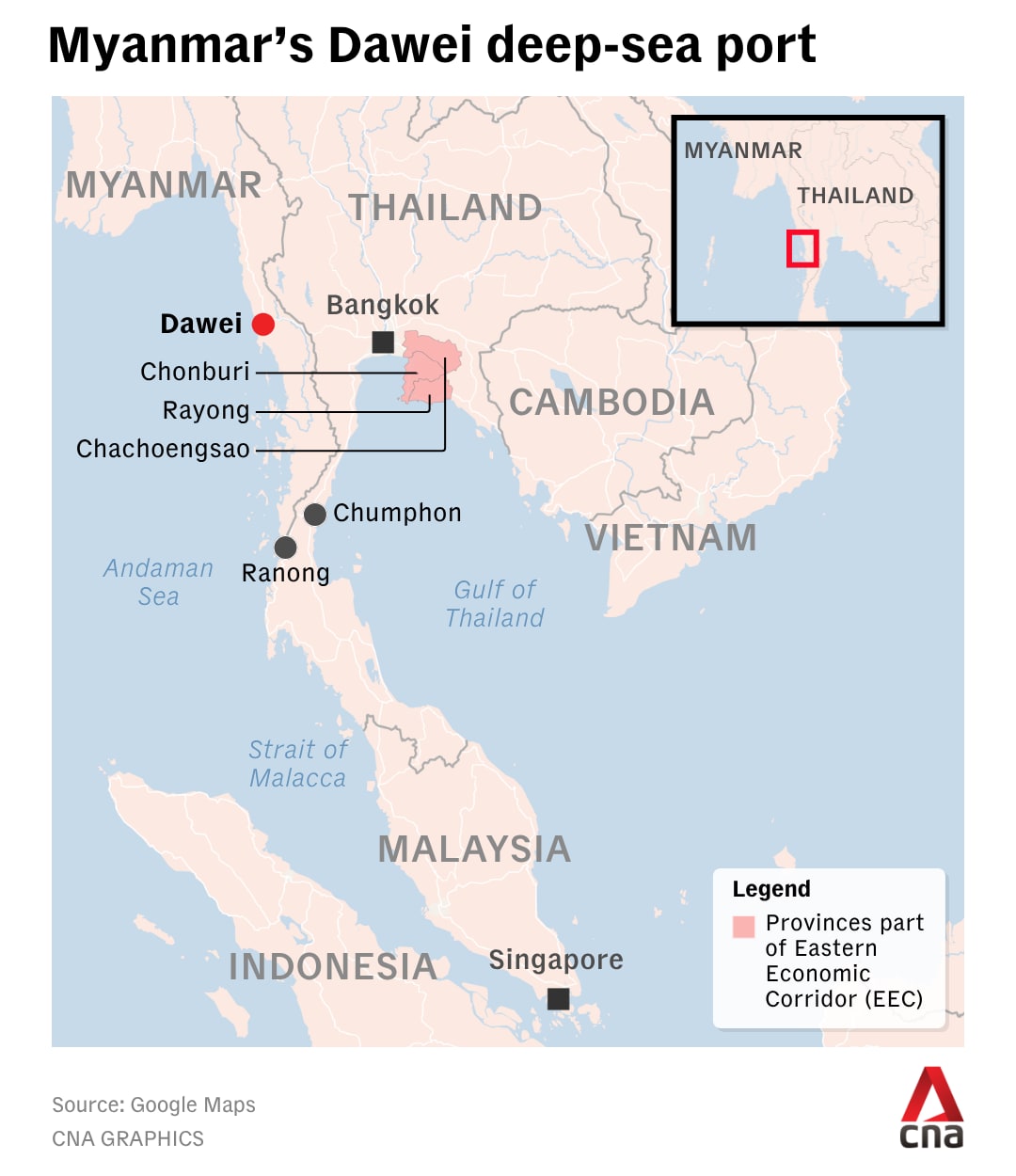
The plan was to develop a regional town pinned in the deep south of a rural fishing peninsula, into a world-class deep-sea port on the Andaman Sea, surrounded by heavy industry and connected by road and rail directly to Thailand’s industrial heartland along its Eastern Economic Corridor (EEC).
Planners saw it connecting production centres as far east as Phnom Penh and Ho Chi Minh City with the Indian Ocean, potentially speeding the movement of goods between mainland Southeast Asia and markets to the west by several days by bypassing the Strait of Malacca.

Guess Word
Crack the word, one row at a time

Buzzword
Create words using the given letters

Mini Sudoku
Tiny puzzle, mighty brain teaser

Mini Crossword
Small grid, big challenge

Word Search
Spot as many words as you can
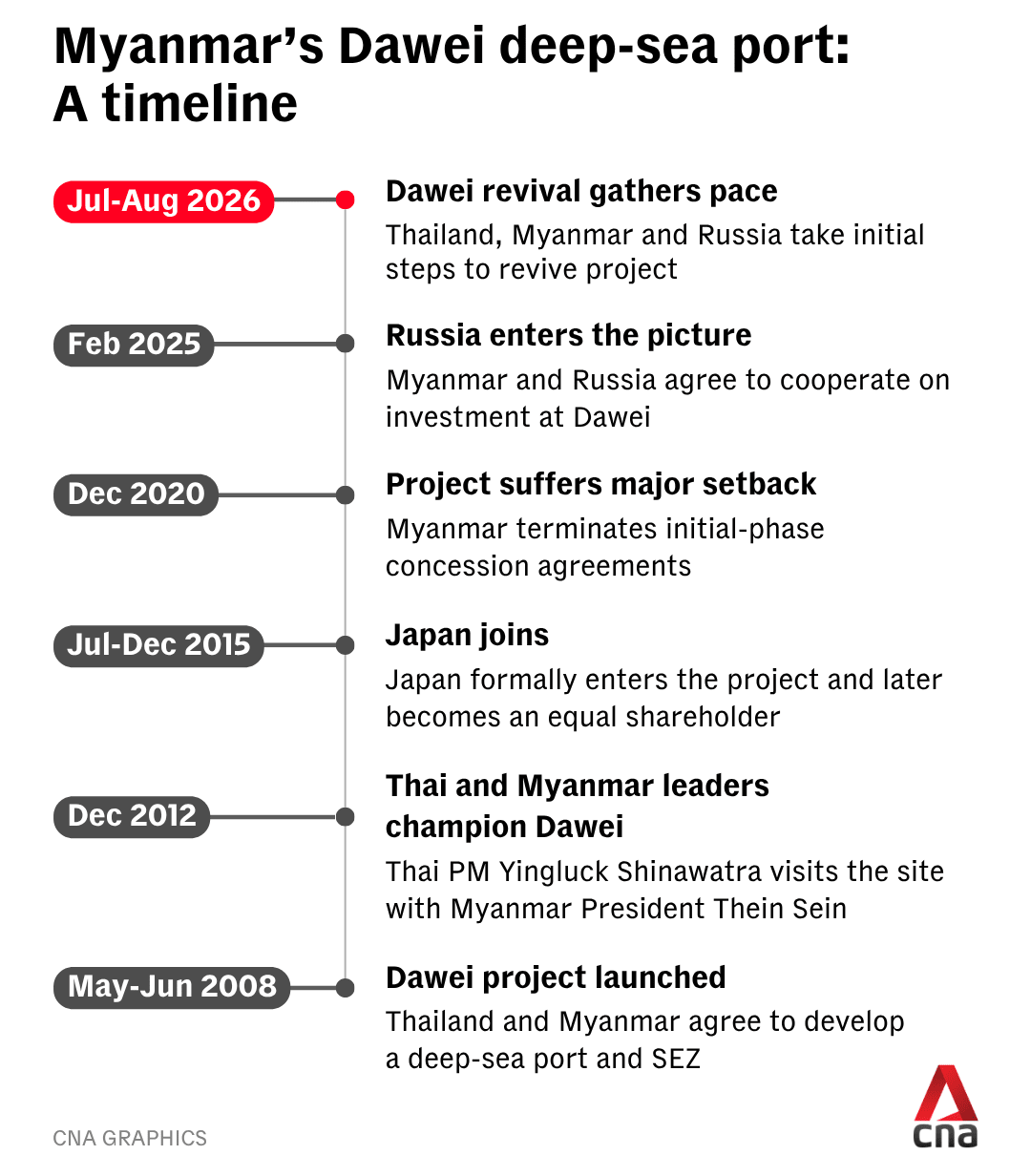
Both countries had signed a memorandum of understanding in 2008 to develop the SEZ. But after struggles with financing, infrastructure requirements and disagreements, a development concession held by a Thai-led private consortium was terminated in 2020.
Naypyidaw is now formally trying to restart the project, and though it has not publicly named a master developer, it has an interested partner in Russia.
In July, it said work to set the geographical boundaries of the port was in its final stages, less than 18 months after Moscow and Naypyidaw signed an investment cooperation framework covering Dawei.
Russian involvement has subsequently expanded into proposals for a deep-water port, 660 MW power plant, oil refinery and other heavy industry.
Thailand is showing renewed interest in the merits of Dawei too. Under the leadership of Prime Minister Anutin Charnvirakul, Thailand’s relationship with Myanmar’s authorities has visibly warmed in recent months.
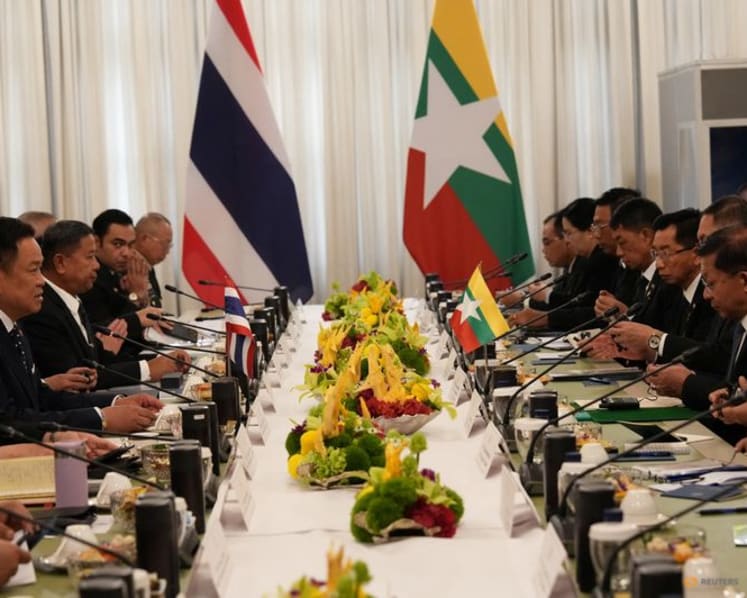
Min Aung Hlaing made his first official visit to Thailand as president in August, during which the neighbours agreed to cooperate on road, maritime, port and cross-border linkages, including the transport corridor to Dawei, which lies about 140 km west of the Thai border crossing at Phu Nam Ron in Kanchanaburi province.
“Our countries, Thailand and Myanmar, are ready for a new chapter in economic cooperation that is based on trust, confidence and the mutual benefit of the people of both nations,” Anutin said.
Min Aung Hlaing also used an accompanying business forum in Bangkok to explicitly promote Dawei.
Despite the latest developments, observers noted the area around the SEZ remains mired in armed conflict.
They also questioned if Russia’s interest would be sufficient for the project’s viability and what Thailand stood to gain from renewed engagement with Dawei.
GEOPOLITICAL BALANCING
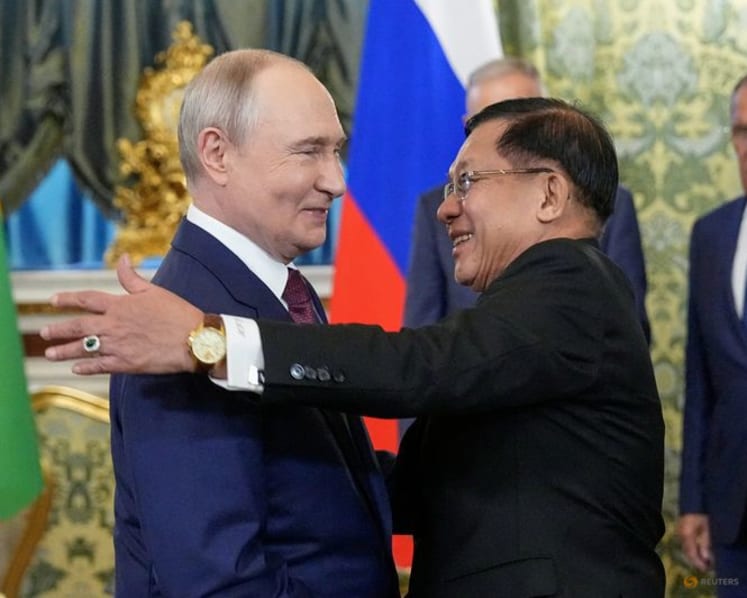
Since the 2021 coup and outbreak of civil war, and as Myanmar’s international isolation has increased, Russia has grown to become a useful ally, said Ian Storey, principal fellow at the ISEAS-Yusof Ishak Institute in Singapore and author of “Putin’s Russia and Southeast Asia”.
Moscow considers Myanmar a viable partner in Southeast Asia due to its location, resources and potential as an energy customer, he said.
Myanmar has turned to Russia for three things: diplomatic validation, military equipment and help to resolve the country’s energy crisis, he said, adding that proceeding with investments in Dawei could deepen economic, political and military ties between the two nations.
“Dawei would give Russia a toehold in the Andaman Sea and therefore access to the Indian Ocean and the Straits of Malacca. It would be especially useful as a port of call for Russian submarines transiting between the Pacific and Indian Oceans,” he said.
Russia has acted as a diplomatic “shield” for Myanmar at the United Nations, Storey said, opposing stronger international pressure against Myanmar’s military and using its position on the Security Council to push back against scrutiny of the government.
Min Aung Hlaing became president in April following military-organised elections held in December and January that excluded major opposition parties and were widely criticised as neither free nor fair.
Moscow has also supplied Myanmar with fighter aircraft, helicopters and drones, according to a UN Special Rapporteur investigation, and promised to build a small modular reactor in Naypyidaw. So far, it has not delivered on any large-scale development project in Myanmar.
In return, Myanmar’s generals have endorsed Russia’s invasion of Ukraine and supplied spare parts and munitions to the Russian military. “It’s a very transactional relationship,” Storey said.
But Myanmar’s military-backed government still faces severe financing constraints and international isolation.
Following the coup, major international companies pulled out of Myanmar while Western sanctions, worsening conflict and an increasingly difficult business environment caused foreign investment to plunge by 74 per cent, according to ISP-Myanmar, an independent think-tank.
Myanmar has continued to earn substantial foreign currency from natural gas exports to Thailand and China, while Chinese investors accounted for nearly half of new foreign investment inflows between 2021 and 2025, ISP reported.
With such a reliance on the economic clout of China, inviting Russia to Dawei, a project with geopolitical symbolism beyond its present commercial value, serves primarily to rebalance its foreign relations, said Teerachai Sanjaroenkijthaworn, coordinator for the ETOs Watch Coalition, a Thai civil society group that monitors cross-border investments, corporate accountability and environmental and human rights impacts.
“They view bringing in Russia as a geopolitical move to counterbalance China’s influence while signalling global confidence that Myanmar is still open for mega-investments,” he said.
Other observers, however, doubt whether Russia could realistically develop the entire project at the scale originally envisaged.
Beyond just being a port, Dawei’s viability depends on the financing and coordinated development of a much broader ecosystem of infrastructure, industries, logistics, and connectivity, according to a former senior economic policymaker in Myanmar, who asked not to be named for security reasons.
“The key question is therefore not only whether Russia has strategic interest in Dawei, but whether it can mobilise the scale of financing, investors, technical partners and supporting industries necessary to make the wider project commercially sustainable,” he told CNA.
The Russian dimension “appears rather far-fetched”, given its distance from the region and the scrutiny that would inevitably befall any commercial activities in Dawei, said Ruth Banomyong, a professor at the Department of International Business, Logistics, and Transport at Thammasat University in Bangkok.
“Political interest or a diplomatic announcement should not be confused with a bankable investment commitment,” he said.
A CORRIDOR THROUGH CONFLICT
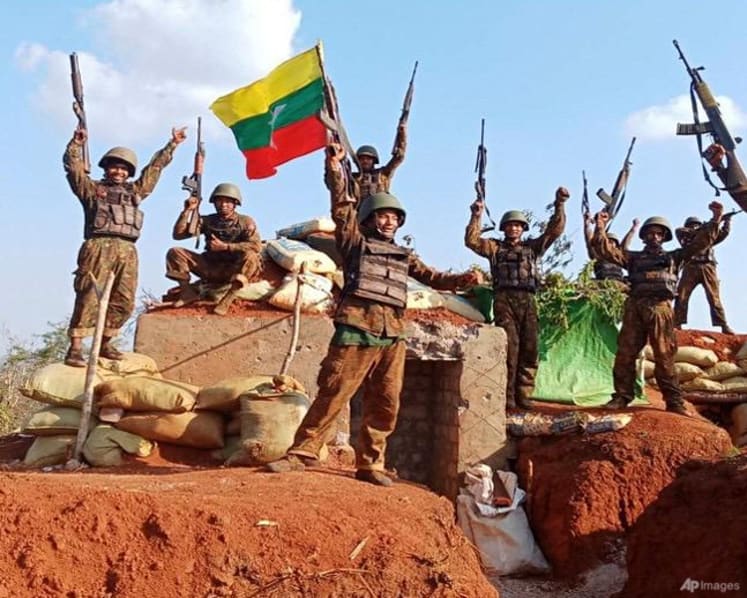
Myanmar’s Andaman coastline also remains in the grip of conflict.
Myanmar has deployed hundreds of troops to forcibly clear areas marked for the SEZ since July, Reuters reported on Aug 21. Troops have reportedly burnt villages and sealed off surrounding tracts of land, according to resistance fighters and a local activist with direct knowledge.
A report at the end of 2025 by ETOs Watch found office buildings within Dawei’s special economic zone abandoned, empty beaches and frequent clashes between military forces and local resistance groups.
Access to the area by outsiders remains problematic, and locals describe safety as existing only within specific areas controlled by individual armed groups, according to Teerachai, based on regular communication with his network in the area.
“Their immediate priority is survival – fleeing active combat and airstrikes to seek temporary shelter in the woods or refuge near the Thai border,” he said.
“Any development requires clear ground-level territorial control, which they haven’t been able to achieve due to active conflict with ethnic armed groups. Consequently, they cannot secure the area or prepare it for new investments,” Teerachai said.
As a result, he said that civil society networks and displaced locals told him that a project revival could not happen anytime soon.
The road that gives Dawei its regional connectivity with Thailand also has to cross territory contested by armed rebel groups.
The former Myanmar economic policymaker says Thailand is “critical” to Dawei’s viability, and that without sustained security, investors cannot have confidence that infrastructure will remain operational for decades.
These factors and ongoing risks mean the Dawei project is “probably feasible only for a state-backed investor”, said Jared Bissinger, a visiting fellow with the Myanmar Studies Programme at the ISEAS-Yusof Ishak Institute.
Even if there was an economic case for a trans-shipment hub, the complex investment environment, only made more challenging in recent years, will make it difficult to proceed, Bissinger said.
“The current military regime has not taken many steps yet to improve the business environment, reduce risk or increase predictability,” he said.
A long legacy of opposition to the port development still lingers too. Even before the 2021 coup and explosion of violence over the past five years, the Dawei project had been delayed by other community opposition and human rights concerns.
The megaproject as planned had multiple sub-projects like roads and dams that displaced locals. Locals argued that land rights and titles were ill-defined and they had been offered minimal compensation for losing their property and crops.
It led to frequent local protests and road blockades linking Dawei to Thailand.
“The subsequent political instability and current safety risks have left all project details completely unresolved,” Teerachai said.
A REGIONAL CORRIDOR?
Since the 17th century, Thai rulers and governments have contemplated ways to exploit the country’s unique geography and create a shortcut through the Kra Isthmus, the narrowest part of the Malay Peninsula.
Elsewhere in the world, the success of the Suez and Panama canals strengthened the appeal of another new trade route that could allow ships and goods to bypass the long journey through the busy Malacca Strait.
In recent years, the plot has centred on a proposed US$30 billion Land Bridge, connecting new ports on the Gulf of Thailand and Andaman Sea by road and rail between the southern Thai provinces of Ranong and Chumphon.
If built, its backers promised ships could save up to nine days by avoiding looping around Singapore.
Yet in late July, the 90km megaproject was effectively shelved. A government review questioned its commercial viability and warned of financial and environmental risks.
Still, Anutin said the plan had not been completely abandoned and could be later revived.
Some 500km north of the proposed Land Bridge, Dawei presents as another means to gain direct commercial access to the Andaman Sea and Indian Ocean trade routes to Europe, South Asia and the Middle East.
While the Land Bridge was designed primarily as a transshipment route, moving cargo between ships on either side of southern Thailand, Dawei is a broader industrial project that gives Thai industry faster access to large global markets.
Ruth said he would be cautious about drawing a direct connection between the mothballing of the Land Bridge and renewed talks about Dawei.
“The timing is nevertheless strange,” he said, reasoning that it more likely offered a substantive economic outcome to report from Foreign Minister Sihasak Phuangketkeow’s Moscow visit this month.
“Dawei offered something that could be announced but an announcement does not resolve the project’s underlying economic and logistical problems,” he said.
He said that Dawei has “never made economic or logistical sense as a project driven by Thai demand”, despite vastly improved near-border infrastructure that could help link the Andaman coast with Thailand’s EEC and industrial networks about 500km away, especially in the provinces of Chachoengsao, Chonburi and Rayong.
Those include border connections at Phu Nam Ron and the newly completed M81 motorway.
“There is a Thai expression about ‘using someone else’s nose to breathe’. That is how I have always viewed the proposition: Thailand would depend on infrastructure, policy and operating conditions in another country to serve a demand case that was never clearly established,” Ruth said.
Beyond Thailand’s interests, the original Dawei planners explicitly pitched the project as completing the Southern Economic Corridor and creating a Dawei-Bangkok-Phnom Penh-Ho Chi Minh City “land bridge”.
The argument was that Vietnamese and Cambodian production networks could gain overland access through Thailand to an Indian Ocean port rather than relying exclusively on eastern-facing ports and longer maritime routes involving the busy Strait of Malacca.
This could potentially reduce transit time for cargo bound for India, South Asia, the Middle East and Europe and provide an alternative when maritime routes face congestion or disruption, said Madhurjya Dutta, the director of Special Projects and Resource Mobilization at the Mekong Institute in Thailand.
“However, the advantage should be assessed on a door-to-door basis, including road transport, border procedures, port efficiency, shipping frequency and overall logistics cost—not simply geographical distance,” he said.
He argued that Dawei should be seen as complementary to, rather than a replacement for established ports and maritime routes.
For countries like Cambodia and Vietnam, the benefits could increase if Dawei develops into part of a regional production and value-chain network, rather than simply a transit route between Thailand and Myanmar, he said.
Cambodia could potentially gain another gateway for selected agricultural, processed and manufactured exports to western markets, while southern Vietnam could benefit from an additional logistics option for selected supply chains connected through Cambodia and Thailand.
“The important point is that not all cargo from Cambodia or Vietnam would need to shift to Dawei. The value would be in giving businesses an additional competitive option,” he said.
Ruth argued that Dawei could be a legitimate Myanmar national-development project if the government there can demonstrate its own industrial, trade and logistics reasoning, not relying on other regional players.
“But that is very different from presenting it as infrastructure that Thailand needs,” he said.
“The danger is repeating the same mistake seen in the Land Bridge process. Beginning with an attractive megaproject and then looking for the demand and evidence needed to justify it,” he added.
Shifting priority from developing its own coastal industrial hub in Ranong province – as proposed under the Land Bridge – abroad to Dawei risks Thailand outsourcing environmental risk, said Teerachai.
“From a nationalistic standpoint, developing an industrial hub abroad allows Thailand to bypass local environmental impacts,” he said.
Ruth agreed, noting it could help Thailand preserve its Andaman coast for tourism, while industrial activity, pollution and waste are generated and located across the border in Myanmar.
“That may be politically attractive to some parties, but it raises serious questions about sovereignty, environmental responsibility and the equitable distribution of costs and benefits,” he said.
Conducting business with a regime whose leaders, military-controlled businesses and certain important sectors are subject to extensive targeted sanctions remains fraught with risks for Thailand, Teerachai said.
Thailand is officially a candidate to join the Organisation for Economic Co-operation and Development (OECD), an influential grouping of mostly wealthy economies whose accession process scrutinises areas including governance, transparency and responsible business conduct.
That could put greater scrutiny on how Thailand deepens its economic relationship with Myanmar. An August joint statement said Bangkok supports Myanmar’s “full and equal participation” in ASEAN mechanisms, as Anutin’s government increasingly treats its neighbour’s military-backed administration as an economic partner.
Teerachai argued that the two tracks could increasingly come into tension. “Entering joint ventures with a sanctioned regime inevitably links investments to grave human rights violations,” he said.
Additional reporting by Jarupat Karunyaprasit
Source: CNA/jb
Sign up for our newsletters

Get the CNA app
Stay updated with notifications for breaking news and our best stories
Get WhatsApp alerts
Join our channel for the top reads for the day on your preferred chat app

Get bite-sized news via a new
cards interface. Give it a try.
Click here to return to FAST
Tap here to return to FAST
FAST
About The Author