
What Beijing’s shrinking youth population reveals about its changing appeal
Beijing’s resident adult population aged 20 to 29 has nearly halved over the past decade. CNA explores how young Chinese are recalculating the costs and benefits of life in the capital, even as it remains a magnet for talent.
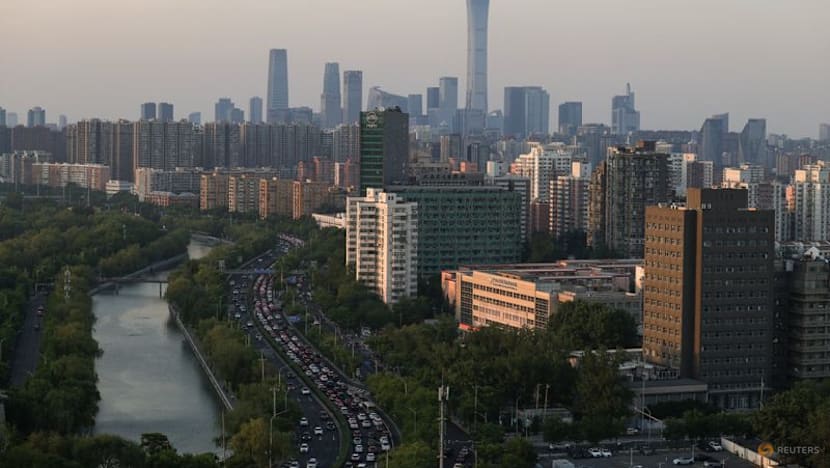
People look at the city skyline at a rooftop of a building in Beijing, China, Oct 18, 2025. (Photo: Reuters/Tingshu Wang)
New: You can now listen to articles.

This audio is generated by an AI tool.

Read a summary of this article on FAST.
Get bite-sized news via a new
cards interface. Give it a try.
Click here to return to FAST
Tap here to return to FAST
FAST
BEIJING: Zhao Haozhe, 20, has never lived anywhere but Beijing.
Yet the second-year nursing student is already looking beyond the Chinese capital as he plans for life after graduation.
While Zhao is confident his skills will be in demand in his home city, he told CNA he plans to prioritise opportunities elsewhere, likely outside China’s first-tier cities, where he believes the cost of building an independent life will be lower.
“I am curious about living outside my home city, away from my family, and forging a life on my own,” said Zhao, who is enrolled in a diploma programme at a higher education institute in Beijing’s northern Changping district.

Guess Word
Crack the word, one row at a time

Buzzword
Create words using the given letters

Mini Sudoku
Tiny puzzle, mighty brain teaser

Mini Crossword
Small grid, big challenge

Word Search
Spot as many words as you can
“Cost of living and housing rentals are relatively lower elsewhere, so it should be easier to live even without the support of family in my home city,” he added.

CHANGING CALCULATIONS
Zhao’s thinking reflects a wider recalibration among young people in Beijing.
The capital’s longstanding appeal as a launchpad for education, careers and upward mobility is increasingly being weighed against rising job competition, high housing costs and the pull of opportunities elsewhere in China and beyond.
Over the past decade, Beijing’s resident population aged 20 to 29 fell by about 46 per cent, from around 4.62 million in 2015 to 2.49 million in 2024, according to calculations published in May by Chinese business publication Economic Observer, based on official municipal data.
Resident population refers to people who regularly live in a locality for more than six months. This means the figures include young people from elsewhere in China who study or work in Beijing, not only those born and registered in the capital.
Analysts caution against reading the numbers as a simple exodus, saying the decline must be read against broader demographic shifts, smaller youth cohorts, changing migration flows and the city’s evolving urban and labour market conditions.
“I would be cautious about reading the decline in Beijing’s youth population simply as evidence that Beijing is losing its appeal to young people,” Zhao Litao, a senior research fellow at the National University of Singapore’s East Asian Institute (EAI), told CNA.
“The trend is real, but it reflects several forces operating at the same time.”
Yet the shrinking youth segment has already had tangible effects on the city, including softer demand in parts of the housing and rental market, according to property agents interviewed by CNA.
In interviews with CNA, students, housing agents and experts described a city that continues to attract young talent, but where the calculations around staying are becoming increasingly complex.
The question is not whether Beijing remains a magnet for opportunity – it is whether staying in the capital is becoming a more selective and costly option for a new generation of young people.
That calculation is already playing out for Cui Xuan, a 22-year-old from Shandong province who is less than two months away from completing her product design degree at a public university in Beijing.
After graduating, she plans to take up a work offer in Sydney, where she interned for a year as part of her studies.
Like Zhao Haozhe, Cui said her decision was not driven by a lack of opportunities in Beijing. Rather, she has begun to question whether the rewards of living and working in the city are worth the pressures at this stage of her life.
“Commuting in Beijing is challenging,” she said. “I know people in similar jobs who spend two hours each way getting to work. I am not sure I want to do that.”

For Cui, the concern is not only distance, but also pace.
“In my line of work, the stress and demands of living in a fast-paced city like Beijing can be too much … there is no work-life balance,” she said.
These pressures have also made her rethink whether she wants to pursue work directly related to her degree.
“I may not want to work in the field I studied,” she said. “There is more quality of life elsewhere.”
THE NUMBERS BEHIND THE SHIFT
The fall in Beijing’s young adult population has been steep enough to change the age profile of a city that once had a far higher share of this group than the national average.
In 2015, residents aged 20 to 29 made up 21.3 per cent of Beijing’s resident population.By 2024, that share had fallen to 11.4 per cent, close to the national average of 10.56 per cent, according to Economic Observer’s analysis.
At the same time, the city’s older population grew; residents aged 60 and above increased from 3.41 million in 2015 to 5.14 million in 2024, a rise of around 1.74 million.
By 2024, for every 100 residents in Beijing, about 11 were aged 20 to 29, while 24 were aged 60 and above.
Official municipal data shows Beijing’s overall resident population has remained broadly stable in recent years, edging down from about 21.89 million in 2020 to 21.83 million at the end of 2024 – suggesting the story is less about population loss than a shift in who is living in the capital.
EAI’s Zhao Litao said Beijing’s youth population decline is not an isolated case, given that the size and share of the 20-29 age group have been declining across China.

Economic Observer’s analysis found that Henan, Hebei and Anhui also saw clear declines in their young adult population shares, with Henan’s resident population aged 20 to 29 falling from 14.75 million in 2015 to 10.37 million in 2024.
But Beijing stands out because its young adult share had once been far above the national average before falling close to it.
“This looks less like a sudden collapse of attractiveness and more like a correction from an unusually high earlier level,” he said.
Peng Xiujian, a senior research fellow at Victoria University’s Centre of Policy Studies, said the trend should be understood as both a demographic and migration story.
China’s sustained decline in births and shrinking youth cohort provide the backdrop, she said, while changing migration patterns, rising living costs and Beijing’s policies aimed at controlling population growth and promoting “reduction-oriented development” have reinforced the trend.

Beijing’s large non-local population also complicates any reading of the data as a simple loss of appeal.
Despite the fall in younger residents, Beijing still had 8.19 million non-local residents in 2024, accounting for 37.5 per cent of its resident population. That was down only about 430,000 from its 2015 peak of 8.63 million, a much smaller decline than the drop in residents aged 20 to 29.
Non-local residents refer to people living in Beijing whose hukou, or household registration, is registered elsewhere.
The numbers suggest Beijing has not stopped drawing people from elsewhere. Rather, the profile of those it attracts – and the threshold for remaining in the city – may be changing, analysts said.
School-age children, for instance, were among the few age groups whose numbers and population shares had increased in Beijing over the past 15 years, said Peng.
“If Beijing were broadly losing its appeal to families, we would not expect to see this pattern,” she said.
“Instead, the evidence suggests that Beijing is undergoing demographic restructuring rather than simple decline.”
THE RENTAL SIGNAL
The shifting youth profile can be seen through a more immediate lens: the housing market.
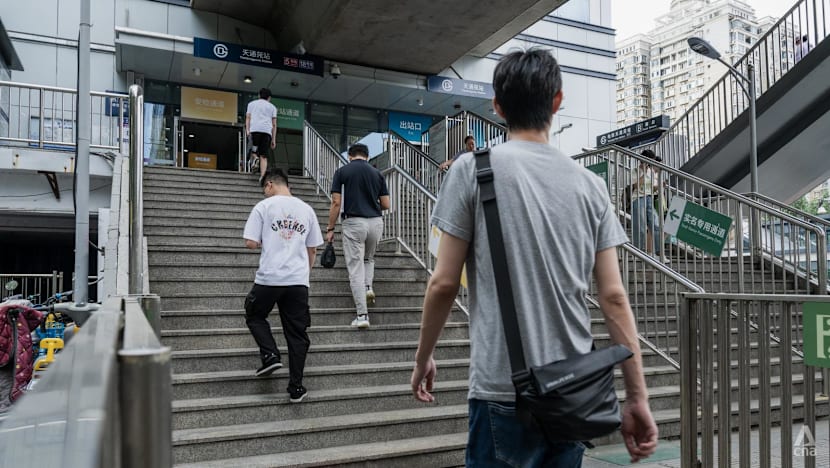
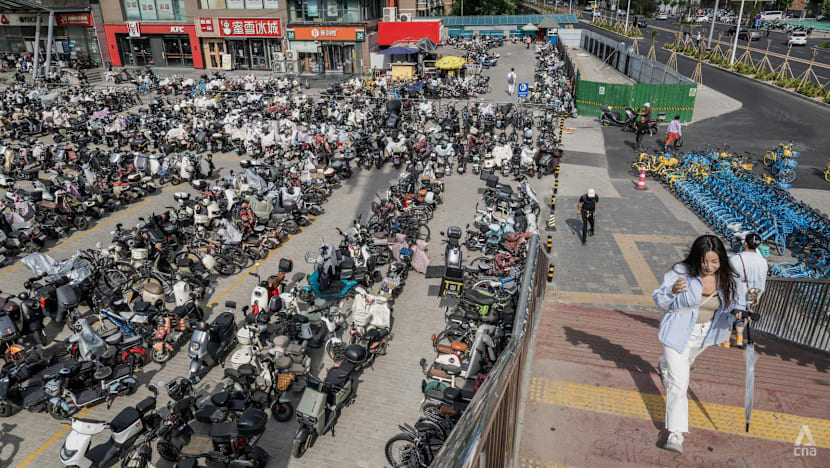
Long favoured by young renters for its relatively affordable housing and convenient transport links, Tiantongyuan in Beijing’s Changping district offers a window into how the city’s changing demographics are playing out on the ground.
During a visit to the area, CNA spoke to four property and housing agencies, all of whom said sales and rental activity were less vibrant than before the COVID-19 pandemic.
There is no official district-level data that directly tracks rental demand among young people in Tiantongyuan. But based on their own transactions and observations, the agents estimated that sales and rental volume had fallen by about 20 to 30 per cent over the past three to six years.
Hou Junyi, manager of a Century 21 franchise in Tiantongyuan that has operated for more than a decade, said the drop in activity was noticeable.
He attributed it partly to Beijing’s population trends, saying softer demand in Tiantongyuan may reflect not only the city’s overall population changes, but also the shrinking pool of younger renters who have traditionally looked to such districts for cheaper homes and metro access.
Hou and other agents also pointed to the wider property downturn as a factor weighing on sales and rental activity, saying weaker market confidence and softer demand had made transactions harder than in the years before the COVID-19 pandemic.


The rental cycle, however, has not disappeared. Hou said demand still picks up during the annual graduation season, typically from June to August, when students leave universities and look for housing near jobs or transport links.
But he said the volume remains below the peak years he witnessed around 2015, when demand from younger renters was stronger.
“Prices have naturally come down with softer demand,” Hou said.
“But even with lower rents, it has not really reignited strong interest or brought back a strong rebound.”
Another agent, who asked to be identified only by his surname Hua, said the change in demand can be seen in how agencies now have to market homes more actively.
Hua has worked on home sales and rentals in Tiantongyuan for three years, at a firm run by his elder brother that has been operating in the area for more than two decades.
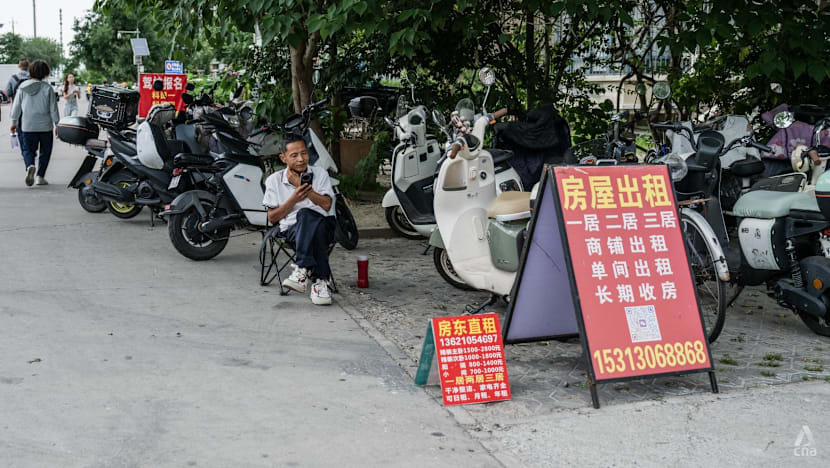
“In the past, we did not need to do this,” Hua said, referring to advertising boards and pop-up stalls set up near metro station exits to attract potential buyers and tenants.
“People would come to us on their own, (and) there were always enquiries.”
Now, he said, agencies have to work harder to draw attention.
“We have to go out and promote the listings ourselves,” he said. “If we just wait in the office, there may not be enough enquiries coming in.”
Hua said he had noticed fewer young graduates looking for homes in the area, though demand from young families remained relatively steady.
“There are still people who want to live here because the transport is convenient and the cost is lower than in the city centre.”
In Hou’s view, the shift is also linked to changes in how businesses operate in and around Beijing.
“My sense is that slower growth and the wider diversification of businesses are also playing a part,” he said.
“Businesses now have more choices in where and how they operate. They may not need such a large presence within Beijing itself, so job demand has slowed, and that has affected housing demand in areas that were popular because they offered easy access to the city.”
Hou’s assessment reflects what he has observed in Tiantongyuan, rather than a citywide measure of employment or housing demand.
Official data shows a more mixed picture for Beijing as a whole. Real estate development investment in 2025 fell 15.5 per cent from the previous year, while new commercial housing sales by floor area fell 6.9 per cent.
At the same time, Beijing added 330,000 urban jobs, up 31,000 from the previous year, suggesting that the wider labour market retained some resilience even as parts of the property market remained under pressure.
A MORE DISTRIBUTED OPPORTUNITY MAP
For some young people, the calculation is not only about whether Beijing remains attractive, but whether other places now feel more suited to the lives and careers they want.
Zhang Yinuo, a 22-year-old from Shandong, is due to graduate from a public university in Beijing in August. She has already decided not to stay in the capital, opting instead to further her design studies in Malaysia after receiving an offer there.
Even before the opportunity in Malaysia emerged, Zhang said that her long-term plans had never centred on Beijing.
“It is not that Beijing has no opportunities, but I do not really like the lifestyle here,” she said.

For Zhang, the issue is partly cultural and partly professional. She described Beijing’s atmosphere as more traditional, and said she has long preferred the lifestyle and culture of southern China, including when choosing where to travel.
“The culture and lifestyle there feel more suitable for people like me who work in design,” she said.
Zhang’s choice is personal, but it points to a broader question in Beijing’s changing youth profile: whether the capital’s advantages still align with the careers and lifestyles that different groups of young people are seeking.
Beijing still offers scale, status and access to major institutions, said analysts. But for students in fields such as design, technology, services or emerging industries, the map of possible futures is no longer limited to the capital or the other first-tier cities, they noted.
That is also because Beijing’s own role in China’s economy is becoming more specialised, analysts said, shaping not only how many young people the city absorbs, but also the kind of young talent it draws.
EAI’s Zhao Litao said Beijing’s population structure is shaped by more than market forces because of the city’s particular role in China.
“Beijing is a special case because it is not an ordinary labour-market city,” he said.
“It is the national political, administrative, cultural, educational and research centre.”
As a result, Beijing’s population is influenced not only by the job market, but especially by policy choices such as urban planning, industrial restructuring, population management and efforts to relocate or upgrade certain industries and functions.
“Some lower-end service and manufacturing jobs have been reduced or moved out, while Beijing has strengthened its role in higher education, research, finance, technology, culture and headquarters functions,” Zhao Litao said.
“This changes not only how many young people the city absorbs, but also what kinds of young people it absorbs.”
That shift fits with Beijing’s official development direction.
According to the city’s official English portal, Beijing has sought to relieve itself of functions non-essential to its role as the national capital, while strengthening its positioning as a national political centre, cultural centre, international exchange hub and scientific innovation hub.
At the national level, China’s State Council approved a plan during the 14th Five-Year Plan period, which ran from 2021 to 2025, calling for an upgraded urbanisation pattern featuring coordinated development among cities of different sizes.
A separate five-year action plan, released in 2024, aims to help more migrant workers settle in cities and raise the share of China’s population living in urban areas to nearly 70 per cent within five years. The rate reached 67 per cent at the end of 2024, according to official figures.
Zhao Litao said Beijing remains attractive to graduates with strong credentials, young professionals in knowledge-intensive sectors, and those seeking careers in government, research, finance, media, culture and technology.
“For others, the opportunity-cost calculation has shifted toward Hangzhou, Chengdu, Suzhou, Wuhan, Xi’an, Hefei and other cities with growing industries and lower settlement pressure,” he said.

Peng from Victoria University said China is seeing some redistribution of talent and young workers.
“It reflects the emergence of a more diversified urban economy,” she said.
“Improved infrastructure, digital connectivity and industrial upgrading have created attractive opportunities in a wider range of cities.”
The trend reflects not only changing preferences among young people, Peng added, but also China’s broader success in spreading economic opportunities beyond a handful of major cities.
Beijing remains important but is no longer the default choice for every young person seeking upward mobility, noted analysts.
If more young workers are considering other cities more seriously, it could have implications for Beijing’s housing demand, consumption patterns and longer-term labour force. Analysts said this points to a broader question over the city’s innovation pipeline and the kind of talent it can continue to attract, develop and retain.
BEIJING’S ENDURING PULL
Yet for every young person looking beyond Beijing, there are others still determined to stay.
For them, the capital remains difficult to replace – not only because of its universities and employers, but because of the kind of work and networks it offers.
Gu Ling, 22, is a final-year law student from Hebei province who plans to continue her studies in Beijing before entering the legal profession.
For many aspiring legal practitioners in China, she said, postgraduate study has become an important step in building the qualifications and competitiveness needed for the profession.
Gu believes remaining in the capital gives her a better chance of finding work. Furthermore, her internship is in the city while her hometown is nearby.
“Beijing is still where I feel more comfortable staying,” she said.
That pull is also felt by Xia Xiuze, a physics student from Anhui province. He hopes to pursue postgraduate studies in Beijing and eventually remain in the city for research and development work.
A third-year student at a public university in Beijing, Xia, 20, said the capital remains one of the best places in China for those seeking to build careers in research-heavy fields.
“Beijing has long been known as a place that produces top research work in hard sciences and attracts talent in these areas,” he said.
Peng from Victoria University said Beijing’s youth population is likely to remain under downward pressure because of China’s declining and ageing population.
Even if Beijing remains attractive, she said, it will be competing for a smaller pool of young people.
“The key issue is not whether Beijing can maintain its youth population, but whether it can continue attracting a disproportionate share of China’s most talented young people,” Peng said.
“In an ageing society, human capital matters more than headcount.”
For Xia, Beijing’s concentration of talent and opportunity is exactly what makes the trade-off worthwhile.
“Living in Beijing may come with more pressure than many other places,” he said.
“(But) as long as your ability can help you find work that gives rewards matching or exceeding that pressure, then I don’t see any problem. That is what I want to achieve.”


Source: CNA/lg(ws)
Sign up for our newsletters

Get the CNA app
Stay updated with notifications for breaking news and our best stories
Get WhatsApp alerts
Join our channel for the top reads for the day on your preferred chat app

Get bite-sized news via a new
cards interface. Give it a try.
Click here to return to FAST
Tap here to return to FAST
FAST