Willing to pay a premium for functional drinks? Here are 5 things you should know first
It is claimed that these drinks provide benefits beyond hydration, but do they live up to the health hype? The programme, Talking Point, finds out what consumers are truly buying.
Functional drinks, a category that barely existed a few years ago, are now part of a growing market in Singapore.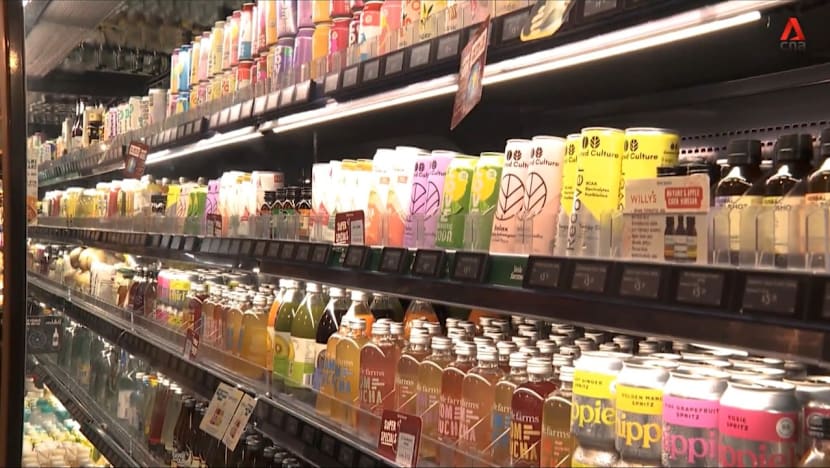
New: You can now listen to articles.

This audio is generated by an AI tool.
Read a summary of this article on FAST.
Get bite-sized news via a new
cards interface. Give it a try.
Click here to return to FAST
Tap here to return to FAST
FAST
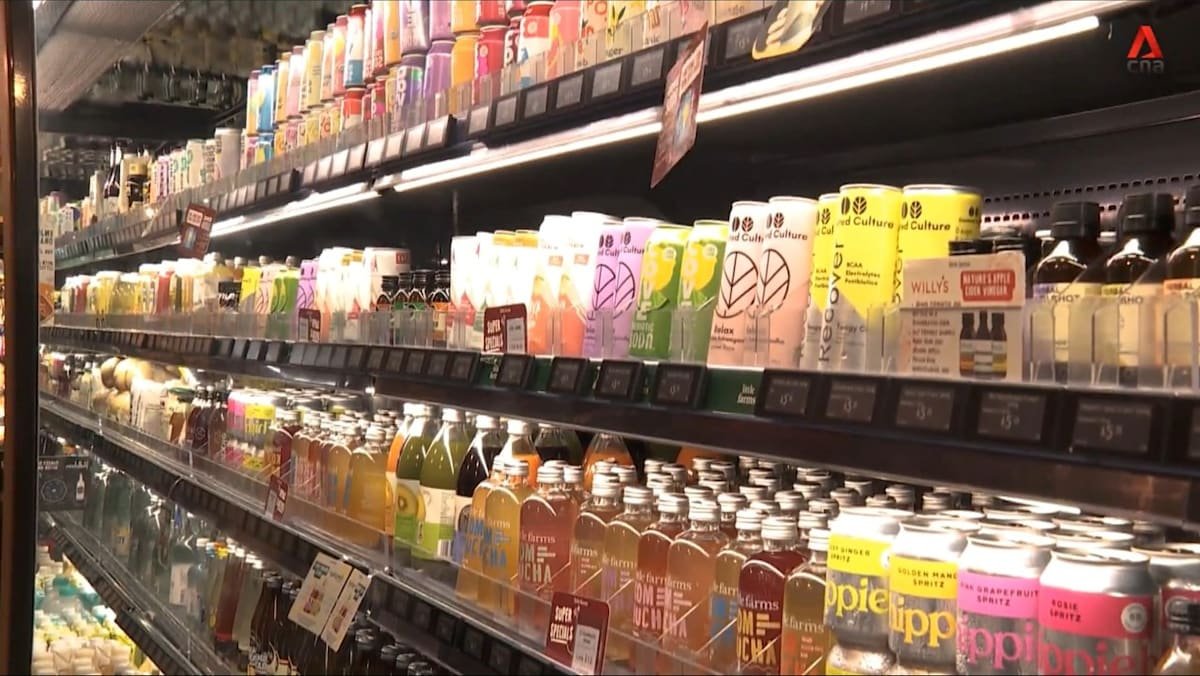
SINGAPORE: Walk into any supermarket, and you will find a shelf full of functional drinks — selling at a premium, as much as 345 per cent more than a regular soft drink.
Yet, this new market is growing, fuelled by a shift towards wellness and an alcohol-free lifestyle. Consumers willingly pay more, sold on a promise that these beverages will fix their gut, perk them up, relieve stress or sharpen their focus.
Talking Point host Steven Chia, who had not drunk them before, found that they could also be “really tasty” when he sampled a probiotic soda, one that smelt “nice … like lemonade”.
Do functional drinks work, though? Or are consumers just paying for the idea of better health?

Guess Word
Crack the word, one row at a time

Buzzword
Create words using the given letters

Mini Sudoku
Tiny puzzle, mighty brain teaser

Mini Crossword
Small grid, big challenge

Word Search
Spot as many words as you can
Picking eight drinks in various categories, Talking Point had a nutritionist analyse their active ingredients to find out. Here are five things you should know before you hand over your money.
WATCH: Functional drinks — Are you paying for a placebo? (22:52)
1. WHAT EXACTLY IS A FUNCTIONAL DRINK?
A functional drink contains bioactive ingredients said to have beneficial effects on the human body.
One supermarket chain, Little Farms, began stocking these drinks only three years ago, generating about S$1 million in sales since then.
“We’ve got a wide range of different subcategories from around the world,” said its commercial director, Tom Gray. “We’ve got functional drinks to address … a range of different issues.”
Talking Point investigated four categories: gut health, stress relief, mental clarity and caffeine-free energy.
Each category relies on specific active ingredients, such as probiotics for gut health, ashwagandha and L-theanine to relieve stress, yerba mate to support mental clarity and paraxanthine to boost energy.

The science is only part of the appeal of functional drinks; the rest is cultural. “You’ve got customers who don’t want to drink (alcohol) sometimes, but they want a tasty beverage with their food,” said Gray.
Their shopping choices will help Singapore’s non-alcoholic drinks market see a compound annual growth rate of 7 per cent between this year and 2032, research firm 6Wresearch has projected.
2. WHAT AMOUNT WILL ACTUALLY BENEFIT YOU?
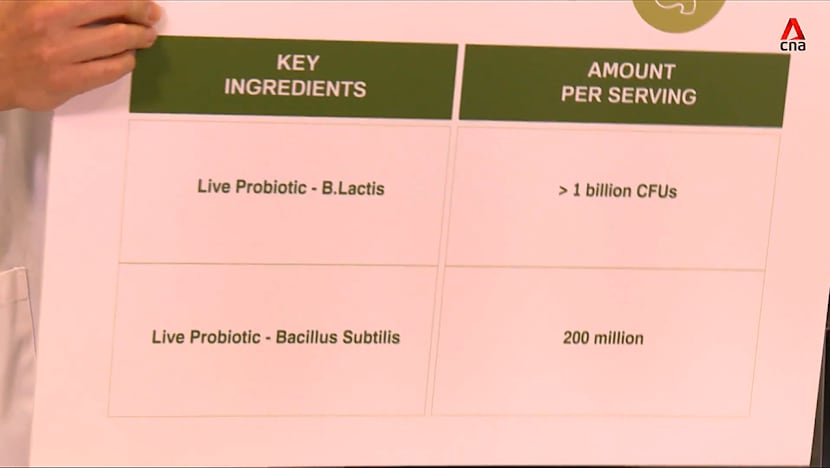
When nutritionist Shania Khialani analysed the drinks selected by Talking Point, however, she found that the levels of active ingredients were either on the “lower end” or fell below the evidence-based threshold needed to have an impact.
An effective daily dose of probiotics ranges from 1 billion to 10 billion colony-forming units (CFU), whereas one of the probiotic drinks contained only 200 million CFU.
“You need to have at least five of these a day for six to eight weeks to be able to feel any benefit” said Khialani, a Nanyang Polytechnic lecturer in food science and nutrition.
Drinks with ashwagandha should have 500 to 600 milligrams of the ingredient to reduce cortisol levels, but the sample she tested contained 312 mg. “(You’re) looking at having about two of these drinks … to get the desired outcome,” she said.
One of the mental clarity drinks, meanwhile, had 45 mg of natural caffeine from yerba mate — “very much in the lower end” of the 40 to 120 mg range for alertness.
“For someone who’s used to caffeine, this may not actually give you the desired effect,” she added.
Furthest off the mark was a caffeine-free energy drink with just 12 kilocalories, which “isn’t giving you enough calories or energy”. A real metabolic effect requires 80 to 120 kcal.
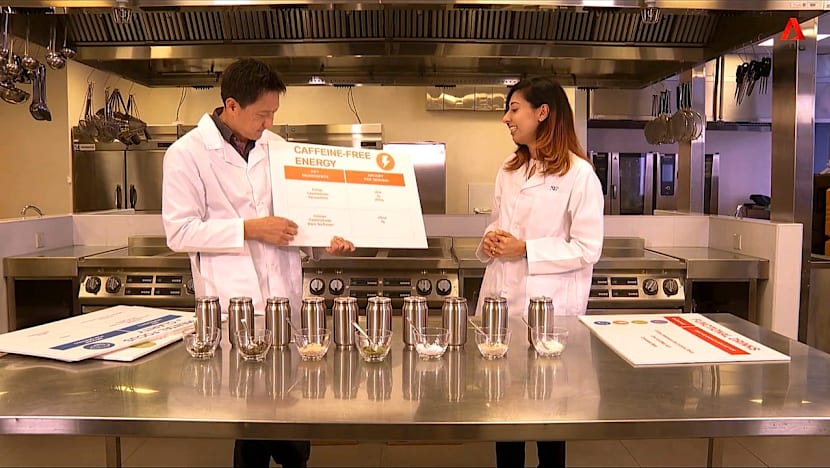
Such underdosing appears deliberate — to avoid triggering sensitive consumers and avoid higher costs. “These key ingredients aren’t cheap,” she noted. “If (manufacturers) put in more, it might also affect their profit.”
3. IS THERE SUCH A THING AS TOO MUCH?
While one serving is often not enough to see results, drinking multiple cans a day comes with its own consequences.
Take, for example, a drink with artificial sweeteners. “Even though it doesn’t have calories, it can still increase the risk of obesity because it leaves your mind stimulated, thinking that it’s still craving that sugar,” Khialani said.
Functional drinks may also contain citric acid and malic acid, which are added as preservatives. “(The acid) can erode your bones. It can also erode your enamel in the teeth,” she highlighted.
LISTEN: Functional drinks — You may not be getting what you paid for
As for caffeine, the levels are generally low in functional drinks but can add up when consuming multiple cans.
Paul Tan, co-founder of beverage start-up Flojo, likened caffeine to a “blunt tool”, masking fatigue instead of providing true energy. Caffeine’s half-life could also affect sleep, “especially your deep sleep”, he added.
4. WHY ARE MUSHROOMS BEING ADDED TOO?
There is another ingredient that is part of the wellness trend: mushrooms. Increasingly considered a superfood, they are appearing in functional drinks and everything from coffee to hot chocolate.
Because of their bioactive compounds, lion’s mane and reishi are two of the varieties commonly seen on beverage labels. The way mushrooms are added varies, however: Some drinks use powder, others use extracts. Does the form matter?
“The extracts will be way better than the whole food and powdered form,” said Ryan Ong, co-founder of Fogo Fungi mushroom farm. Extraction means the active compounds are “bioavailable and in a concentrated form”, which the body can easily absorb.
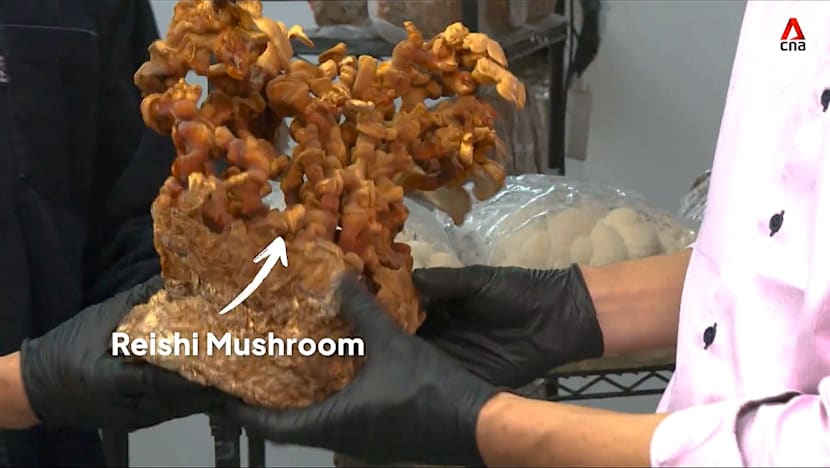
Consuming 500 to 1,000 mg of mushroom extract daily over two to four weeks should lead to results, according to him. Nonetheless, effectiveness “depends on the concentration” of the extract rather than its mass, he cautioned.
This varies from brand to brand “because people manufacture them (at) different concentration levels”. To fully reap the benefits of mushrooms, the “gold standard” is dual extraction using water and alcohol, he added.
5. WHAT ARE YOU REALLY PAYING FOR?
Then there is one benefit of functional drinks that some people might be obtaining not from the ingredients but from their own belief in the results — the placebo effect.
When a drink is packaged as having a calming effect or “going to take your stress away”, even without the right dosage, “just the placebo effect itself gives you the desired outcome”, said Khialani.
It raises the question whether the belief that a product is working is worth the higher price tag. That’s not to say the products themselves cannot lead to improved health outcomes.
“The benefits … aren’t usually something that happens overnight. You’d need to drink them consistently over time before noticing anything,” Chia concluded. “While functional drinks aren’t miracle cures, they probably beat alcohol or a sugary drink.”
Watch this episode of Talking Point here. The programme airs on Channel 5 every Thursday at 9.30pm.
.png?itok=St_khljX)
Source: CNA/dp
Sign up for our newsletters

Get the CNA app
Stay updated with notifications for breaking news and our best stories
Get WhatsApp alerts
Join our channel for the top reads for the day on your preferred chat app

Get bite-sized news via a new
cards interface. Give it a try.
Click here to return to FAST
Tap here to return to FAST
FAST
About The Author