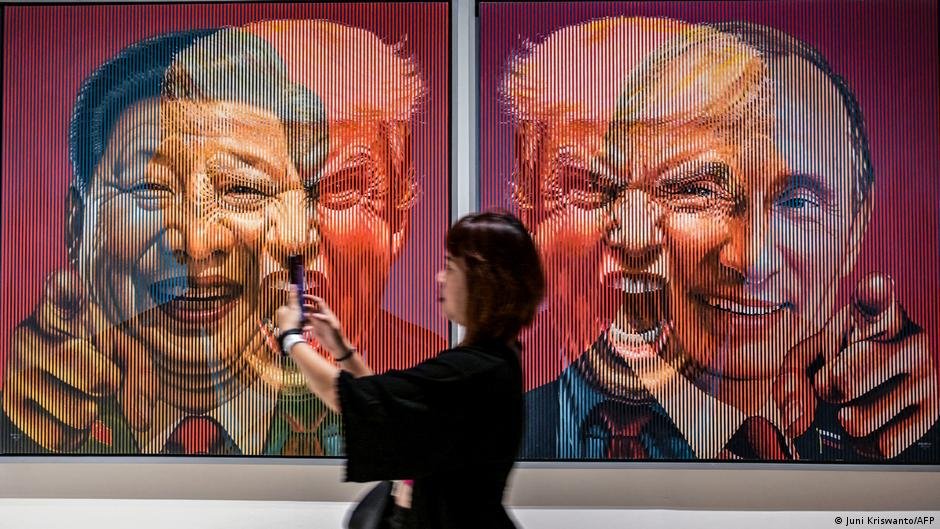
Donald Trump’s visit to UN headquarters in New York in September 2025 was rife with symbolism.
As the US president stepped onto the escalator in the lobby ahead of his address, it stopped working. Then, the teleprompter failed during his speech, prompting the former TV star to tell the assembled heads of state and government, half-jokingly: “These are the two things I got from the United Nations: A bad escalator and a bad teleprompter.”
The United Nations is the central institution of the post-World War II order, shaped in part by the United States and based on multilateralism and the balancing of interests. When the UN was founded in 1945, its goal was to prevent wars. Its mandate later expanded to include countless other areas, such as global health, development and climate protection.
Today, more than 80 years later, the UN’s institutions, above all the Security Council, are widely considered to be in need of an overhaul, much like the UN headquarters itself.
The broken escalator incident was apparently triggered accidentally by Trump’s own camera operator, the UN has said, rejecting responsibility for the incident. And beyond this symbolic moment, views are split over whether Trump, with his sometimes isolationist America First ideology, is above all a symptom of the crumbling multilateral world order or a destructive wrecking ball.
Far beyond escalators and teleprompters, politicians and analysts around the world are debating the question: Is multilateralism coming to an end — and if so, what comes next?
A new world order in five years or continued disorder?
Finnish President Alexander Stubb, one of the few heads of state to hold a doctorate in international relations, argues that the world is currently experiencing a power vacuum from which a new world order will likely emerge over the next five years.
To view this video please enable JavaScript, and consider upgrading to a web browser that supports HTML5 video
Other experts expect a longer period of adjustment. “It is time to acknowledge that the old order really has disappeared and to plot a new approach to geopolitics. This moment does not constitute a short interregnum between a US-led order and a Chinese-led one,” Mark Leonard, director of the European Council on Foreign Relations think tank, recently wrote in an essay in Foreign Affairs magazine.
“For some time, the world will be without any order at all, swept by fragmentation, contagion, and strangulation or the temptation to weaponize a wide variety of geographic, economic, and technological chokepoints.”
An era of reform gridlock
“That framework of multilateralism, which is connected with the world after World War II […] and a golden period of then the United Nations, I would say that it’s all over,” said Teresa Nogueira Pinto, a globalization expert specializing in Africa at Lusofona University in Lisbon.
“It’s not working,” she added. “We can see that in the peacekeeping and peacebuilding missions, most of them, they have been a failure, and then we see that the UN is desperately in need of a reform.”
Speaking with DW, Pinto cited the UN Security Council as an example, stressing that it doesn’t represent the world in 2026. “But who would join? India, Pakistan, Nigeria, Ethiopia — I mean, it’s very, very hard to even imagine a reform.”
Johannes Thimm, head of the Americas Research Group at the German Institute for International and Security Affairs (SWP) in Berlin, takes a different view. “I do not agree that this era is already completely over,” he said. “International law is very diverse and also includes a great deal that you don’t even notice in the daily relations between states, diplomatic conventions, treaties and so on. And there is still quite a lot there that you don’t really notice because it isn’t particularly spectacular.”
But he added that there is no doubt that international law has increasingly been violated in recent times, for example, through wars of aggression in Ukraine and Iran. Meanwhile, violations of international humanitarian law, as in Gaza, also pose a challenge to the multilateral order.
Thimm pointed out US withdrawals from dozens of international organizations and treaties as another factor undermining the stability of multilateralism. These include the World Health Organization, the Paris climate agreement, the UN Framework Convention on Climate Change and the UN Educational, Scientific and Cultural Organization (UNESCO). Just recently, the US government further stepped up its pressure on the International Criminal Court, which it has criticized.
“If the still most powerful state acts this way,” Thimm said, “then that poses a threat to the system as a whole. So, I would say, a greater threat than when Russia, for example, wages a war of aggression.”
Old alliances fray, new ones emerge
Trump frequently invokes the Monroe Doctrine of 1823, which defined the Western Hemisphere as an exclusive sphere of influence for Washington. Applied to the present day, this could mean that the rest of the world is no longer dominated by the United States but by other major and middle powers: that’s to say a multipolar world order following the departure of the US as the dominant power.
For many countries, this upheaval carries the risk of losing influence. For others, however, it can also be an incentive to reposition themselves and secure their place through alliances of their own in a multipolar world no longer dominated by the West. It is no coincidence, for example, that the BRICS alliance of Brazil, Russia, India, China and South Africa has also gained in importance and taken on new members. It is increasingly seeking to establish a confident counterweight to the Western-dominated international financial architecture.
To view this video please enable JavaScript, and consider upgrading to a web browser that supports HTML5 video
“Many African countries are realizing that the previous models were not so advantageous for them, and especially for growth and sustainable growth,” said Pinto. “They are taking advantage of this, and I would say also that this is very connected to the comeback of geopolitics. For a period we thought that geopolitics was history, but it’s not.”
The world is also reorganizing itself in terms of security policy. Within NATO, there are fears of a further US withdrawal or even a military attack from within should Trump continue to pursue hi sclaims to Greenland, which is administered by Denmark. In the Indo-Pacific region, and especially in the Middle East, US allies are questioning the reliability of American security guarantees and looking for new alliances.
In early August, Saudi Arabia, Turkey and nuclear-armed Pakistan launched the Mecca Defense Pact, with NATO-style mutual defense guarantees. The agreement, as well as the European coalition of the willing to support Ukraine, are seen as examples of the smaller, more agile formats that are sometimes referred to as “minilateralism.”
In many cases, military and diplomatic efforts are being considered together. “A world without rules only helps the strong,” said SWP expert Thimm. “Everyone else, whether they are moderately strong or weak, gets crushed. And that is why Europe, which I would count among the moderately strong, naturally has a strong interest in preserving some kind of order.”
Alongside military considerations, many states are also looking for new, broader economic and political partnerships. Pinto expects regional alliances to gain importance and potentially produce better results than mechanisms at the global level. The World Trade Organization, for example, achieved a great deal in the 20th century, she said, but has not functioned for some time now.
“Now, it may be more useful to think about regional approaches such as the African Continental Free Trade Area.”
The harmonization of African markets is seen as a promising approach to solving many problems. But further implementation of the free trade area, ratified by almost all African states since 2018, has been rather slow.
Whose interests will a future world order serve?
Pinto said three factors could influence the future distribution of power in a multipolar world: sovereignty, access to resources and, last but not least, demographics. Young, growing societies in Africa and Asia could make themselves indispensable. “India could become a superpower by the end of the century,” she said.
Amid the decline of US influence, the growing power of other actors such as China, and other factors including minilateralism and regional alliances — it’s still too early to say for sure what kind of world order will emerge from the status quo.
To view this video please enable JavaScript, and consider upgrading to a web browser that supports HTML5 video
At least in the short term, however, Thimm fears that “the world will become more violent. There will be more wars. The wars will become more brutal. It will be more difficult to organize cooperation. So I don’t know what will happen when the next pandemic breaks out. I don’t know what will happen when the next global financial crisis breaks out.”
Against this backdrop, he pointed out that we still face the climate crisis, a key challenge that can only be solved through collective action.
This article was originally published in German.
About The Author