Young girls are becoming obsessed with skincare and makeup – why is this happening?
Social media, marketing and social norms around appearance are fuelling an unhealthy fixation on skincare and makeup among young girls, which can have consequences for both their skin and self-worth.
Cosmeticorexia is an unhealthy obsession with achieving flawless skin that drives age-inappropriate or compulsive use of beauty products and cosmetic procedures. (Photo: iStock/Thanida Petdum)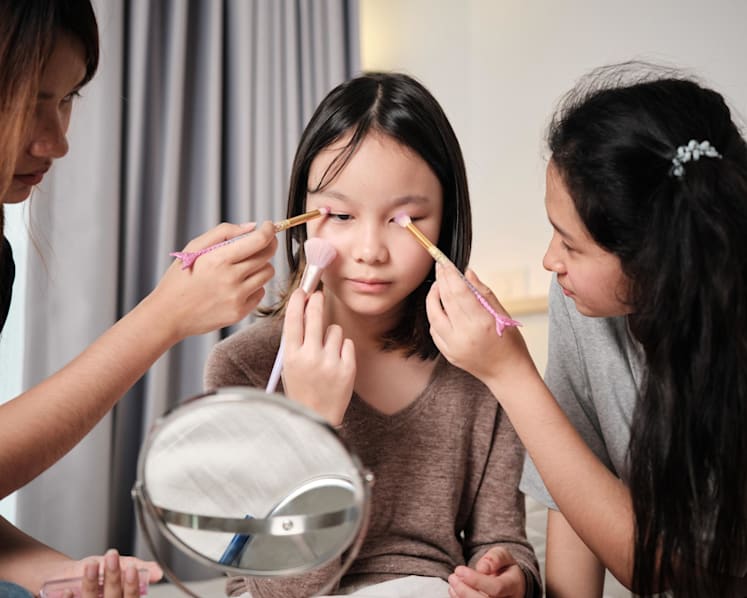
New: You can now listen to articles.

This audio is generated by an AI tool.

Read a summary of this article on FAST.
Get bite-sized news via a new
cards interface. Give it a try.
Click here to return to FAST
Tap here to return to FAST
FAST
Ifah’s daughter was only seven when she first became interested in her mother’s beauty products. The young girl would observe the older woman applying her skincare and makeup every morning and would ask her mother to apply the products on her too.
“She even learned how to apply them herself – I had to hide my stash so she wouldn’t keep using it,” the 37-year-old technical specialist, who declined to give her full name, said.
One of her friend’s daughters, an eight-year-old, once showed Ifah how she applies makeup and skincare. “She even does GRWMs,” Ifah said, referring to “Get Ready With Me” videos showing creators getting ready for the day.
“I was surprised at how ‘advanced’ she was in her makeup skills at her age.”
These young girls point to a worrying phenomenon known as cosmeticorexia, a blend of the words cosmetic and anorexia.
“Cosmeticorexia is an umbrella term for an unhealthy obsession with achieving ‘flawless’ skin that drives excessive, age-inappropriate, or compulsive use of cosmetics and cosmetic procedures,” said Dr Lynn Chiam, a dermatologist at the Children & Adult Skin Hair Laser Clinic at Mount Elizabeth Novena Hospital.
Dr Chiam told CNA Women that this preoccupation is evident among young children, particularly girls, who use skincare products meant for adult skin, despite having no significant skin concerns.
She said this can be seen in the “Sephora kids” phenomenon, where girls, typically aged seven to 14, spend a lot of time in beauty stores browsing and buying skincare or makeup.
WHAT COSMETICOREXIA CAN LOOK LIKE
“The blend of ‘cosmetic’ and ‘anorexia’ is used to signal an obsessive, compulsive nature of a behaviour, and it has physical and psychological consequences,” Dr Chiam said.
It can start with a heightened awareness of beauty products, skincare or even aesthetic procedures, she added.
“Some of my patients include teenagers who are well-versed not only in the newest creams and serums but also in procedures like lasers, energy-based devices, even Botox and other injectables,” she said.
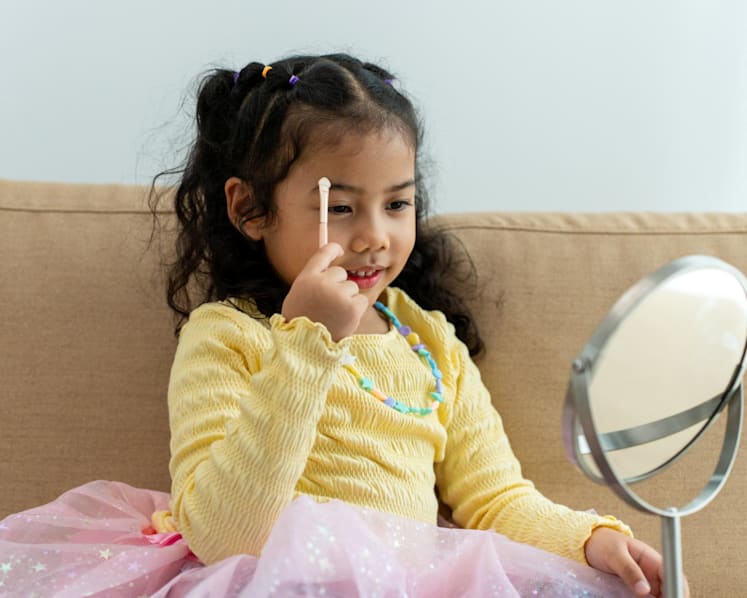
Some have used products to achieve “flawless glass skin” – a South Korean beauty trend characterised by smooth, clear and highly moisturised skin – and other viral beauty trends.
Others ask for specific ingredients or treatments they’ve encountered online, without knowing or caring that these may be harmful to young skin, Dr Chiam added.
The concern, however, goes beyond how many products young girls own or how much they know about skincare.
Dr Chiam said some patients – and their parents – have told her how distressed the girls become when they miss a product in their multi-step skincare routine.
Others constantly buy new products to address perceived flaws, sometimes leaving them with little money for necessities such as lunch or school supplies.
“Often, these young girls will fixate on certain tiny blemishes and will spend considerable effort and money to correct them,” she said. “To them, their appearance is central to their self-worth.”
As their obsession intensifies, some children may become less concerned about whether the products they use are appropriate for their age, said Associate Professor Mark Koh, head and senior consultant of dermatology at KK Women’s and Children’s Hospital (KKH).
“Social media marketing targets girls far more aggressively with complex anti-ageing products,” he said. “Ingredients such as retinoids, exfoliating acids, Vitamin C and heavily perfumed products are generally formulated to address concerns associated with adult skin.”
These young girls will fixate on certain tiny blemishes and will spend considerable effort and money to correct them.
The impact of cosmeticorexia may extend beyond the skin. Lim Shoon Yin, executive director of gender equality organisation Association of Women for Action and Research (AWARE), said the phenomenon raises questions about what happens when young people’s insecurities become a market to be tapped.
“This isn’t just a skincare trend; it’s a preview of how the next generation will relate to their bodies,” Lim said. “When eight-year-olds are using retinol, we’re not looking at vanity; we’re looking at an industry that has found a way to sell insecurity earlier and earlier.”
Retinol is a topical skincare ingredient that helps improve skin texture and reduce wrinkles – a concern associated with older skin.
The worry is not simply that children are using skincare too early, Lim said. It is about turning normal insecurities about growing up and appearance into problems that young people feel they desperately need to fix – when there is nothing wrong in the first place.
WHAT SKINCARE DO CHILDREN ACTUALLY NEED?
Children do not really need a skincare routine, said Associate Professor Mark Koh, head and senior consultant of dermatology at KK Women’s and Children’s Hospital (KKH). If necessary, the products they might need are:
1. A gentle cleanser to be used once or twice a day.
2. A basic moisturiser if they have dry or irritated skin.
3. A good sunscreen with SPF 30 or above for when they are outdoors, to be washed off at night.
Avoid products containing retinoids, strong chemical exfoliants such as alpha-hydroxy acids (AHAs) or beta-hydroxy acids (BHAs), and anti-ageing serums. Assoc Prof Koh said these can damage a child’s skin barrier, which can result in painful rashes, allergic reactions and chemical irritation.
Collapse
Expand
COSMETICOREXIA IS ON THE RISE
Dr Annabelle Chow of Annabelle Psychology told CNA Women that she has observed an increase in the number of pre-teen and teenage patients who have expressed stronger interest in skincare and makeup.
At its core is a timeless need to fit in and look good, said the clinical psychologist.
“Kids’ brains are still developing, which means they don’t really have the capacity to make sensible decisions, and are generally more impulsive and eager to follow and impress their friends,” said Dr Chow.
“For them, the desire to look good can become even more pronounced, often becoming one of the ways they try to fit in.”
She added that girls may be more affected than boys because of social norms.
“From childhood, girls are often exposed to more products, practices and social cues like, ‘Oh, you shouldn’t wear that, not pretty,’ or ‘Don’t eat that, you’ll get fat’,” she said.
All this is amplified by social media, which makes beauty products more accessible and visible to young teens, said Cheong Xinyi, head and senior principal psychologist of KKH’s Psychology Service.
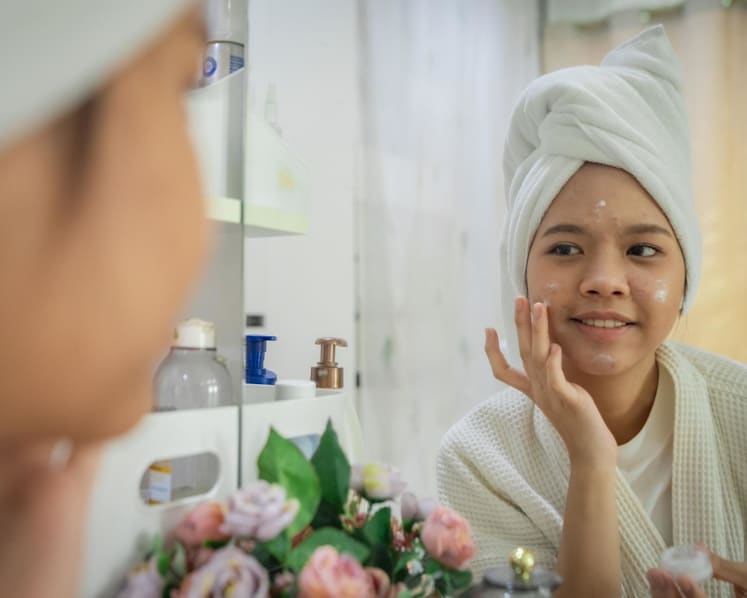
Dr Chow added: “Unlike previous generations like mine, when our exposure to beauty ideals was limited to magazines that we saw relatively rarely, young people today can see beauty content continuously and conveniently on Instagram or TikTok.”
That exposure is then reinforced by social media algorithms that tailor content to individual users, Cheong said. For example, girls and women may be served more skincare and makeup products, and the more they engage with such content, the more similar content they are likely to encounter, she added.
Dr Chow said this can affect how young people – both girls and boys – perceive their own appearance.
“When consumed daily on their digital devices, these platforms can distort kids’ understanding of what healthy, natural skin looks like and shape how they view themselves, eventually leading to an unhealthy fixation with cosmetics,” she said.
HOW ADULTS CAN SUPPORT THEIR GIRLS’ INTERESTS
“It all comes down to education,” Cheong said. “Curiosity about skincare is natural, so banning it or punishing your girls will likely backfire, especially at the teen stage when they may not always want to listen to adults.”
Instead, she recommends using a child’s interest in beauty as an opportunity to talk about what they see and consume online.
“Listen to your child without judgement and set clear boundaries on what products are appropriate,” she advised. “Use shared moments to teach digital literacy, help them understand how advertisers drive sales by using filters and lighting to play up unrealistic beauty standards.
“Most importantly, affirm your child for just being who they are rather than how they look.”
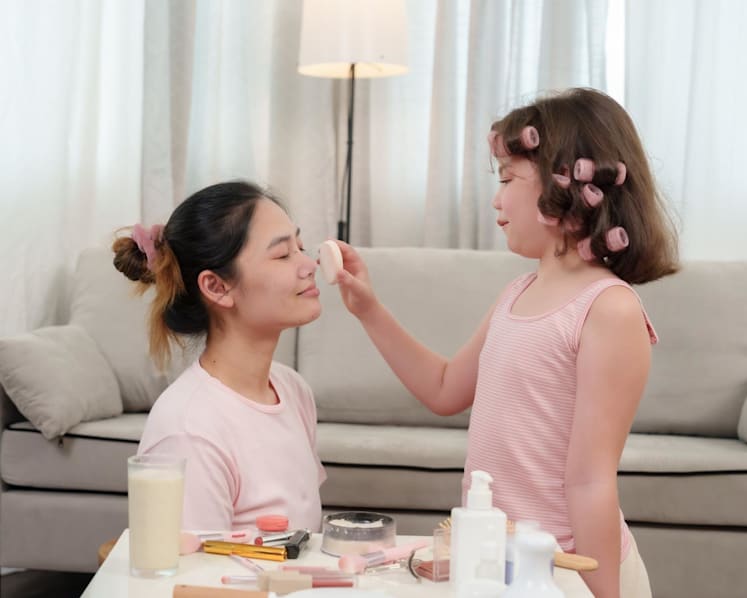
Dr Chow also emphasised how important it is for adults to talk to children about why they use beauty products.
“Is it to make you look better, or is it because it’s to hide how ‘ugly’ you think you look?” she said. “The distinction is important – it can affect the way your girls see themselves, too.”
AWARE’s Lim also recommended that such conversations begin early. The mother of four daughters recalled having discussions with each of them about self-esteem, appearance and makeup.
For Ifah, keeping that conversation open has meant allowing her daughter, now nine, to explore skincare and makeup safely. Whenever she occasionally uses such products, Ifah helps her wash and moisturise her skin afterwards.
“Most importantly,” she said, “I also remind my daughter how beautiful I believe she is on the inside.”
CNA Women is a section on CNA Lifestyle that seeks to inform, empower and inspire the modern woman. If you have women-related news, issues and ideas to share with us, email CNAWomen [at] mediacorp.com.sg.
Source: CNA/iz
RECOMMENDED
Get bite-sized news via a new
cards interface. Give it a try.
Click here to return to FAST
Tap here to return to FAST
FAST
About The Author