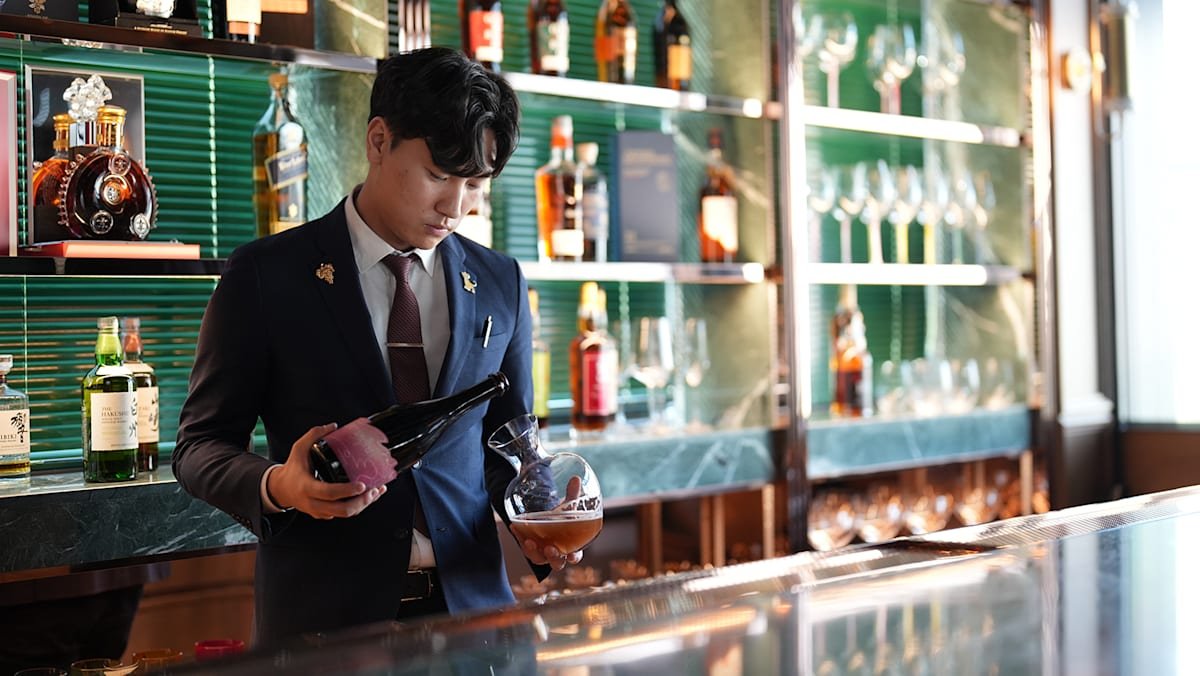
This sommelier can’t easily consume alcohol. So he created non-alcoholic beverages for fine dining
South Korean sommelier Jaehyun Sim founded Havn to show that non-alcoholic drinks can be as complex and food-friendly as wine, using Korean herbs, teas and botanicals to build pairings for Michelin-starred restaurants.
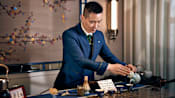
Jaehyun Sim founded Havn after his difficulty consuming alcohol led him to rethink his path as a sommelier. (Photo: Havn)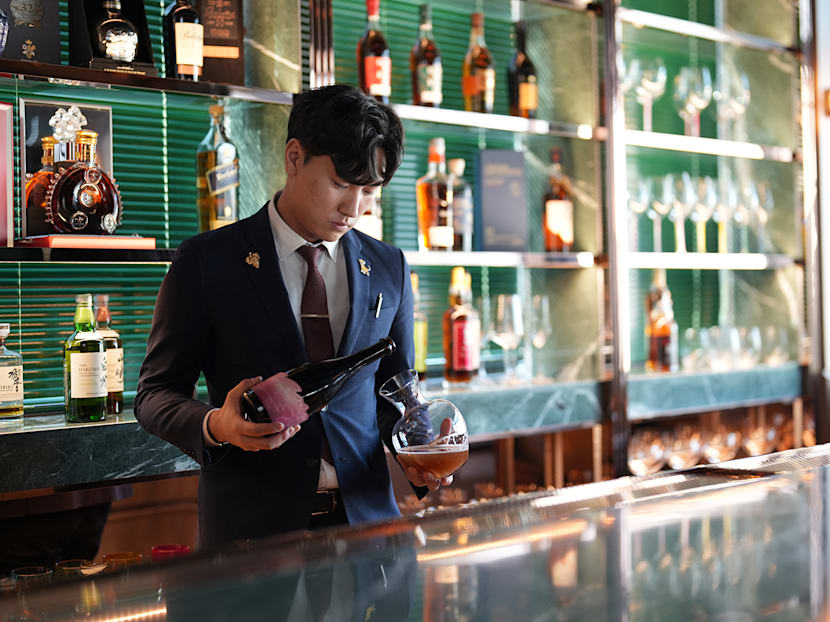
New: You can now listen to articles.

This audio is generated by an AI tool.
By
Read a summary of this article on FAST.
Get bite-sized news via a new
cards interface. Give it a try.
Click here to return to FAST
Tap here to return to FAST
FAST
The moment Jaehyun Sim decided to become a sommelier was not the one you might expect. There was no formative bottle of Burgundy at the family table, nor a revelatory glass poured by a mentor with impeccable taste. Instead, during his sommelier training, Sim watched his peers develop their palates with enthusiasm while he confronted a more complicated problem. He cannot easily consume alcohol.
“Watching colleagues discuss the nuances of wine late into the night, I naturally began to question whether I could realistically sustain a career as a sommelier,” he recalled.
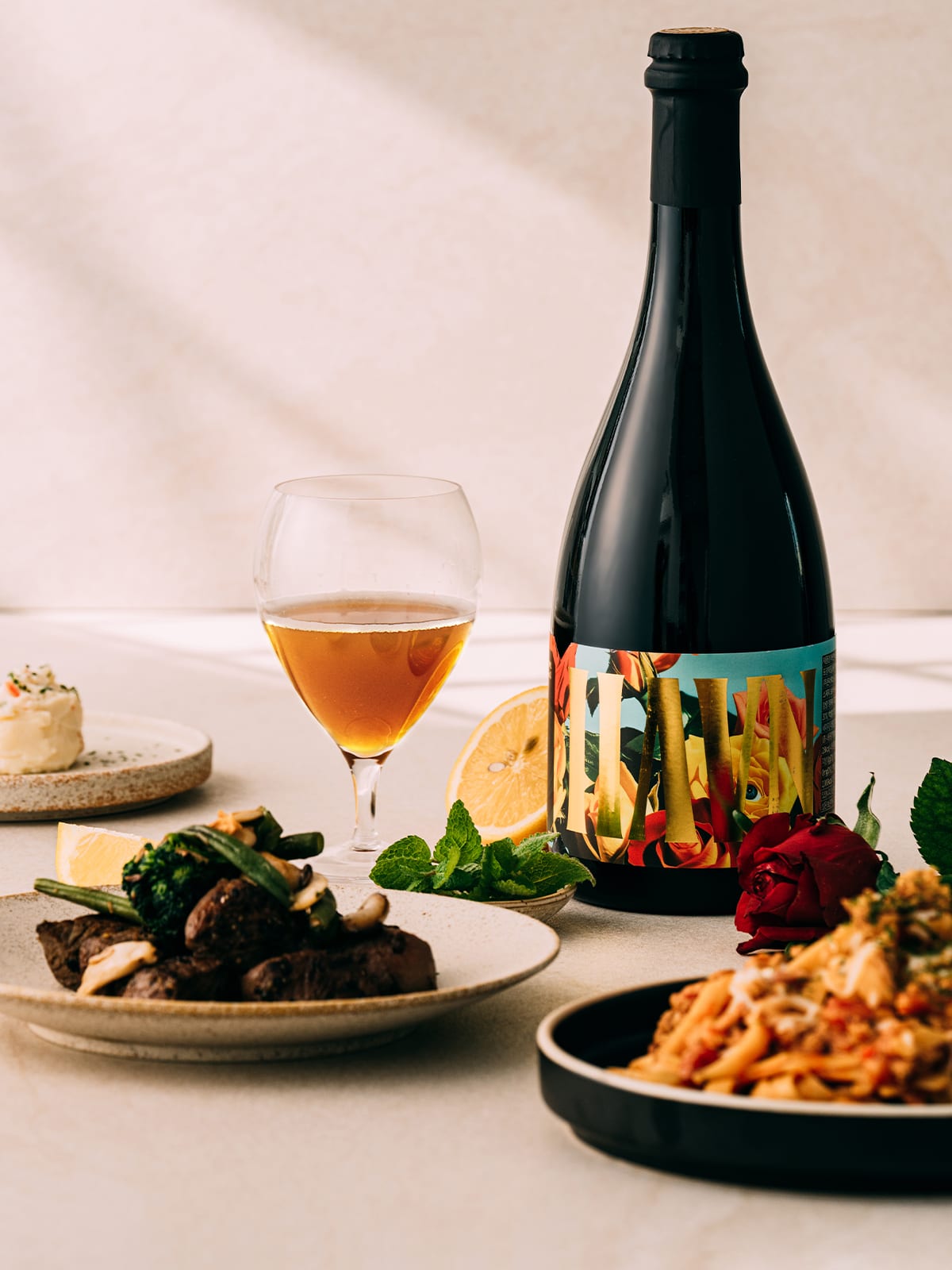
The answer was not to drink more. Sim founded Havn – a non-alcoholic botanical beverage label built around carefully sourced Korean ingredients – not as a compromise, but as an argument that what accompanies serious food can be complex, balanced and free of alcohol.
His route into beverages began in the kitchen, as a line cook at La Main de Chef in Gangnam, before a head chef’s recommendation moved him front-of-house and led him to wine. It was not, as it turned out, out of a love of drinking, but from the recognition that to elevate a dining experience, he had to understand what sat alongside the food in the glass.
During sommelier training, however, the physical barrier became clear. His peers were developing their palates the time-honoured way. Sim had to work from a different vantage point.
The answer began to take shape at Evett, Joseph Lidgerwood’s Michelin-starred restaurant in Seoul. What Sim encountered there changed his understanding of what a non-alcoholic pairing could be. Lidgerwood’s kitchen was not treating teetotallers as an afterthought. It was running a fully realised non-alcoholic pairing programme with the rigour of a serious wine list: Green juices pressed from perilla leaves, liquids carbonated with whey left over from cheese-making to build creamy texture and acidity, and a “Korean Cola” assembled from traditional medicinal herbs.
“These were not mere substitutes for alcohol,” Sim said. “They were independent components of the dining experience with their own structure and balance.”
Having found his direction, he set his sights on Copenhagen.
THE DANISH INTERLUDE
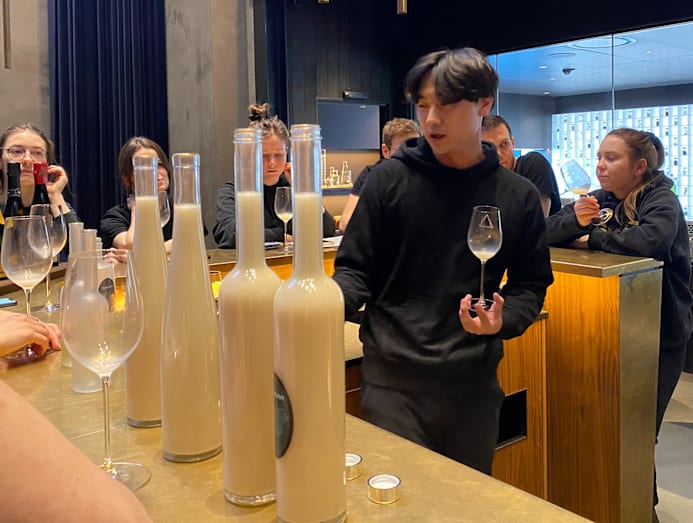
His placement at Alchemist, Rasmus Munk’s Michelin-starred Copenhagen restaurant, gave Sim something the Korean fine dining scene could not yet offer: infrastructure. There was a dedicated fermentation cellar for non-alcoholic beverages, precisely controlled for temperature and humidity; a water kefir of uncommon smoothness, far removed from the sharp kombucha acidity that then represented the outer edge of Korea’s non-alcoholic fermented drinks; and flavour combinations built around coffee, rose and pinecones, translating a specific philosophy into liquid.
What Sim brought home was not a recipe.
“What resonated with me more than their avant-garde techniques was their attitude toward expressing their identity and local terroir through their beverages,” he said.
He returned to Korea with a single brief: To build something rooted in Korean soil, Korean farmers and Korean culinary heritage, rather than replicate what he had encountered abroad. That development period played out through his zero-waste beverage experiments at B3713, a now-defunct Nordic fine dining restaurant in Seoul. They included a milk-wash-clarified apple punch made with Yanggu apples, and a smoked cherry juice made with avocado seeds salvaged from the kitchen’s sandwich station, then roasted and infused into the juice.
Havn launched in 2024 with two labels. Eden draws its core ingredients – apple mint, sage, dill and thyme – from farmer Um Taehee’s garden in Jincheon, Chungcheongbuk-do. To achieve layered notes, Sim blends these with rose, Earl Grey, green grape, lemon and lime through herbal infusion, creating a profile designed for European fine dining dishes such as shellfish, scallops and bouillabaisse.
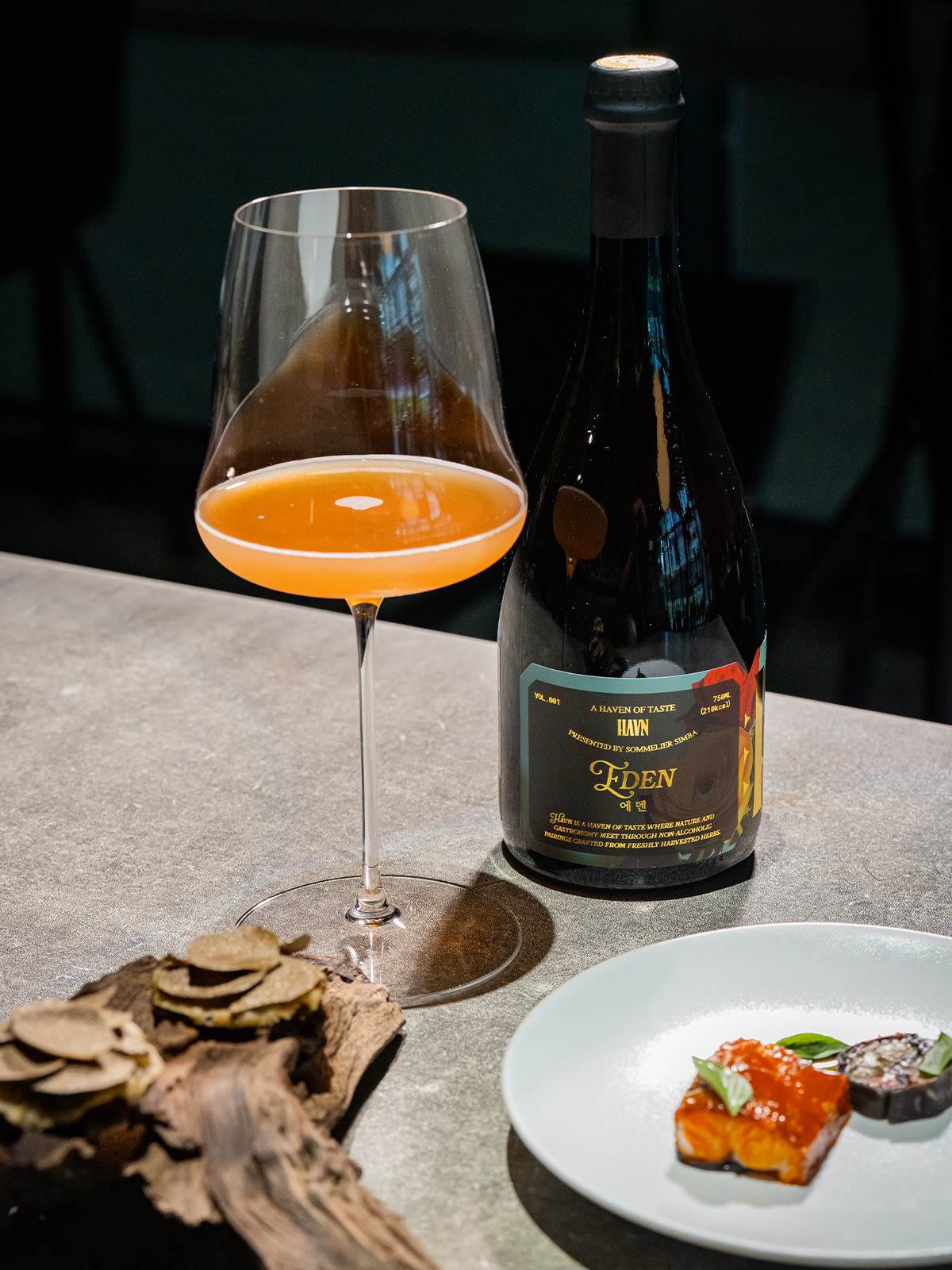
What distinguishes Eden from many premium beverages is that it changes with the seasons.
“The refreshing aroma of blended apple mint stands out in the summer, whereas the heavy, distinctive notes of sage become more prominent in the autumn and winter,” Sim explained. “Rather than controlling this through artificial additives, we embrace these natural seasonal shifts as a unique feature of the product.”
Hwawon is the more culturally assertive of the two: a sparkling tea anchored by bang-a, a fragrant and polarising Korean mint used mostly in Busan and Gyeongsang, alongside chrysanthemum, quince, mugwort and saejak, an early-picked green tea.
“From a commercial standpoint, choosing bang-a was a high-risk decision,” he said. “Even within Korea, its distinct aroma divides preferences, and it is a relatively unfamiliar ingredient to international consumers.”
Its aroma sits somewhere between mint and anise, and Sim makes no apologies for asking drinkers to meet it halfway.
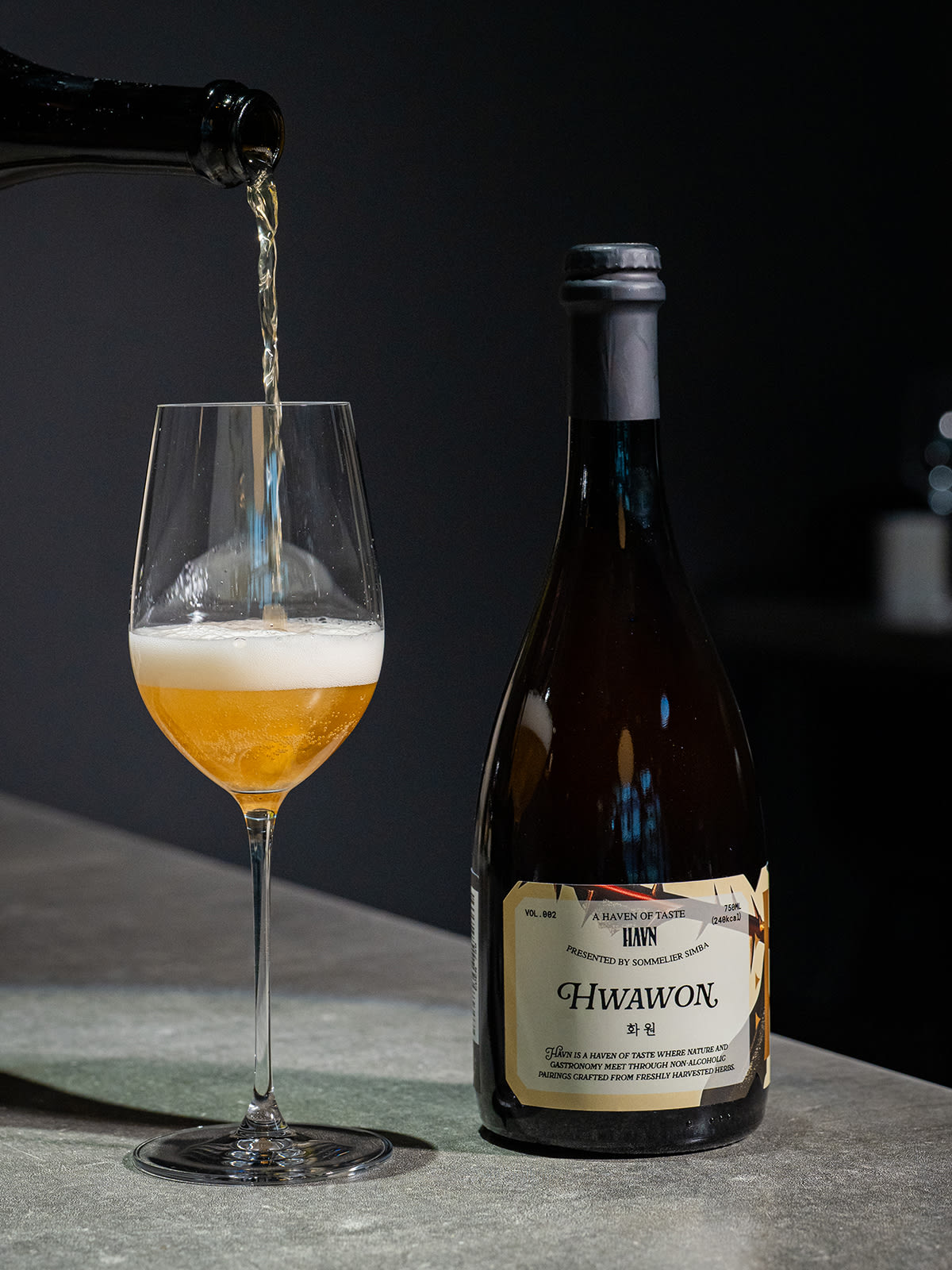
Korea has a long, under-exported culture of namul – the harvesting and culinary use of seasonal mountain herbs and greens – that has yet to register strongly on the global fine dining stage. Sim’s ambition, stated plainly, is for indigenous herbs like bang-a to earn their place among the foundational aromatics of the international kitchen, “akin to Western basil or Southeast Asian cilantro”.
The sommelier’s vocabulary does not merely shape Havn – it informs how the drinks are made. Tannin, a structural backbone of wine, is echoed through an intentional over-infusion technique: A small amount of tea leaves is brewed for an extended period, maximising astringency while keeping caffeine low enough for a multi-course meal. The polyphenols in tea share enough properties with wine tannins to function, in Sim’s framework, as a legitimate substitute rather than an approximation.
“Terms like balance, structure and acidity are not just rhetorical descriptors,” he said. “They represent our core manufacturing formulas to achieve gastronomic completeness without alcohol as a medium.”
In Seoul, Mosu and Soigne, two of South Korea’s most acclaimed Michelin-starred restaurants, include Havn in their pairings.
SCALING INSTINCT
What comes next is the part of the story that brands rarely discuss candidly. The most demanding aspect of running Havn, Sim said, is not sourcing or commercial negotiation, but preserving the product’s original quality as demand grows. He currently manufactures through an OEM, or third-party manufacturing, arrangement. As volume scales, minor variables – the condition of raw materials, extraction time and temperature control – compound in ways that turn sensory judgement calls into data management problems.
For Sim, the most demanding part has been standardising what used to be a manual, sensory-driven process, and translating it into measurable data to ensure consistent quality.
Pricing carries its own pressure. Rather than positioning Havn at the premium end from the outset, Sim is keeping it competitive with other sparkling products – even if it means minimising margins – to build category familiarity before asking the market to pay for brand recognition.
His latest endeavour is the forthcoming Havn Blendery in Seoul’s Yeonnam-dong – part R&D laboratory, part micro-production facility and part hub for private-batch restaurant collaborations. Rather than supply bottles and leave their integration to someone else, Sim intends to work directly with chefs and sommeliers to develop pairings around specific menus. It reflects something he learned on the floor: The relationship between a kitchen and its beverage programme is never purely transactional.
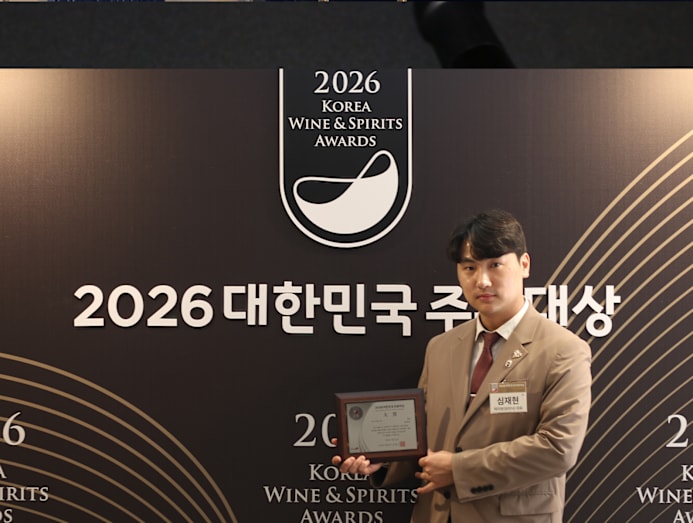
In April 2026, Singapore became Havn’s first international market – a deliberate choice, given the city’s fine dining density and growing openness to non-alcoholic beverages. Sim collaborated with Anju, an established modern Korean restaurant on Tras Street, on a sold-out dinner pairing, and participated in a showcase at the inaugural Korean Craft Collective, a festival celebrating South Korea’s emerging craft beverage scene at New Bahru. Havn also arrived here with its first major external recognition behind it: the grand prize in the inaugural non-alcoholic category at the Korea Wine & Spirits Awards.
Sim said he was thrilled by the win, while also feeling a deep sense of responsibility as an industry pioneer.
The forthcoming third label, inspired by hwachae, Korea’s traditional summer fruit punch, draws on fig leaves from Yeongam, yuzu from Goheung and oolong tea. It is designed to be enjoyed like a still white wine: with minimal effervescence, complexity from the milky body of oolong and the green aromatics of fig leaf, and acidity from the citrus precision of yuzu. If it lands as described, it could move the category beyond carbonation, something much of the non-alcoholic fine dining world has yet to manage.
For now, the pace is his.
“Even if the market evolves slowly, I am not hurried,” Sim said, adding that non-alcoholic pairings, once considered unfathomable, were now proving their worth on the tables of Michelin-starred restaurants.
There is a version of this story that frames Jaehyun Sim as an unlikely underdog. He has no interest in telling it. Bang-a divides opinion at home and barely registers abroad; he chose it anyway. Sage, difficult to cultivate at scale in Korea’s climate, sits at the heart of Eden; he found a farmer who could grow it well and built his supply chain around that relationship. Every decision in Havn’s short history has been made this way – not by reading the market, but by trusting a palate sharpened by years of being unable to drink what everyone else was drinking. The limitation, it turns out, was the education.
Source: CNA/bt
Get bite-sized news via a new
cards interface. Give it a try.
Click here to return to FAST
Tap here to return to FAST
FAST