Chicken rice without chicken? Edward Chong puts a Singapore spin on fine Chinese dining at Peach Blossoms
At Peach Blossoms, the chef draws inspiration from familiar local favourites such as bak kut teh, chwee kueh and curry rice for a new menu that celebrates Singapore’s diverse culinary traditions.
With his new menu at Peach Blossoms, chef Edward Chong hopes to establish a distinct identity for Singapore Chinese fine dining, drawing inspiration from the country’s rich culinary heritage. (Photos: Peach Blossoms)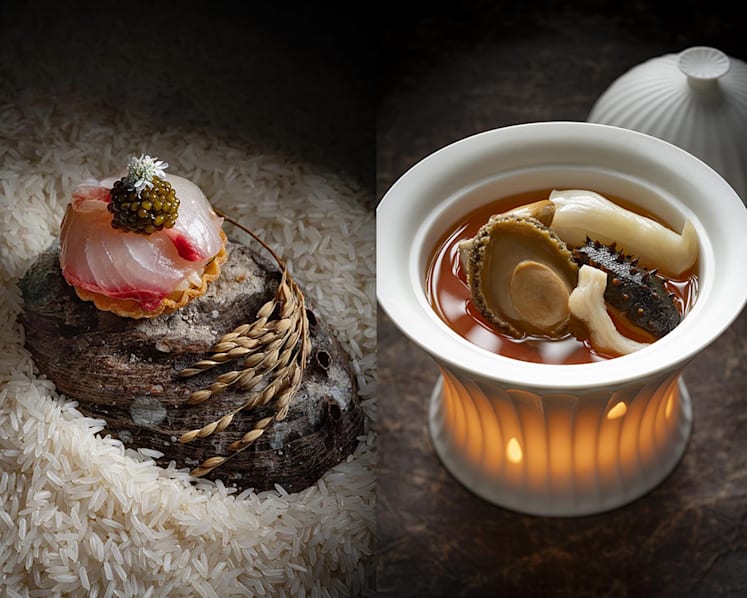
New: You can now listen to articles.

This audio is generated by an AI tool.

By
Read a summary of this article on FAST.
Get bite-sized news via a new
cards interface. Give it a try.
Click here to return to FAST
Tap here to return to FAST
FAST
Peach Blossoms is known and loved for its fine Chinese cuisine, but unlike restaurants that uphold staid tradition in their dishes, chef Edward Chong has been doing clever, inventive and always tasty things here for several years now, while staying true to the fundamentals of Chinese cooking.
For the first time, though, he’s taken a clear new direction with a freshly launched a la carte menu grounded in the familiar flavours of Singapore.
A one-bite snack captures the essence of chicken rice; Boston lobster is served with chye poh and chwee kueh; and Buddha Jumps Over the Wall gets a bak kut teh spin, among other inventive dishes.
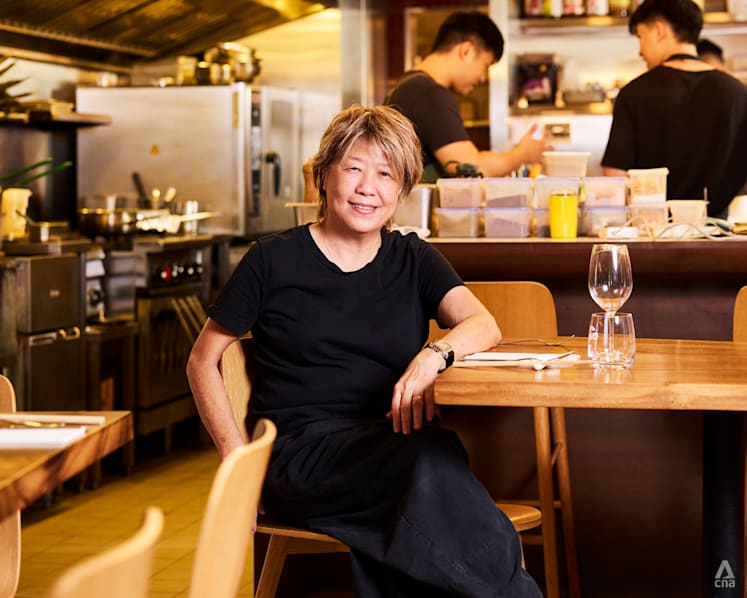
“One very common misconception is that Peach Blossoms is a Cantonese restaurant, an original concept when the restaurant first launched close to 40 years ago,” said Chong, 43. In reality, the cooking draws on several regional styles. Chong himself is originally from Malaysia and belongs to the Hakka dialect group.
Chong now wants to pay tribute to the country he has called home for two decades.
“As Peach Blossoms embarks on a new chapter, I would like to take the opportunity to pay homage to Singapore, a place I have called home for the past 20 years,” he shared. “This new menu reflects my personal journey and experiences in Singapore, which have shaped me over the years. As a Hakka, I want to celebrate Singapore’s distinct food culture and the richness of its dialect communities through fine Chinese cuisine at Peach Blossoms.”
The new menu comes on the heels of the Black Pearl-recognised restaurant’s kitchen overhaul and interior refinements such as new statement lights and new dining chairs with plush upholstery.

The food takes inspiration from Chong’s personal favourites and dishes that many Singaporeans grew up with.
“The peppery warmth of bak kut teh, the fragrance of Hainanese chicken rice and the savouriness of cai poh served with chwee kueh. I wanted to explore how we could express those familiar flavours at Peach Blossoms and elevate it further,” Chong said.
He’s done this by drawing on “several Chinese traditions, including Hakka, Teochew, Hainanese, Hokkien and Cantonese, alongside Southeast Asian flavours that are part of Singapore’s food culture” while also reimagining these familiar flavours.
“My aspiration is for Peach Blossoms to be a restaurant that comes to mind when people think of where to experience fine Singapore Chinese cuisine in Singapore,” he shared.

Needless to say, it’s not about slapping local flavours on the menu and calling it Singaporean, or even simply “elevating” hawker classics. Instead, Chong is articulating a distinct identity for fine Singapore Chinese cuisine – one that draws on the island’s dialect traditions and everyday food culture without sacrificing the sophistication of classical Chinese cooking.
“For me, a successful interpretation must always begin with respect for the original dish. It might be a particular aroma, texture or combination of flavours. That needs to remain clear, even when the ingredients or presentation change. Every addition should contribute to the taste,” Chong asserted.
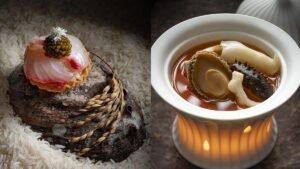
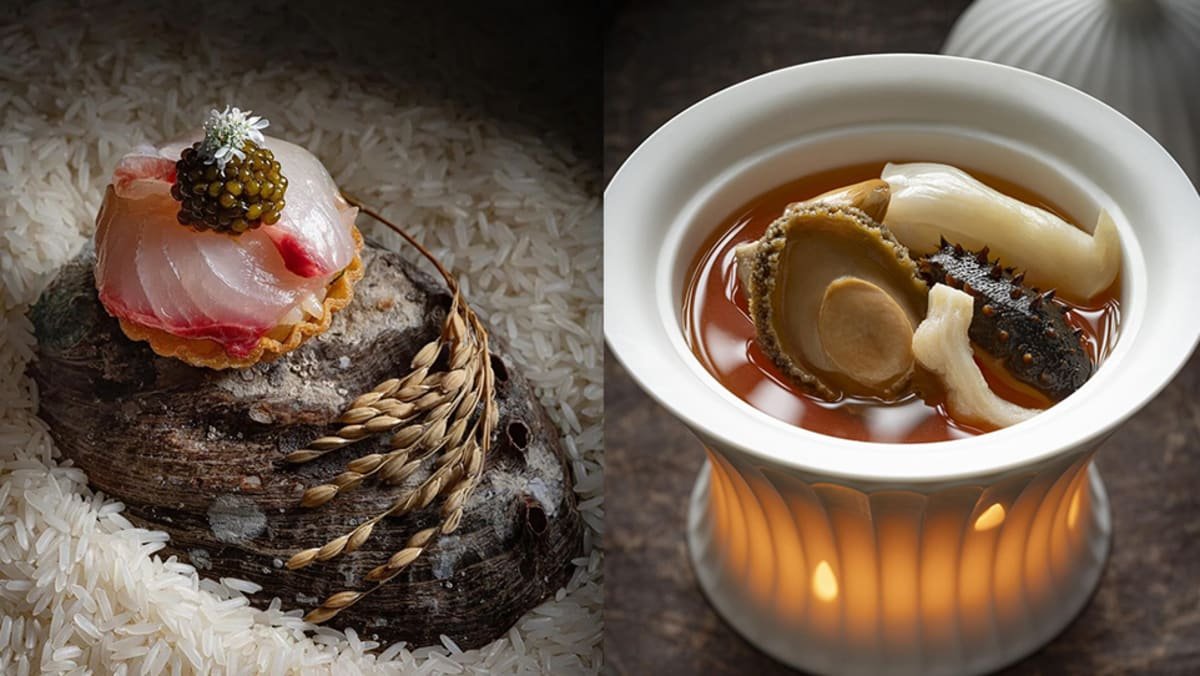
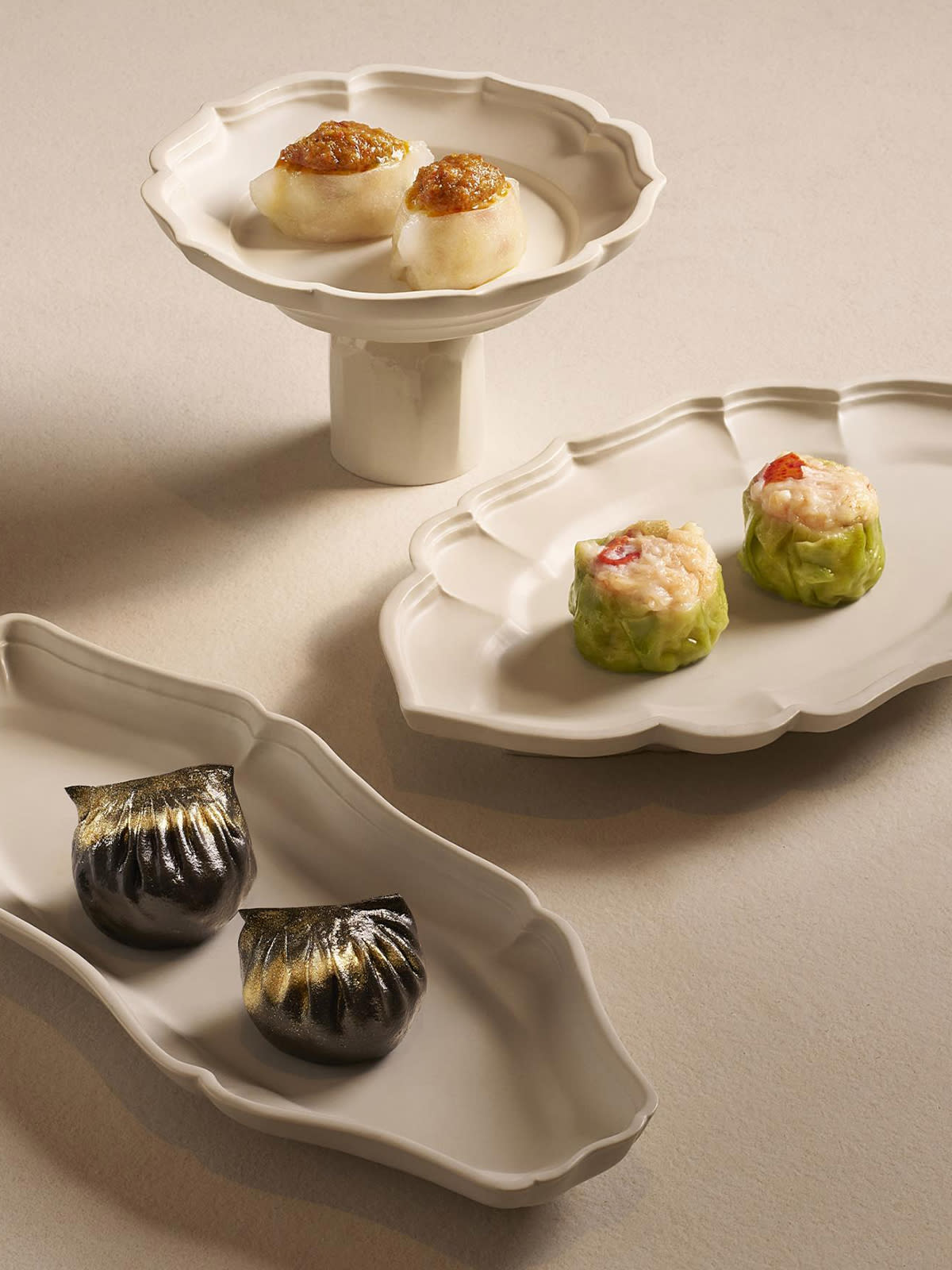
“Our Chicken Rice Tart with 6-Hour Cured Kampachi and Caviar is one example. It looks very different from a plate of Hainanese chicken rice, but the fragrance and flavour of the rice should be immediately recognisable.”

The fascinating thing about this snack is that it playfully uses kampachi fish cured for six hours in place of chicken. But the fish goes so well with the rice cooked in chicken fat and finished with housemade peanut oil that you’d never miss the poultry.
“Hainanese chicken rice is one of Singapore’s most iconic dishes, and what interests me is how much of its identity comes from the rice itself. The fragrance of chicken fat, ginger and aromatics is immediately recognisable. I wanted to capture that in a small, concentrated bite,” said Chong.
“The idea of using fish came from my travels to Shunde in Guangdong, where I was inspired by the appreciation for the natural flavour and texture of fish.”
Curing the kampachi in soya sauce gives it “a smooth, buttery texture that complements the fragrant rice. You recognise the familiar flavours of chicken rice, then discover a different texture in place of the chicken.”
For Chong, a dish is successful “when guests understand the connection without needing a long explanation and enjoy eating it. This is also when I realise that the dish has truly resonated with them”.
One creation he’s particularly proud of is the Bak Kut Teh Inspired Buddha Jumps Over the Wall. “It is a celebrated Chinese classic, and I’m excited to have created a rendition shaped by the flavours of Singapore,” he said. “The aromatic, comforting flavours of bak kut teh gave me a way to bring that connection into the dish.”

Bak kut teh and Buddha Jumps Over the Wall may appear to sit at opposite ends of the dining spectrum, but both “depend on a carefully prepared broth with varied ingredients, which was what first connected them for me. I wanted to bring the comforting flavours of bak kut teh to Buddha Jumps Over the Wall while allowing its prized ingredients to retain their character,” Chong said.
“We simmer white pepper and aromatic spices with pork ribs and chicken over a low flame for six hours. The aim is a clear, fragrant broth that complements the seafood.” In the collagen-rich soup, the warmth of the pepper is pronounced but never overwhelming.
“Texture is also an important part of the dish,” Chong added. Jeju abalone, giant king grouper stomach and thick fish maw “bring different textures, while Japanese sea cucumber is filled with prawn mousse for a delicate sweetness. The broth needs to bring these ingredients together while allowing guests to appreciate each one.”

He has big dreams for the dish. “My hope is that this rendition will come to be recognised as a Singapore interpretation of Buddha Jumps Over the Wall. It tells the story and captures the direction we are taking at Peach Blossoms: Fine Chinese cuisine shaped by Singapore’s culinary heritage.”
One challenging new creation to develop was the Home Styled Braised Marble Goby with Aromatic Curry Sauce – a fish dish served with a savoury gravy inspired by one of Chong’s favourite hawker dishes, curry rice.
“Fish is often steamed or fried in Chinese cooking, but for this dish, we dry-braise it in a claypot,” he explained. “The challenge is to have precise control over the heat and cooking time, so the sauce develops its flavour while the fish cooks through and remains moist and tender. Too much heat or a little too long in the claypot can affect its delicate texture, so, getting that balance right is crucial.”

The rich, creamy sauce evokes curry but has flavours more complex and elegant than what you’ll find at a scissors-cut curry rice stall.
“The fresh, quality ingredients make all the difference. We make the curry from scratch every day, including extracting our own coconut milk from freshly grated coconut. I also add fish bone broth to give the sauce more depth and bring it together with the marble goby.”
Another interesting dish pairs Boston lobster with cai poh and chwee kueh, or steamed rice cakes.
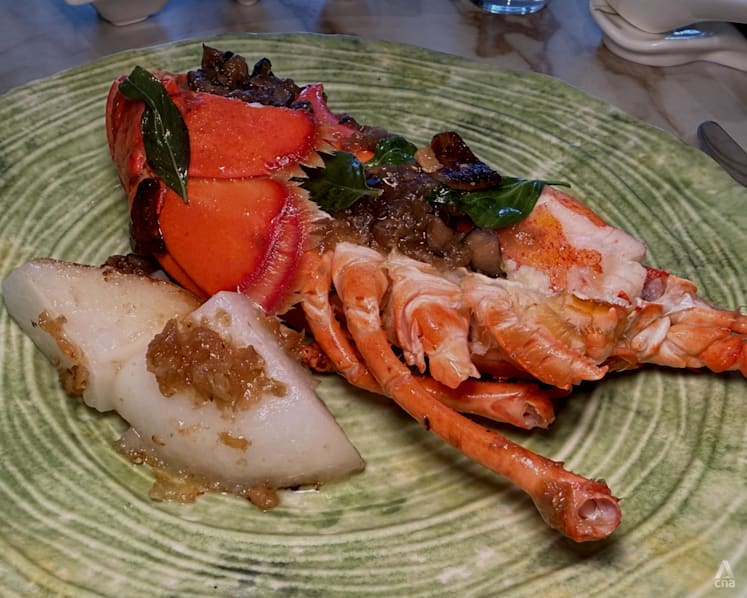
“The inspiration came from cai poh, the preserved radish which is commonly used in Teochew cuisine and traditionally served with chwee kueh,” Chong said. “Lobster is often steamed, baked or stir-fried with ginger and spring onion, and I wanted to explore how a familiar Singaporean flavour could bring a different character to it. We dry-braise Boston lobster in a claypot with aromatics, then pair it with basil and a Japanese shiitake mushroom sauce enriched with cai poh. The preserved radish adds a savoury depth that complements the lobster’s natural sweetness.”
Then there is the Crisp Air Roll, which brings together two familiar Southeast Asian favourites: popiah and otak-otak.
“We make a squid ink popiah skin and fill it with Spanish mackerel blended with yellow ginger, curry powder and aromatic spices, alongside crab meat, konjac jelly, hairy gourd and dried shrimp slowly stewed in seafood broth. The roll is then fried until crisp.” It’s served with Kaluga Queen caviar mixed with minced ginger and sesame oil – a bold touch that “adds a savoury contrast to the spiced filling”.

For dessert, Chong has somehow managed to put a refreshing spin on pandan. There is Pandan Bingsu with Fresh Longan and Tofu Pudding, made with freshly extracted pandan juice, freshly ground soybeans and dehydrated coconut. “Pandan is such a familiar flavour in Singapore, and I wanted to let its fragrance come through in a light dessert,” Chong said.
Future menus will continue to draw inspiration from Singapore’s culinary heritage, he shared.
“Singapore’s culinary heritage is central to the direction of Peach Blossoms, and it will continue to shape our menus. There is much to explore within the Hakka, Teochew, Hainanese, Hokkien and Cantonese traditions, as well as their connections with Southeast Asian ingredients and flavours. That could mean working with a familiar seasoning, revisiting a cooking technique or drawing on the way a dish is eaten here.”
Peach Blossoms is at Parkroyal Collection Marina Bay, Level 5, 6 Raffles Boulevard, Singapore 039594.
Source: CNA/my
Get bite-sized news via a new
cards interface. Give it a try.
Click here to return to FAST
Tap here to return to FAST
FAST